María Corina Machado returns to Venezuela after 10-month exile Source: independent.co.uk.
After nearly a year abroad, Venezuelan opposition leader María Corina Machado has returned to Venezuela. Her arrival follows a series of failed attempts to re-enter the country, which strained relations with the U.S. administration under President Donald Trump.
What happened
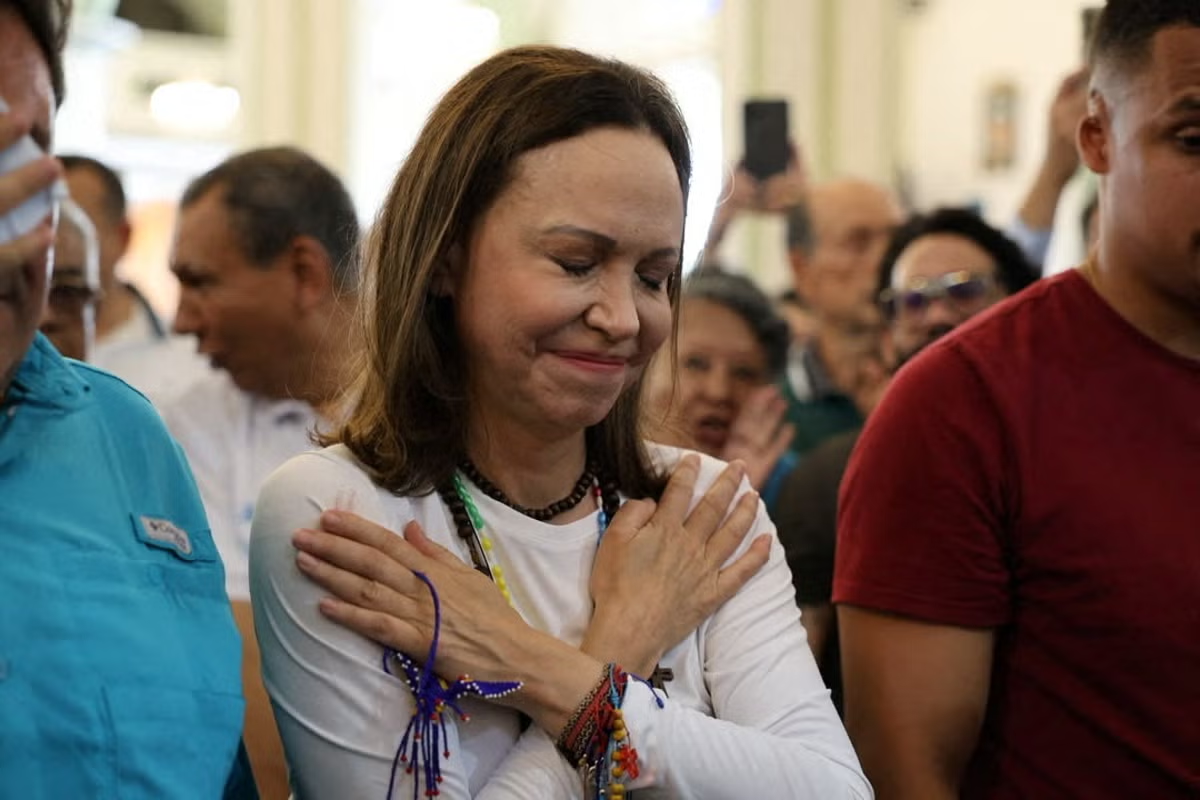
Footage shared by Machado’s press team shows her arriving at a church in the western state of Lara. Bystanders gathered to sing the national anthem and shout ‘liberty!’ as she departed in an SUV.
Her team confirmed she will travel overland to Caracas. According to two individuals with knowledge of the matter, she took a private flight from Panama to Colombia before crossing into Venezuela.
Machado’s return was not officially welcomed by all political actors. Venezuela’s communications ministry did not respond to requests for comment.
U.S. response and diplomatic context
U.S. officials had previously asked Machado to delay her return, Reuters reported in June, following multiple failed entry attempts. The request came as part of broader diplomatic efforts to maintain stability in Venezuela’s political landscape.
At the White House on Sunday, President Trump stated he was unaware of her arrival. When asked about her presence, he said: ‘She’s a very nice woman,’ adding that the United States remains committed to supporting interim President Delcy Rodriguez.
Trump emphasized: ‘We’re doing really well in Venezuela,’ a statement that reflects confidence in the current leadership structure and suggests limited openness to broader political transitions.
U.S. Secretary of State Marco Rubio attributed the safe return of Machado to U.S.-supported reconciliation talks. He said these talks have already led to the release of hundreds of political prisoners and the return of hundreds of opposition figures from exile.
Rubio stated: ‘These talks represent Venezuela’s best chance in thirty years to achieve a free and fair election and an enduring democracy.’ He added that the United States expects all political actors to support the process, viewing it as essential for long-term stability.
Political developments and next steps
A faction of the opposition and the interim administration held a negotiation session this month to restructure Venezuela’s supreme court and electoral council, aiming to prepare the country for future elections.
Machado’s movement is not part of these talks. In a statement to Reuters, her top foreign affairs adviser, David Smolansky, said she plans to meet with families of political prisoners, victims of the June earthquakes, international delegates, and leaders of the country’s democratic movement.
Smolansky added: ‘She will work proactively for a date for free and fair elections,’ underscoring her commitment to democratic processes and public accountability.
Public engagement and outreach
On Saturday, Machado’s Vente Venezuela movement launched a mobile application to gather voter registration details from Venezuelans living abroad.
The app, developed over 18 months by a team of 15 staff members, is designed to collect and share data with a reformed electoral council to officially register users. The initiative aims to ensure broader civic participation and inclusivity in the electoral process.
Edmundo Gonzalez, a former presidential candidate from Machado’s movement currently living in Spain, said on X that he will join her in Venezuela soon. His statement reflects growing momentum within the opposition to reestablish physical presence and political activity in the country.
Why it matters
Machado’s return signals a shift in Venezuela’s political landscape. It reflects both a personal re-engagement and a broader movement toward democratic accountability and public participation.
While the U.S. has publicly endorsed reconciliation talks, its continued support for interim President Delcy Rodriguez has created a divide with opposition figures like Machado. This divergence highlights the complexity of international diplomacy in shaping domestic political outcomes.
The situation underscores ongoing tensions between different factions within Venezuela’s political sphere—particularly between those advocating for inclusive, transparent governance and those emphasizing the need for a full democratic transition.
Limitations and open questions
It remains unclear whether Machado’s movement will participate in upcoming political negotiations. The absence of her group from the court and electoral restructuring talks raises concerns about the inclusivity and representiveness of the current process.
There is no official confirmation from the U.S. government on whether it will support future elections in Venezuela or how it will assess their legitimacy. This lack of clarity may affect investor confidence and international observer engagement.
International energy companies committed last month to expanding operations in Venezuela during a ceremony led by interim President Delcy Rodriguez and U.S. Energy Secretary Chris Wright. While this move may signal a shift in investor confidence, Machado has not yet confirmed its impact on her vision for governance or economic stability.
Machado’s return marks a personal and symbolic moment, but the broader political trajectory remains uncertain. The path forward will depend on how inclusive and transparent the upcoming political processes are, and whether international actors continue to support a democratic, rather than a transitional, model of governance.
Sources & further reading
Featured image: original publisher image. Via original publisher. Image source