After choosing a job, committing to a relationship, or selecting an apartment, many people still feel anxious. This is not a sign of failure. The body and mind don’t always respond to decisions with immediate relief.
Why Anxiety Can Linger After a Decision
When we make a major decision, uncertainty often remains. Even if we believe we’ve chosen the right path, the future is still unknown.
Our brains are wired to detect threats. A decision may reduce immediate stress, but it doesn’t eliminate the possibility of future risks. This ongoing uncertainty can trigger anxiety.
For example, accepting a new job may feel like a victory. But worries about performance, pay cuts, or job loss can still surface. The anxiety doesn’t vanish—it shifts form.
Relief Is Not Instant
Some people expect calm to follow a decision. But the body doesn’t always respond that way. The nervous system may stay in a state of alertness for days or weeks.
One contributor to this is the brain’s role in processing risk. When we choose a path, we still face potential outcomes. The brain keeps scanning for signs of danger, even when we feel confident.
Research suggests that emotional responses to decisions are shaped by how much we expect the future to change. If a decision leads to a new life phase, anxiety may grow as we face uncharted territory.
How the Body Responds to Uncertainty
Physical symptoms like a racing heart or tight chest are not just emotional. They are physiological reactions to stress.
When we make a choice, the body releases stress hormones. These remain active even after the decision is made. The body may interpret new choices as potential threats.
For instance, choosing a partner may bring joy. But concerns about compatibility, distance, or future conflict can still trigger a stress response. The body doesn’t distinguish between past and future worries.
Personal Experiences Reflect This Pattern
One reader shared that after accepting a job offer, they felt anxious for weeks. They didn’t feel regret. But they worried about whether they’d made the right choice.
Another person said they felt relief at first, but then anxiety returned when they realized how much they’d changed. The decision had reshaped their identity, and that shift was unsettling.
These experiences show that anxiety after a decision is not about regret. It’s about the emotional weight of change.
What Mindfulness Can Offer
Mindfulness helps us observe emotions without judgment. It doesn’t eliminate anxiety, but it allows us to see it clearly.
- Notice when anxiety arises after a decision.
- Ask: What is this anxiety really about?
- Practice breathing when the body feels tense.
- Reflect on whether the decision was truly right, or just a step forward.
These practices don’t fix the decision. They help us understand the emotional response to it.
For people who feel anxious after making a choice, it’s not a flaw. It’s a sign that the mind is still processing the impact of that choice.
Understanding this can reduce shame and help people accept that uncertainty is part of living.
For more on managing emotional responses to life decisions, visit Mindful’s article.
Sources & further reading
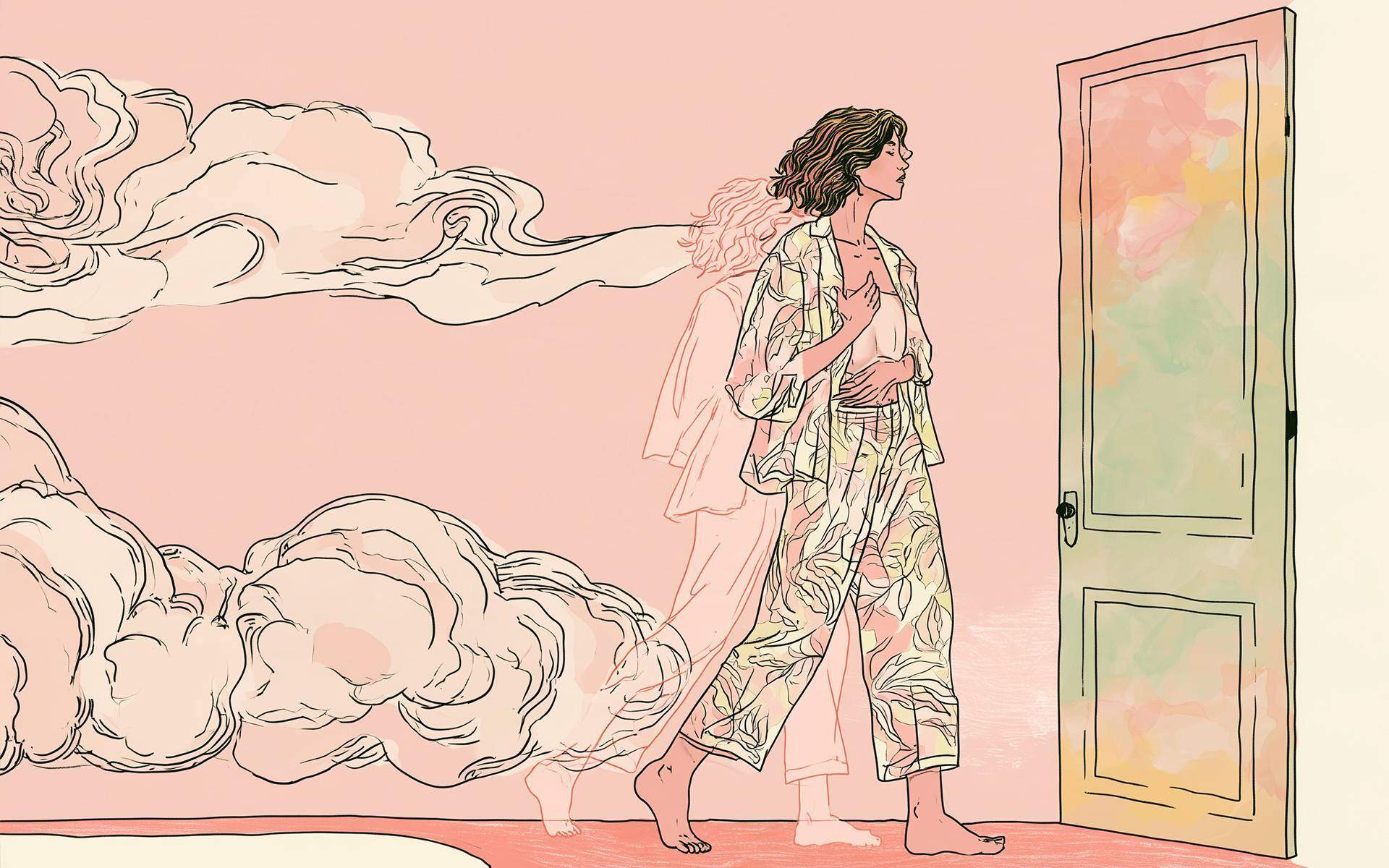
Featured image: A woman in pajamas walks toward an open door, her ethereal trail reflecting the anxiety of decision-making amidst swirling clouds.. Via original publisher. Image source