He knew how to change course—when life shifted, he adapted. That’s a lesson not just for veterans, but for anyone navigating uncertainty.
What Happened
After a decision was made to keep his father in a rehabilitation facility for another two weeks instead of returning home, he left a detailed message on his daughter’s phone.
He spoke slowly, deliberately, so she could take notes. He listed items: a cell phone from his car, a charger from her bedroom, stamps, address labels, note cards, and thumbtacks—though she later realized he likely meant paper clips.
His message ended with gratitude: ‘I really appreciate you doing this for me. I don’t know what I’d do without you girls.’
His Daily Routine in a New Space
When the daughter arrived at the facility the next morning, she found her father already setting up a new daily life.
- The nightstand became his filing cabinet.
- His bedside table was now his desk.
- The rocker was his chair.
With these simple adjustments, he began conducting his daily routine—keeping himself busy, making each day productive, no matter where he was or what circumstances he faced.
How He Learned to Adapt
His ability to adapt didn’t come from luck. It was shaped by early life.
As the youngest of twenty-one children, he grew up sharing meals and beds. Dinner was eaten in shifts. Sleep was shared three to a bed. These experiences taught him to make the most of what was available.
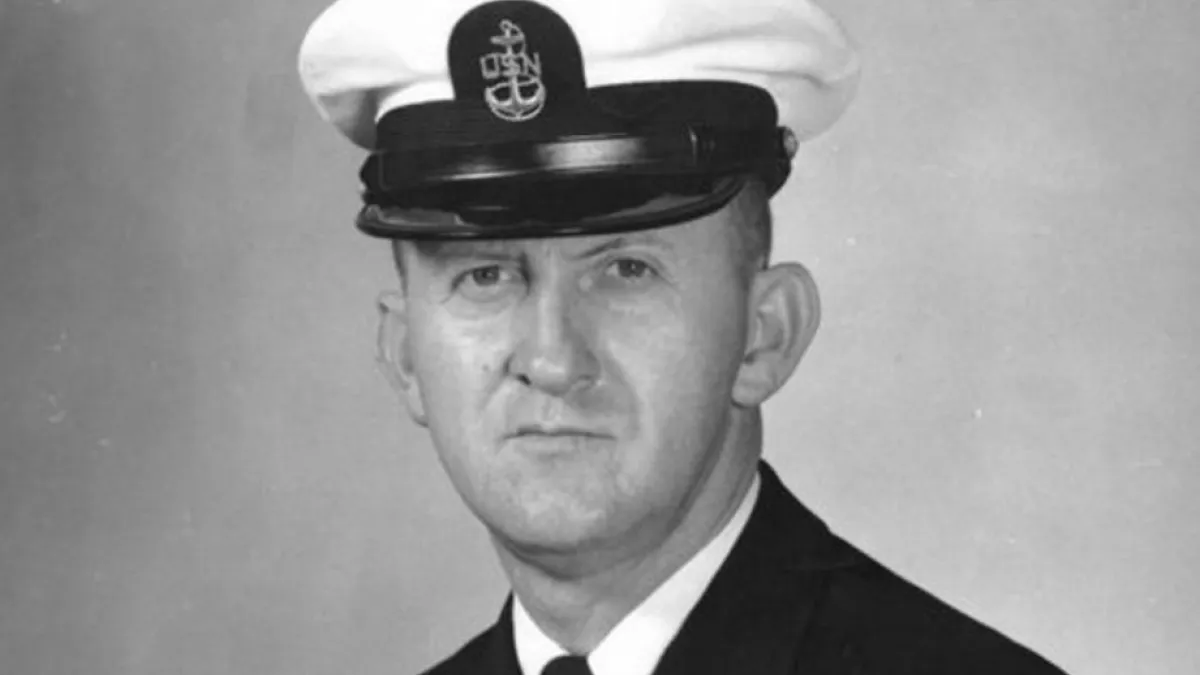
Joining the Navy at age eighteen deepened that skill. He learned to turn a mug of black Navy-issue coffee into a morning ritual. He learned to connect with strangers. He learned to find beauty in small moments—like the sunrise on a ship’s deck during an early watch.
These habits weren’t just survival tactics; they became the foundation of his worldview. In the Navy, he wasn’t just a member of a service—he was part of a culture that valued discipline, resilience, and adaptability. Every day on the ship, whether it was a routine patrol or a storm at sea, he had to adjust to changing conditions. There was no room for hesitation. If a plan failed, he had to pivot quickly. That mindset carried into his personal life.
For instance, during a particularly rough winter in Korea, the ship’s engine failed. The crew had to improvise, using emergency generators and manual tools to keep the vessel afloat. He recalls one night, watching the crew work through the night, when he realized how much strength came from simply accepting what was happening and moving forward. That moment stayed with him. It taught him that adaptability isn’t about having a plan—it’s about having the courage to act when one is missing.
Challenges Since His Wife’s Passing
Since the death of his wife, who had lived with him for sixty-three years, his life has not been easy.
He has faced heart ailments, a hip replacement, a broken wrist, a small stroke, a blood infection, and a stubborn gallstone. Yet, each time, he responded with resilience.
He often said: ‘I am where I am. I don’t know why. I’m not sure what’s coming next. But I’m grateful to be here, with all the love and care that surrounds me. Might as well make the best of it.’
These words weren’t just poetic—they were practical. They reflected a deep understanding of human experience. When illness struck, he didn’t see it as a failure of health, but as a shift in the rhythm of life. He began to view each medical event not as an end, but as a new chapter to be lived with intention.
For example, after his stroke, he initially struggled with mobility and speech. But instead of giving up, he started attending therapy sessions with a focus on small, daily goals—like writing one sentence each day or walking a few steps. Over time, he began to notice how each small act of effort brought a sense of control. That shift in mindset helped him regain not just physical function, but emotional strength.
Why This Matters
His story is not about overcoming hardship. It’s about how he chose to respond to it.
His attitude didn’t change the circumstances. But it changed how he lived within them.
He showed genuine interest in others—calling relatives and friends, going out to lunch, sending notes of appreciation to those who made his days brighter.
His ability to accept what came, to adapt, and to change course at a moment’s notice is not just personal. It’s a lesson in mindset.
Our attitude, the source says, means more than any circumstance. It can shift the course of our days, our moments, and our lives.
What This Teaches Us
When we face difficulty, we have two choices: we can complain, or we can accept the challenge and rise to the occasion.
What we choose makes a world of difference.
Gratitude opens us to new experiences. Embracing a difficult situation improves our perspective—and may even improve the situation itself.
A positive attitude attracts positive energy, which tends to be contagious.
For the daughter, this lesson became a guide in her own life—especially as she adjusted to empty-nest living.
She now sees her father not just as a man who survived war and illness, but as a living example of how to live with grace, even in the face of uncertainty.
His best advice? ‘Accept what comes. Make the best of it.’
She has taken that to heart.
His actions—small, consistent, and deeply human—show that resilience isn’t about enduring pain. It’s about finding meaning in the moment, no matter how uncertain the future may seem.
Whether it’s a medical setback, a life transition, or a sudden change in circumstance, the ability to adapt is not a skill reserved for those with special training or background. It’s a practice—one that can be learned, refined, and lived every day.
For anyone navigating life’s unpredictable turns, the message is clear: change is inevitable. But how we respond to it is what defines our journey.
Original source: Psychology Today
Sources & further reading
Featured image: original publisher image. Via original publisher. Image source