Fireworks Goldenrod is a native perennial known for its bold yellow blooms and strong support for pollinators. It stands out among goldenrod varieties for its compact size and early to mid-autumn flowering. Source: finegardening.com.
What Is ‘Fireworks’ Goldenrod?
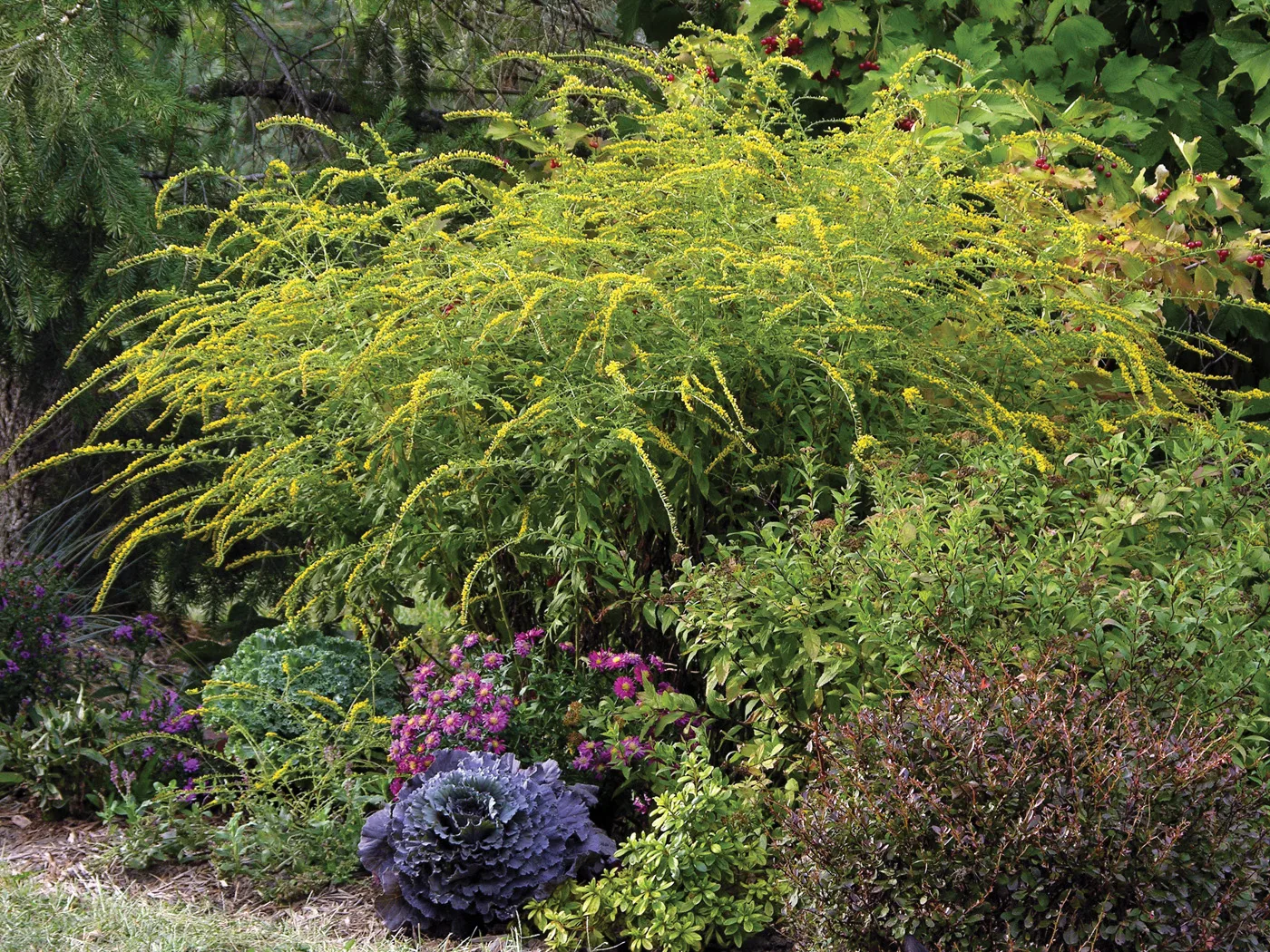
‘Fireworks’ wrinkle-leaved goldenrod (Solidago rugosa ‘Fireworks’) is a cultivar with bright yellow flower spires that rise like fireworks in early to mid-autumn. It grows 3 to 4 feet tall and spreads 2 to 3 feet wide.
Its leaves have a wrinkled texture, which helps the plant conserve moisture. This feature supports its ability to grow in varied conditions. The cultivar balances beauty with ecological function, making it ideal for gardens that value both aesthetics and sustainability.
Growing Conditions and Site Requirements
‘Fireworks’ goldenrod needs full sun for best blooms. It can grow in partial shade, though it may produce fewer flowers there.
It thrives in moist to average, well-drained soil. Prolonged wetness causes root rot. In drier areas, it grows slowly and won’t spread much. This makes it safe for small gardens or containers.
It handles cold winters and hot summers well. Proper drainage is key to prevent disease and poor root growth.
Ecological Benefits
Goldenrods are often blamed for allergies. This is a mix-up with ragweed (Ambrosia spp.). Ragweed produces airborne pollen that causes allergies. Goldenrod’s pollen is heavy and sticky—too heavy to be carried by wind.
‘Fireworks’ goldenrod supports over 120 moth and butterfly caterpillar species. Many are rare or endangered. Its seed heads feed birds and small mammals like finches and squirrels.
As a native plant, it helps local food webs and strengthens garden biodiversity. It’s especially useful in gardens built on ecological principles.
Why Gardeners Choose This Plant
Melissa Starkey of Mt. Cuba Center in Delaware calls ‘Fireworks’ a gateway to goldenrods. It’s easy for all gardeners—new or experienced.
Its bright yellow blooms explode in fall, creating a striking visual effect. The plant grows in clumps, making it ideal for small spaces like patios or containers.
It doesn’t spread aggressively. In drier areas, it stays put. This makes it a reliable, low-maintenance choice.
Personal Experience and Garden Use
Starkey pairs ‘Fireworks’ with native perennials like coneflowers and black-eyed Susans. These combinations create layered, pollinator-rich gardens.
She’s planted it near milkweed, which supports both butterflies and moths. This shows how it fits into a broader ecosystem.
In fall, when other plants fade, ‘Fireworks’ offers a bold golden presence. It marks the transition from summer to autumn.
Limitations and Considerations
It needs well-drained soil. In consistently moist spots, it may spread slightly. Avoid compacted or poorly drained soils.
It doesn’t grow well in very dry or compacted soils. In hot, dry summers, occasional watering may help.
Performance may vary by region, though it is native to central and eastern North America.
How to Use in a Garden
‘Fireworks’ goldenrod works well as a standalone feature or in mixed plantings. It pairs well with native perennials in borders, beds, or containers.
Its late-summer to autumn bloom time supports pollinators during fall. It fits well in gardens designed for biodiversity and local wildlife.
Further Resources
- Original article on Fine Gardening
- Super Cool Plants Podcast
- Planting in a Post-Wild World by Thomas Rainer and Claudia West
For more native plant ideas, visit the Fine Gardening website. It offers guidance on building resilient, ecologically balanced gardens.
Sources & further reading
Featured image: Solidago rugosa ‘Fireworks’ in a garden border in bloom. Via original publisher. Image source