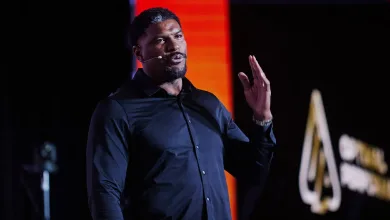
How do you bounce back from public failure? The answer may not be shameless denial — it might be showing remorse. Source: theguardian.com.
Even the most competent professionals can make mistakes. But how they respond to those mistakes defines their legacy. A recent column by Gaby Hinsliff explores this through real-life cases — from a senior NHS surgeon to a former civil servant — and draws a sharp contrast between public failure and personal accountability.
One Mistake, One Life
Dr Gabriel Weston, a respected surgeon at the NHS, made a serious error in the operating theatre this summer. It was so severe it was classified as a ‘never event’ — something that should never happen under proper medical processes. Medical ‘never events’ include procedures like wrong-site surgery or administering the wrong medication, all of which are considered unacceptable in any functioning healthcare system.
She didn’t hide it. Instead, she shared her experience in a series of Instagram and Substack posts. The posts revealed her emotional response: ‘ashamed and alone and really quite nervous’. This level of vulnerability is rare in high-stakes professions, where fear of reputational damage often leads to silence. Weston says she only spoke up because she felt her employer had failed to support her. She had requested a reduced surgical schedule to manage workload pressure — a request now fulfilled. Her hospital responded positively, and she now praises their support.
Her story is not unique. Many professionals face similar moments of failure, yet few speak openly about them. Public inquiries often recommend transparency — but the same failures keep repeating. This suggests a systemic issue: institutions may prioritize protecting appearances over fostering a culture of learning from error.
Public Failures and the Cost of Silence
When Liz Truss released her book Bank Job, it drew sharp criticism. The book blames the Bank of England for the collapse of her mini-budget — not her own decisions. Her former allies at the Telegraph called the policy ‘deranged’. The book, however, shows a pattern: Truss avoids direct accountability. She doesn’t engage with the failure as it should be — with honesty or reflection.
Unlike Keir Starmer, who quietly stepped away from public commentary after his brief time in Downing Street, Truss refuses to withdraw. She refuses to face the failure directly. This absence of reflection is not just a personal lapse — it reflects a broader cultural tendency in politics to deflect blame rather than confront it. Public figures often use books or media appearances to reframe failure as a misjudgment of external forces, rather than an admission of personal or strategic error.
For many, public failure is not about the outcome — it’s about the response. The failure that haunts people is not the one that ends in disaster, but the one that happens under pressure — when someone is tired, overworked, or stressed. These are not failures of character, but of systems under strain. The pressure of political leadership, the weight of public expectation, and the fatigue of long-term service can all contribute to poor decision-making.

What Happens When a Mistake Is Made?
Richard Jackson, a high-ranking civil servant, accidentally took two classified documents home. He realised the error that night and decided to sneak them back — only to leave them on a train. The documents were found by a BBC reporter and led to a major security scandal. Jackson lost his job and nearly died by suicide.
In a BBC Radio 4 episode, he shared advice for coping: write down dark thoughts, keep a list of positive feedback, and never let one mistake define your life. These are personal strategies. But Hinsliff argues for something deeper — a culture of professional ‘care and acceptance’.
People who fail should not be shamed. Shame drives cover-ups and silences. True failure is not about being wrong — it’s about not learning from it. In institutions, the failure to acknowledge mistakes undermines trust. When a mistake occurs, the response should not be to hide or deflect, but to examine the root causes — whether it’s a flawed process, inadequate training, or excessive pressure.
Shamelessness is often seen as a sign of strength. But in public life, it can be a shield. The real shame lies with those who refuse to offer grace to those who have failed. A culture that celebrates accountability — not just for results, but for process — is essential for long-term resilience.
Why This Matters
Public institutions — from hospitals to government — rely on trust. When people fail, the system must respond with honesty, not silence. Failure is not a personal flaw. It’s a signal that systems may be under strain. When professionals admit mistakes, it opens space for learning — not just for individuals, but for institutions.
For leaders, the lesson is clear: public failure should not be met with evasion. It should be met with reflection, accountability, and, when possible, remorse. As Hinsliff writes, people who examine their mistakes deserve grace. The true failure is not in making a mistake — it’s in refusing to face it.
For those facing personal or professional failure, resources exist. In the UK and Ireland, Samaritans can be contacted at 116 123. In the US, call or text 988 or visit 988lifeline.org. In Australia, contact Lifeline at 13 11 14. More international helplines are available at befrienders.org.
These stories — from a surgeon to a civil servant — show that failure is not the end. It is a moment when honesty becomes the most powerful tool for recovery.
Sources & further reading
Featured image: original publisher image. Via original publisher. Image source