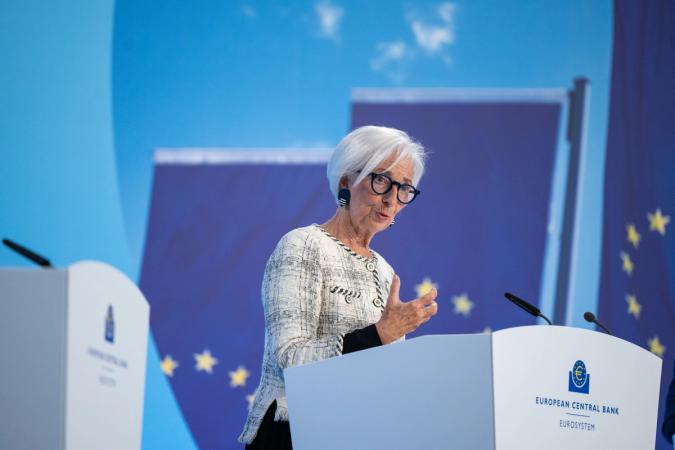
ECB President Lagarde warns Europe could lose control of growing tokenized asset market Source: coindesk.com.
She emphasized that without coordinated regulatory action, the EU risks losing oversight of digital asset transactions.
What Happened
During a public briefing, Lagarde highlighted the growing use of blockchain-based tokenized assets—such as digital bonds and securities—within financial markets.
The event coincided with a successful 1 billion euro ($1.1 billion) digital bond transaction through the EU’s new blockchain settlement system.
The transaction proved blockchain can handle real financial instruments. It involved issuing and settling a digital bond using a secure, interoperable system.
The system reduces settlement risk and improves efficiency in financial operations.
Key Facts
- The transaction was valued at 1 billion euros, a major milestone in digital asset settlement.
- The EU’s blockchain settlement system supports real-time, secure, and transparent financial operations.
- Lagarde called for harmonized rules across member states to ensure consistent oversight.
- Tokenized assets are digital versions of traditional financial instruments like bonds or shares, recorded on a blockchain.
Background: How the System Works
The EU’s blockchain settlement system is a shared infrastructure for financial institutions.
It allows institutions to issue and transfer digital assets without traditional intermediaries.
Each transaction is recorded on a distributed ledger. This ensures transparency and prevents tampering.
The system follows existing financial regulations. But it creates new challenges in cross-border compliance and data privacy.
Tokenized assets have existed in private markets for years. Their use is now expanding into public financial systems.
Why It Matters
Lagarde’s warning shows a growing gap: financial innovation may outpace regulation.
As more institutions adopt tokenized assets, some countries may create different rules.
This could allow assets to move to regions with weaker oversight—a practice known as regulatory arbitrage.
Without common standards, the EU may lose influence over how digital assets are issued, traded, and settled across borders.
Limitations and Open Questions
The source does not detail how widely tokenized assets are used across the EU.
There is no data on how many institutions use the system or the total value of transactions.
It does not name which countries lead in adoption or whether any have launched tokenized instruments in public markets.
There is no information on whether the system has been tested under stress or how it handles failures or fraud.
The transaction was successful, but it’s unclear if it was a pilot or a full-scale deployment. The system’s long-term viability remains unverified.
What to Watch Next
Regulators will need to develop a unified approach to tokenized assets.
They may soon draft a regulatory framework for digital securities.
Financial institutions may begin offering more tokenized products to clients.
This could increase public exposure to digital assets and raise consumer protection concerns.
Market participants will monitor whether the ECB or other bodies issue guidance on compliance, reporting, and risk management for tokenized instruments.
Sources & further reading
Featured image: original publisher image. Via original publisher. Image source