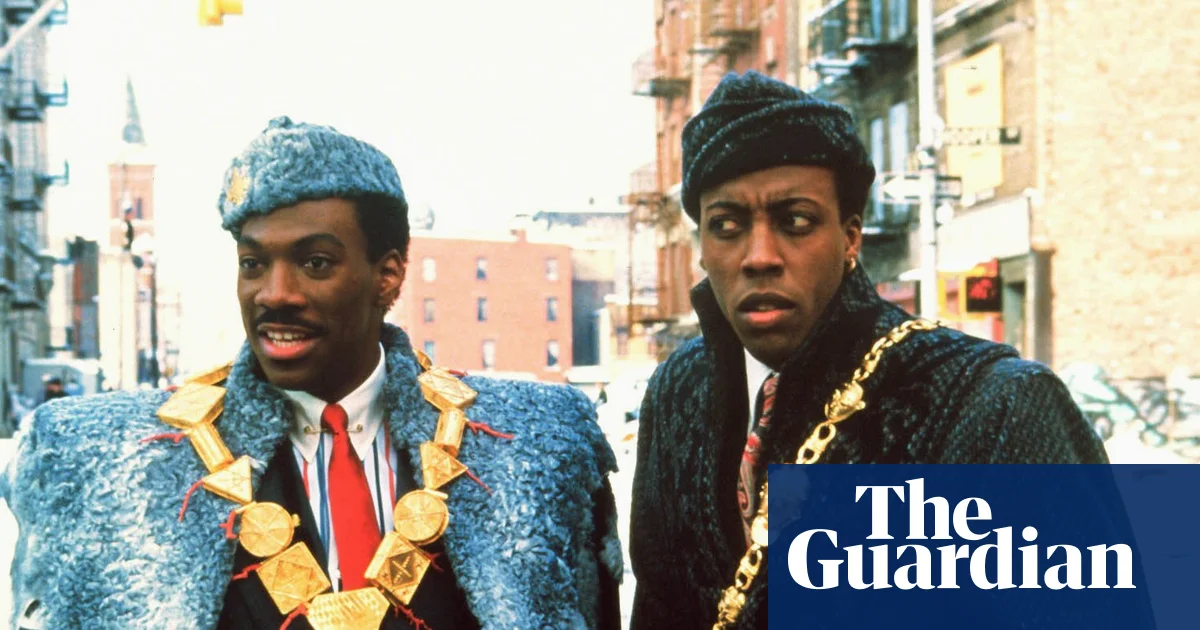
Coming to America is more than a comedy. It’s a cultural touchstone for many, especially those of African descent in the United States. The film opens with a scene that captures the essence of cultural clash. Prince Akeem, played by Eddie Murphy, shouts from a Queens balcony: Good morning, my neighbors!
A voice below yells back: Hey, fuck you!
Akeem, misunderstanding the insult as a greeting, repeats it back. Source: theguardian.com.
This moment is absurd, yet effective. It highlights the gap between American and African cultural expressions. The scene doesn’t just show difference—it makes it visible and relatable. In a society where communication styles and social cues vary widely, such a moment underscores how language and etiquette can be both a bridge and a barrier.
Prince Akeem and the Quest for Love
Prince Akeem is the heir to the fictional African nation of Zamunda. Instead of an arranged marriage, he chooses to find a bride on his own. His parents disapprove, seeing it as a loss of tradition. This decision reflects a broader cultural shift—moving from rigid, inherited expectations to personal autonomy in relationships. Akeem’s journey is not just about romance, but about self-discovery and the courage to challenge norms.
With a coin toss and a globe roll, Akeem and his sidekick Semmi travel to America—specifically to Queens. The choice of location is symbolic. It reflects the real-life diversity of New York, where people from all over the world live side by side. The film uses Queens not just as a backdrop, but as a character in its own right—representing a melting pot of cultures, languages, and economic backgrounds.
His target: Lisa, the heiress to McDowell’s, a fast-food chain. She’s already engaged to another man. Akeem hides his royal identity and works at the restaurant to gain her trust. He adopts a working-class persona, dressing simply and speaking like a regular man. This transformation is not just a plot device—it’s a commentary on social mobility and the power of humility. By stepping into the role of a commoner, Akeem learns the value of everyday experiences and the dignity of ordinary labor.
Characters That Reflect Real Life
The cast is a who’s who of Black Hollywood. It includes Arsenio Hall, James Earl Jones, Madge Sinclair, Garcelle Beauvais, and early appearances by Samuel L. Jackson and Cuba Gooding Jr. The actors come from the U.S., Jamaica, and Haiti. Their performances reflect a rich blend of cultural expressions. The film isn’t just about romance—it’s about belonging, identity, and intercultural connection.
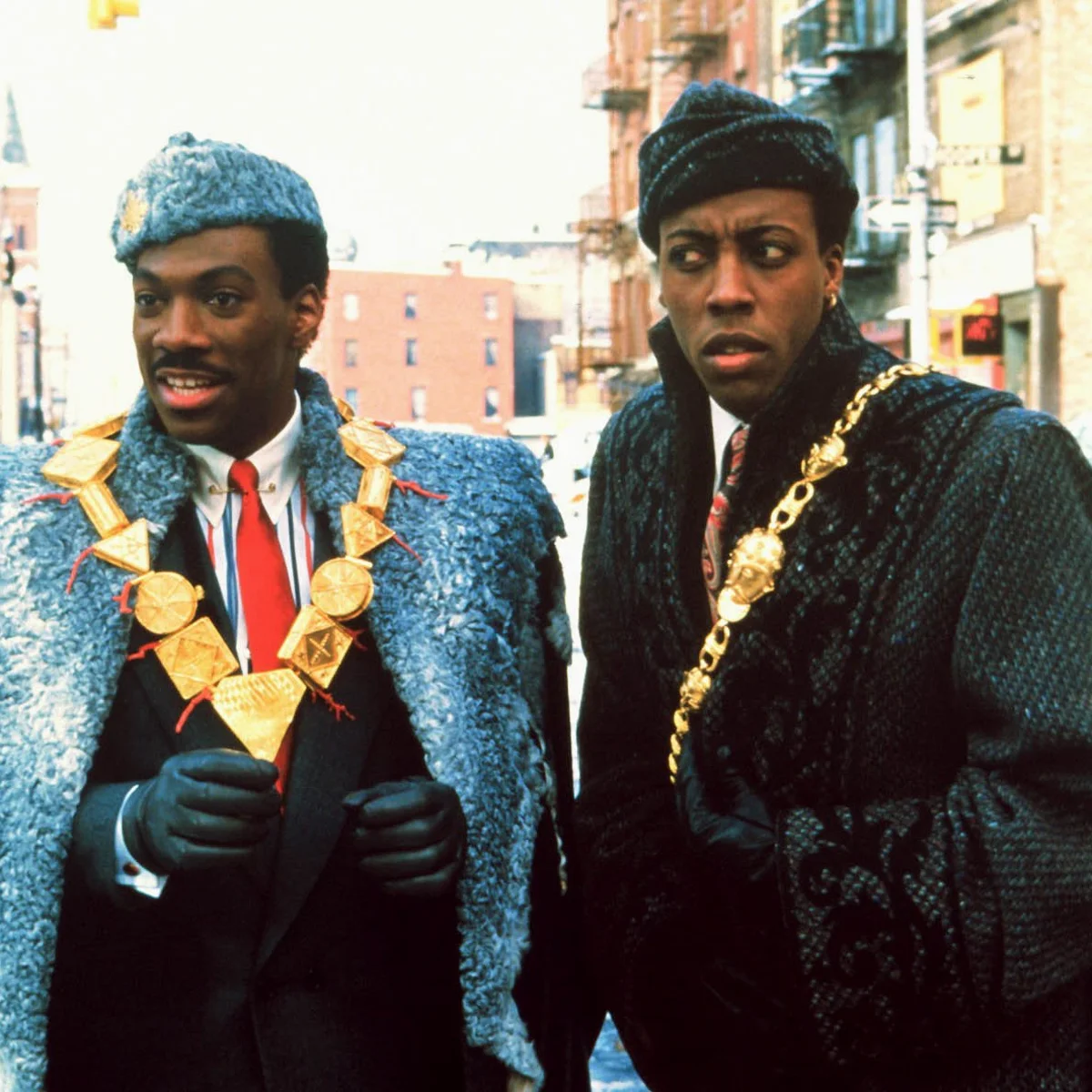
Women in the film wear bold, vibrant clothing. Men have Jheri curls or low afros. The music is a mix of Paula Abdul’s dance and Nile Rodgers’ soulful production. These details ground the story in a specific time and place—1980s America. The fashion, music, and dialogue are not anachronistic; they are authentic representations of a period when Black American culture was being celebrated and redefined on screen.
A Personal Connection
One writer recalls a childhood memory: they’re not sure when they first saw the film, but there’s no moment in their childhood when Coming to America wasn’t present. Every time it aired on TV, their mother and they would watch it together. They’d sit on her ottoman in her bedroom or curl up on the living room couch, laughing at scenes they’d already seen dozens of times. For many Black households, the film was a regular presence—something that wasn’t just entertainment, but a shared experience.
They didn’t grow up watching Trading Places or Beverly Hills Cop. Coming to America was their first exposure to romantic comedy. Unlike the idealized stories of Disney or Mary Kate and Ashley films, Coming to America allowed them to see themselves reflected. The characters weren’t perfect—they were flawed, real, and lived-in. This authenticity made the film deeply personal. It wasn’t about perfection—it was about people navigating real-life challenges with humor and heart.
Legacy and Influence
Though the film received mixed reviews upon its initial release, it has since developed a strong cult following. Artists such as Busta Rhymes, Nas, and Kanye West have all cited it as a key influence on their work. The film’s rapid-fire dialogue, physical comedy, and cultural references have become a blueprint for Black comedic storytelling in film and music.
Its impact extends beyond music. The Barbershop franchise, for instance, draws on Murphy’s character work and comedic timing. The film’s style of rapid-fire dialogue and cultural humor has shaped a generation of Black comedy. The way characters navigate social situations—whether it’s a barbershop debate or a restaurant interaction—mirrors real-life dynamics in multicultural communities.
Coming to America isn’t just a love story. It’s a story about identity, migration, and cultural pride. It shows how people from different backgrounds can find common ground. The film celebrates the everyday—whether it’s a fast-food restaurant or a Queens apartment building. It reminds viewers that joy, connection, and belonging are not reserved for the elite or the royal—they are found in the ordinary.
Why It Matters Today
For someone who has lived and fallen in love in New York, the film remains a powerful reminder. It captures the awkwardness and beauty of cultural encounters. The film shows how a prince can become a commoner, and how a commoner can become a prince in spirit. It celebrates the everyday—whether it’s a fast-food restaurant or a Queens apartment building.
Coming to America is available to rent digitally in the US, UK, and Australia. It remains a vital piece of American pop culture. As a film that blends romance, humor, and cultural identity, it continues to resonate. It reminds viewers not just of a bygone era—but of a shared human experience.
- Prince Akeem’s journey reflects the search for identity in a multicultural society.
- The film features a diverse cast that represents real diasporic communities.
- Its humor and visuals are rooted in 1980s American culture.
- It has influenced major artists and comedic traditions.
- It remains a symbol of cultural pride and shared experience.
Coming to America is more than a feelgood movie. It’s a mirror held up to the diversity of American life.
Sources & further reading
Featured image: original publisher image. Via original publisher. Image source