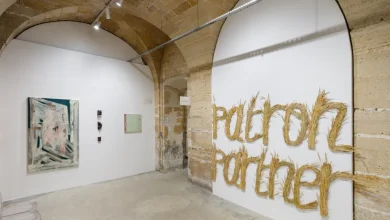
After four decades of public exhibitions, the Faurschou Foundation has ended its New York program. The space was never reopened after a closure announced in March 2025. Source: artnews.com.
What Happened
The Faurschou New York outpost closed in March 2025 for renovations. It did not reopen. The closure was officially confirmed by the foundation.
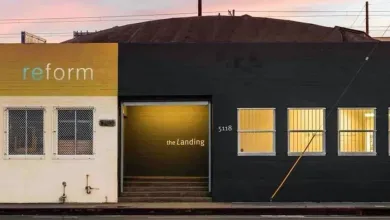
City records show the building was sold in June 2025 to a real estate developer. The city has approved demolition of the structure. A condominium project is planned for the site.
Founder Jens Faurschou stated in April that public exhibitions at the New York location were over. He described the closure as the end of a chapter, not a failure.
Key Facts
- Founded in 1986 in Copenhagen as a private art museum and consultancy.
- Opened a New York space in 2019, compared to major collector-founded institutions like the Hill Art Foundation and Brant Foundation.
- Not a 501(c)(3) nonprofit, distinguishing it from traditional art institutions.
- The Greenpoint building was sold in June 2025 to a developer.
- Demolition has been approved by the city.
- A condominium complex is planned for the site.
Background: How It Worked
When Faurschou New York opened in 2019, it was seen as a bold move by a private art collector to establish a public-facing presence in New York. The New York Times described it as comparable to institutions like the Hill Art Foundation and the Brant Foundation.
Unlike those institutions, Faurschou New York was not a nonprofit. It operated as a private entity, with no tax-exempt status. This structure limited its ability to sustain long-term public programming or receive institutional funding.
The foundation has maintained a focus on art curation and private collection, rather than public access or community engagement. Its exhibitions were curated with a strong emphasis on contemporary art, often featuring emerging artists.
Despite initial expectations, the New York space never achieved the scale or visibility of other major art institutions. Attendance and public interest remained modest.
Why It Matters
The closure signals a shift in how private collectors engage with public art spaces. It reflects broader challenges in sustaining non-profit, privately funded art institutions in major cities.
With fewer public art venues operating independently, the model of private collectors building public spaces may become less viable. Faurschou’s exit offers a case study in the limitations of such models.
Its closure also underscores the difficulty of balancing private ownership with public access. The lack of nonprofit status limited long-term financial and operational resilience.
Limitations and Open Questions
There is no public record of audience feedback or visitor data from the New York exhibitions. The foundation did not release metrics on attendance or engagement.
While the closure was framed as a natural conclusion, it raises questions about the sustainability of private art institutions in competitive urban environments.
There is no indication that the foundation will reopen the space or shift to a new format. The sale and demolition confirm the end of the project.
Some critics have questioned whether the space ever fulfilled its public mission. Others note that private art initiatives can still play a role in supporting emerging artists.
For now, the Faurschou New York project remains a footnote in the history of contemporary art institutions in New York.
Founder Jens Faurschou has said the decision was not driven by financial issues or artistic failure. He emphasized that the foundation’s mission was always to support art, not to build a permanent public monument.
He described the closure as a personal and philosophical conclusion: After four decades, Faurschou’s public exhibitions are over.
For the public, the closure marks the end of a physical presence that once offered access to contemporary art in a major city. The site will be replaced by a residential building.
Visitors who once attended exhibitions may now see only the memory of a space that once existed.
Sources & further reading
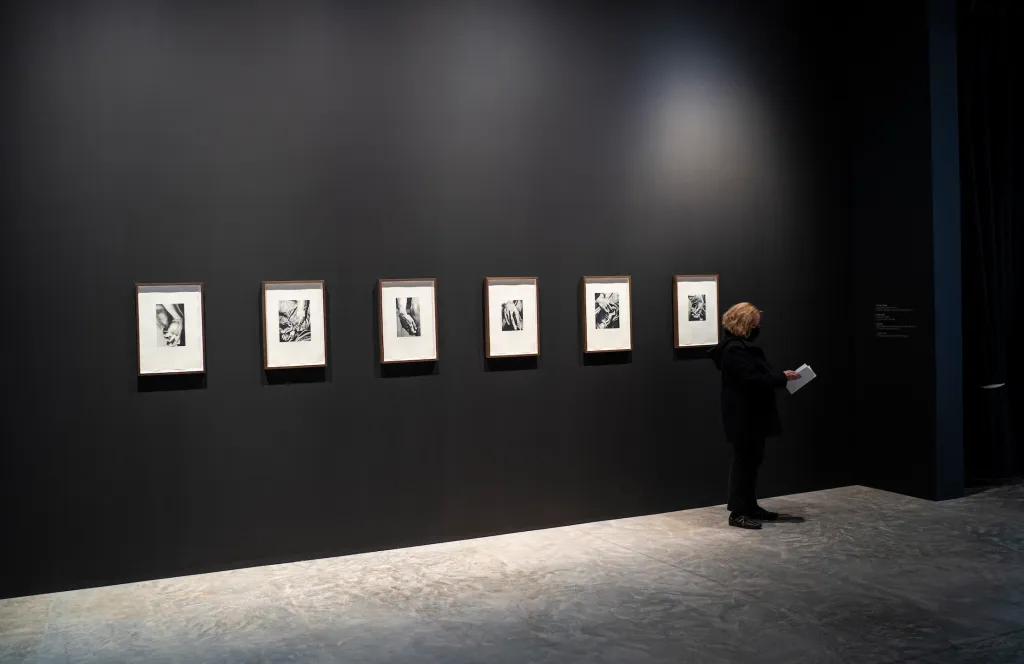
Featured image: NEW YORK, NY – DECEMBER 2: Black and white gravure photographs hang at the Faurschou New York Museum on December 02, 2020 in New York City. The private museum in Brooklyn's Greenpoint neighborhood is owned by the Danish philanthropist and art collector, Jens Faurschou. (Photo by Robert Nickelsberg/Getty Images). Via original publisher. Image source