The 2020 Oregon wildfires burned over 1 million acres and killed 11 people. Smoke spread across the Pacific Northwest, affecting both wine and hop farms. Source: arstechnica.com.
Smoke Taint in Hops: What It Is and How It Forms
Smoke taint happens when plant material like hops is exposed to high heat during wildfires. The main chemical is volatile phenols (VP), formed when lignin in plant cell walls heats up. This changes hops’ natural aroma, replacing citrus or herbal notes with smoky, meaty, medicinal, or artificial BBQ flavors.
Hops are typically dried in kilns after harvest. This drying stage is when smoke exposure has the biggest effect. Even brief smoke exposure during kiln drying can greatly increase VP uptake. Oregon State University researchers found this makes hops more likely to impart smoky flavors in beer.
Without action, the entire beer supply chain could face reputational and financial harm.
How Researchers Tested the Impact on Beer
Scientists at Oregon State University led by Thomas Shellhammer and graduate student Cade Jobe tested how smoke-tainted hops affect beer. They used Idaho-grown Cascade hops, a common choice in craft brewing.
The hops were split into two groups. One group was smoked in a kiln using wood pellets in the air intake. The control group dried normally without smoke. This allowed them to isolate smoke’s effect on hop chemistry.
They brewed several beer batches using two methods: dry-hopping—adding hops after fermentation—and boiling, where hops are added during wort boiling.
Gas chromatography measured volatile phenol levels in each batch. A panel of 24 trained tasters evaluated the aroma and flavor under blind conditions.
Key Findings: When and How to Use Tainted Hops
When hops were dry-hopped, smoke-tainted hops increased volatile phenol levels. The more tainted hops used, the stronger the smoky and meaty flavors became. Tasters described the aroma as artificial, like burnt wood or grilled meat.
When hops were added during boiling, the beer was nearly identical to one made with no smoke-tainted hops. Though VP levels rose, the flavor remained acceptable. This suggests heat during boiling can reduce or mask smoke taint.
Timing matters. Adding hops during boiling acts like a natural filter, minimizing the negative impact of smoke taint.
Practical Guidance for Brewers
Brewers should blend smoke-tainted hops with untainted ones when dry-hopping, but keep the blend under 50%. This limit prevents strong smoky flavors from overwhelming the beer.
For brewers using hops during boiling, smoke-tainted hops can be added without noticeable flavor changes. This helps maintain beer quality and supports supply chain stability during wildfire seasons.
The research gives hop growers and brewers practical tools to respond to environmental disruptions. Growers can better assess post-fire crop quality. Brewers can make informed choices about ingredient use.
Limitations and What’s Next
The study used lab-simulated smoke, not real wildfires. In actual fires, hops may be exposed while still growing, which could change chemical outcomes. Future research must test smoke exposure during active plant growth.
Consumer studies are needed to see if the general public finds blended beers—especially with up to 50% tainted hops—acceptable. Tasters found boiling methods acceptable, but broader public acceptance is still uncertain.
The findings do not apply to wine. Grapes are the main ingredient in wine, and fermentation differs from beer. Smoke taint is not a factor in wine brewing in the same way.
The study was published in the Journal of the American Society of Brewing Chemists (DOI: 10.1080/03610470.2026.2749166). The full paper is available at tandfonline.com. More data on smoke exposure in field conditions is available at Oregon State’s Smoke Exposure Research Page.
For background on the 2020 Oregon wildfires, see Wikipedia.
Thomas Shellhammer said the goal was to give brewers practical, actionable guidance. He noted that while smoke-tainted hops are a challenge, the brewing process—especially boiling—can reduce their impact.
Cade Jobe, who worked closely with Shellhammer, asked: can brewers still use affected hops without sacrificing quality? Beyond that, flavor degrades noticeably.
Both researchers agree the findings are promising but preliminary. Real-world factors—like smoke intensity, timing, and handling—may differ from lab conditions. Larger-scale field studies are needed to confirm these results.
Sources & further reading
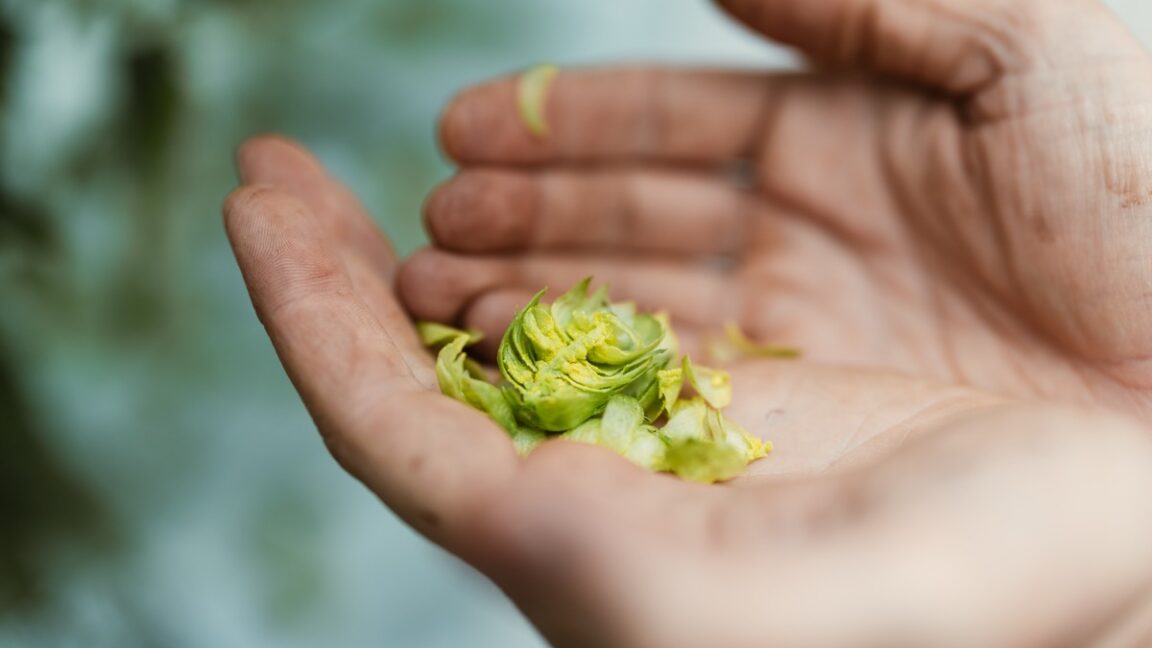
Featured image: cupped pair of hands holding freshly harvested hops. Via original publisher. Image source