A young woman in Maine in the mid-1990s found a turning point in her life after discovering a riot grrrl song. It wasn’t a grand event or a public movement. It was a single album, Call the Doctor, by Sleater-Kinney. Source: theguardian.com.
What Happened: A Relationship and a Record
She was in her first year of high school. She played jazz clarinet and read Virginia Woolf. She had always been a quiet, introspective student, drawn to literature and the emotional depth of human experience.
Her boyfriend was a lanky, dark-haired boy with a band T-shirt. He seemed like a rebel, a kindred spirit. They began spending time together—lunches, phone calls, shopping for records. He was passionate about music, collecting mixtapes filled with songs by the Flaming Lips, Liz Phair, and other alternative acts. He named one of his guitars after PJ Harvey, a gesture that showed his admiration for women in rock and his interest in feminist expression in music.
He taught her how to play chords on a borrowed acoustic guitar. That moment—her first tentative strumming—felt like a breakthrough. It wasn’t just about music; it was about agency. For the first time, she felt like she could create something of her own, something that didn’t depend on approval from another person.
They dreamed of moving to Seattle after school. He would play music. She would write. Their bohemian future seemed real. The idea of a shared life, built on mutual creativity and independence, felt tangible and hopeful.
When Control Took Over
Then she was invited to join a band. He refused to go with her to buy an electric guitar. He said it was his thing, not hers. That simple statement marked a shift in the dynamic of their relationship.
At first, she thought it was a minor disagreement—perhaps a misunderstanding. But soon, the behavior intensified. He began demanding to know where she had been, what music she listened to, and why she was spending time with other musicians. He begged her to quit guitar, claiming it was too intense, too dangerous for a girl.
She told herself he was just sensitive. His jealousy was a sign of love. But the reality was more complex. His demands weren’t about music—they were about control. He wanted her to conform to his vision of what a woman should be, what a woman should do. She felt trapped between who she wanted to be—a creative, independent person—and who he wanted her to be—a passive, obedient partner.
She didn’t speak to friends or teachers about it. She was afraid of being judged, of being seen as unstable or rebellious. She didn’t have the language to describe what was happening—only the emotional weight of it. It wasn’t just about music; it was about identity, autonomy, and the right to choose one’s own path.

Discovery of Sleater-Kinney
One day, she found an article in an old copy of Spin magazine. It introduced Sleater-Kinney—a trio of women from Olympia, Washington. The article described them as part of the riot grrrl movement, a grassroots feminist music scene that emerged in the early 1990s, primarily in the Pacific Northwest.
The article emphasized their role in challenging gender norms in music. It said their second album, Call the Doctor, was essential listening—particularly for anyone interested in female empowerment and resistance to patriarchal structures.
She felt a sudden recognition. The music sounded like something she had always dreamed of—raw, unapologetic, and defiant. It wasn’t polished or performative. It was real, messy, and unafraid to confront uncomfortable truths.
She found the album in a used CD bin. The cover featured a woman lying in the middle of a street—either dead or defiant. The image was stark, powerful, and unapologetic. It wasn’t just a photo; it was a statement. It suggested that women could stand up to power, even when it meant facing violence or isolation.
Her boyfriend rolled his eyes when she bought it. He didn’t understand the power of the image or the music. To him, it was just another rock record. To her, it was a mirror—reflecting the reality of her own life and the choices she had been forced to make.
That Night: A Moment of Awakening
Later that night, alone in her room, she played the album.
The sound was aggressive—detuned guitars, distorted vocals. Corin Tucker’s voice soared and sneered: We’re s’posed to be free / I’m s’posed to be mine.
For the first time, she heard women not waiting for permission. Not answering to a man. They were fully themselves. The music wasn’t just entertainment—it was a statement of independence. It validated her own desire to create, to express, to exist on her own terms.
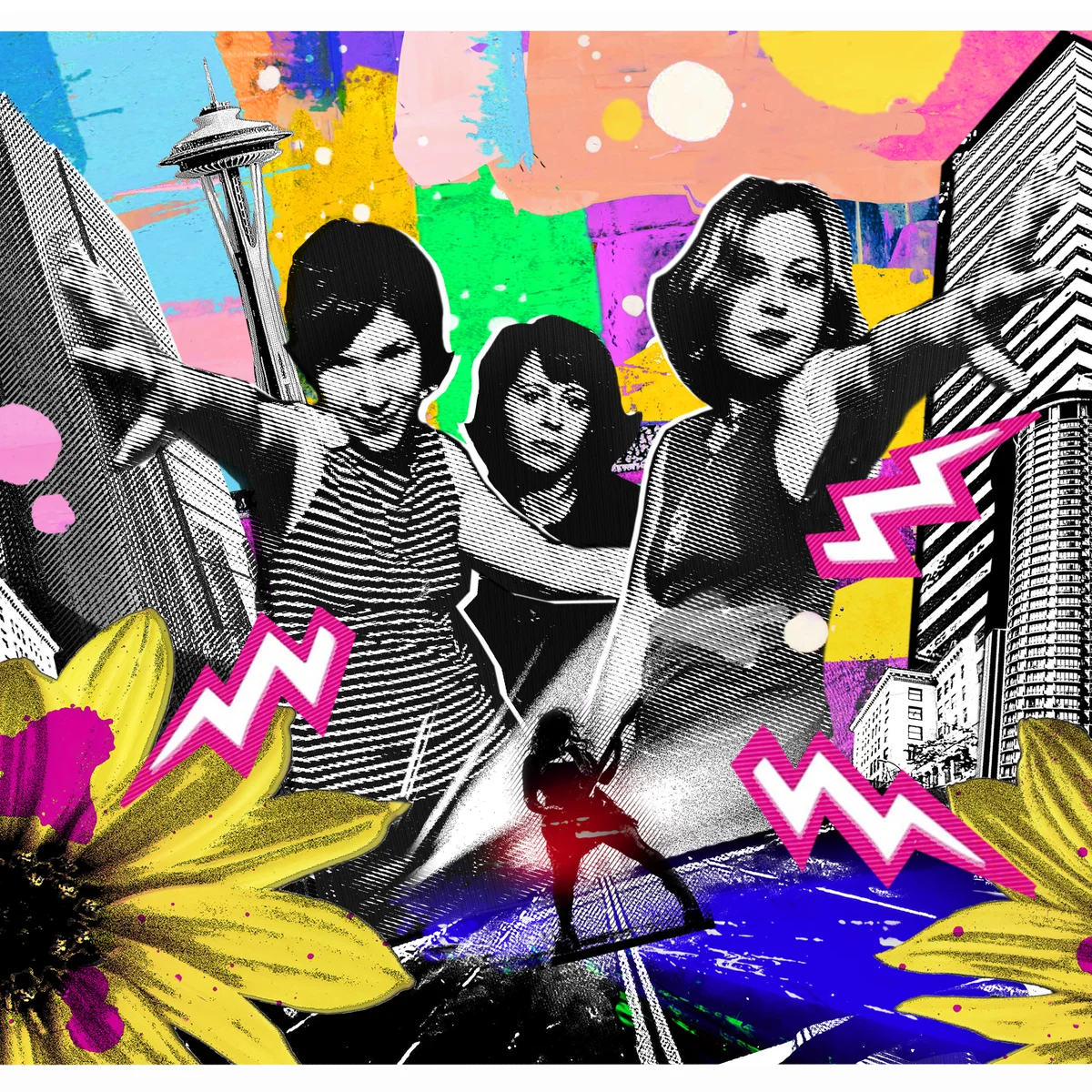
Breaking the Relationship
During one of their nightly phone calls, which always ended in fights, she played the album.
She said, Don’t call me any more.
Then she hit play and dropped the phone. There was no negotiation. No apology. No hesitation. She made a clear, decisive choice—she was no longer in a relationship that stifled her growth.
Aftermath: A Life Rebuilt
She joined a peer-training group for teens. The group taught her how to identify controlling and abusive behaviors—gaslighting, emotional blackmail, isolation, and the manipulation of intimacy.
She learned that emotional control is not love. It is a form of power, often disguised as care. The group provided her with tools to recognize these patterns and to protect herself in future relationships.
Today, she is an educator, writer, and musician. She works to create spaces where women can connect and speak truth to power—whether in classrooms, workplaces, or open-mic nights. Her work is rooted in the belief that music, storytelling, and education can be powerful tools for personal and collective liberation.
Call the Doctor turned 30 this spring. It still sounds urgent and necessary. The album remains a powerful symbol of female autonomy in music. While Sleater-Kinney has evolved as artists, the raw power of that record is unmatched. It opened a door—not just for the band, but for her life.
It shows how a single piece of music can act as a cultural awakening. A dissonant chord can point to a different way forward.
For anyone in a controlling relationship, the message is clear: You are not alone. You are not defined by someone else’s expectations.
Domestic violence support is available. In the US, call 1-800-799-SAFE (7233). In the UK, call 0808 2000 247 or visit Women’s Aid. In Australia, call 1800 737 732. International helplines are available at befrienders.org.
Sources & further reading
Featured image: original publisher image. Via original publisher. Image source