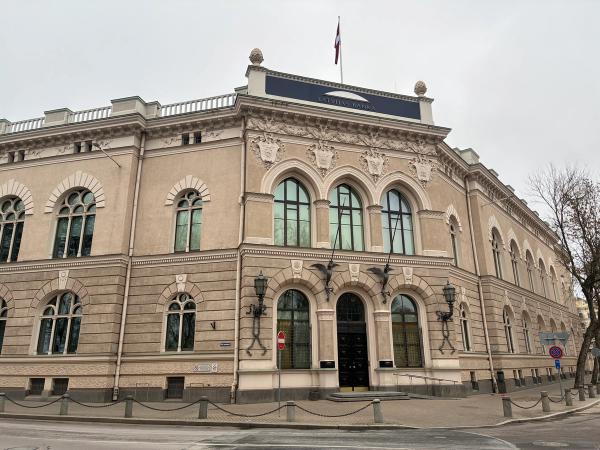
Latvia’s central bank has taken a cautious stance on cryptocurrency reserve plans, rejecting proposals to hold bitcoin as a national reserve asset.
Central Bank Rejects Bitcoin Reserve Proposal
Latvia’s Financial Intelligence Unit (FIU) has backed a 10% crypto tax declaration window, signaling a regulatory approach that prioritizes oversight over adoption.
However, the central bank has explicitly pushed back on plans by private entities to use bitcoin as a reserve asset. This position reflects a broader shift toward risk assessment rather than financial innovation.
According to a report from Coindesk, the bank has raised the risk rating of crypto firms to ‘medium-high’—a clear signal of regulatory concern.
Why the Central Bank Took a Cautious Approach
Latvia has long been a pioneer in digital asset regulation. It launched the e-currency ‘Lats’ and has experimented with digital identity and tokenization.
Yet, the central bank emphasized that holding bitcoin as a reserve would expose the nation to volatility and liquidity risks. It cited a lack of transparency in how such assets are managed and stored.
One official stated, ‘We are not against innovation, but we must ensure stability and accountability in financial systems.’ This reflects a balanced view that values progress without compromising macroeconomic resilience.
Tokenization Policy Moves Forward
While rejecting bitcoin reserves, the central bank has taken a more open stance on tokenization—particularly in commercial property.
This could allow ownership of commercial properties to be represented as digital tokens on a blockchain.
Such a move aligns with global trends in digital asset use. It may offer new financing tools for small businesses and investors, especially in rural areas.
However, the central bank has stressed that these rules must include strong compliance and audit mechanisms. It warns against unregulated token issuance that could undermine financial stability.
Comparison with Other Countries
Latvia’s approach contrasts with countries like El Salvador, which adopted bitcoin as legal tender. Others, such as China, have banned crypto assets entirely.
France recently blocked a crypto tax and wallet registry initiative, echoing concerns about privacy and surveillance. This shows a broader global debate over digital asset governance.
Latvia’s position may reflect a middle path—supporting innovation while maintaining financial stability.
What to Watch Next
Regulators will monitor how tokenization evolves in commercial real estate.
Investors and firms should remain cautious about any claims of bitcoin reserves in national portfolios. The central bank has not endorsed such plans.
For a broader view of global crypto regulation, see France Blocks Crypto Tax and Wallet Registry.
On the risks of crypto asset recovery, see Tether Can Freeze Stolen Crypto in Minutes — Recovery Takes Years.
The central bank’s actions show a clear priority: stability over speculation. This approach may influence how other nations treat digital assets in the coming years.
Sources & further reading
Featured image: original publisher image. Via original publisher. Image source