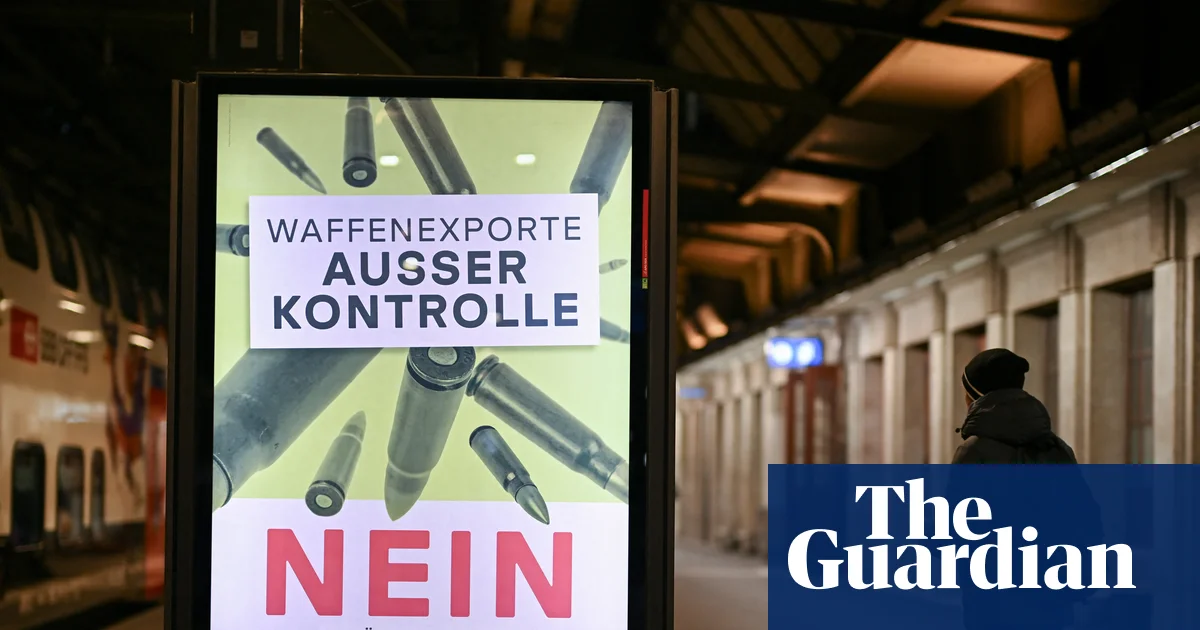
Swiss voters have approved a change to arms export rules, allowing the country to sell weapons to 36 Western nations—including EU members, the UK, Canada, Japan, and the US—even if those countries are involved in conflicts. Source: theguardian.com.
What Changed in the Vote
The referendum, held on Sunday, saw 54.3% of voters support easing long-standing restrictions on arms exports.
Under the new rules, Swiss authorities in Berne can now approve arms sales to these 36 countries without requiring prior buyer consent.
However, Switzerland may still block any sale if it believes it threatens national neutrality or foreign policy.
Who Is Included?
- EU member states
- United Kingdom
- Canada
- Japan
- United States
Ukraine remains excluded. Any indirect transfers to Ukraine will still face strict limits.
Background: Switzerland’s Neutrality
Switzerland’s neutrality was formally recognised after the Napoleonic Wars in 1815.
For over two centuries, the country avoided military alliances and arms sales to warring parties.
Why the Change Matters
Switzerland has faced criticism from European allies for blocking re-exports of Swiss-made weapons to Ukraine.
Germany objected when it was blocked from sending Gepard tank ammunition—purchased decades earlier—to Ukraine.
Spain was denied permission to send Piranha III armoured vehicles. Denmark was barred from sending two 35mm anti-aircraft guns.
In 2023, the European Parliament expressed regret over Switzerland’s refusal to allow re-exports from EU nations to Ukraine, urging a policy shift.
Swiss Government Response
Swiss officials have grown concerned about being excluded from European defence supply chains.
The Federal Council noted that more countries are now excluding Switzerland from procurement and supply chains due to its re-export restrictions.
France’s defence minister, Catherine Vautrin, said continued restrictions could harm future industrial cooperation between Switzerland and Europe.
Opposition and Concerns
Left-wing and green groups opposed the change, fearing it undermines Swiss neutrality.
Amnesty International Switzerland warned that authorising arms exports does not ensure they won’t be used against civilians or re-exported to countries with serious human rights violations.
Patrick Walder wrote: ‘An authorisation given today is not enough to guarantee that arms will not be used tomorrow against civilians or re-exported to a country involved in grave violations.’
Industry Reactions
Christophe Gerber, chairman of GRPM, said he felt ‘great satisfaction’ after the vote.
He said the decision brings stability and confidence to Swiss defence manufacturers, allowing them to operate more freely in global markets.
What to Watch Next
The vote comes two months after Swiss voters rejected a proposal for a strict neutrality definition that would have limited NATO cooperation and ended sanctions on Russia.
As Switzerland adjusts its role in global defence, the balance between neutrality and international security will remain a key public and political issue.
Sources & further reading
Featured image: original publisher image. Via original publisher. Image source