Spain’s snap election has set the stage for a potential far-right government. Voters turned out in record numbers, driven by frustration over housing, rising costs, and political disconnection. Source: independent.co.uk.
Record Turnout Amid Housing Crisis
Turnout is projected at 68 per cent by 6pm local time—among the highest in Spain’s democratic history. This reflects deep public anger over housing affordability and social inequality.
Maricarmen, an 87-year-old woman, was evicted from her Madrid apartment after an investment firm bought it. The plan was to raise rent by 230 per cent. She died two weeks later. Her case has become a symbol of the crisis’s human cost.
Protests have grown in major cities. Citizens blame overtourism and the rise of holiday apartments—many privately owned—on driving up rents. These trends have made daily living harder for ordinary Spaniards.
Key Party Results and Government Prospects
The centre-right People’s Party (PP), led by Alberto Núñez Feijoo, is on track for 133 seats. That surpasses the Socialist Party (PSOE)’s 117.
But the PP still lacks the 176 seats needed to govern alone. A coalition with the far-right Vox party—projected to win 51 seats—is likely.
This would mark the first time since Franco’s death in 1975 that a far-right party holds national power. It signals a major shift in Spain’s political path.
Policy Divergences Between Parties
- The PP plans to build one million homes over the next decade. It aims to ease housing shortages for a population of nearly 50 million.
- It will repeal the Housing Law, which regulates rental prices. The PP argues this law has distorted the market.
- It will tighten immigration rules, including setting annual visa quotas for sectors with labour shortages.
- Spain’s government has defended immigration, citing economic and social benefits of legal immigrants from Latin America and Africa.
- Spain legalised the status of nearly 1.2 million undocumented immigrants earlier this year. This move makes Spain an outlier in Europe.
Policy Positions and Public Concerns
Prime Minister Pedro Sánchez has credited his government with 2.6 per cent GDP growth this year. It has also raised the minimum wage and cut unemployment.
Yet many Spaniards say these gains don’t reach them. Inflation has driven up housing, energy, and consumer prices. Basic living costs are now harder to afford.
Public trust has declined due to train crashes, a nationwide power outage, and corruption scandals. These events have weakened confidence in political institutions.
What Voters Fear
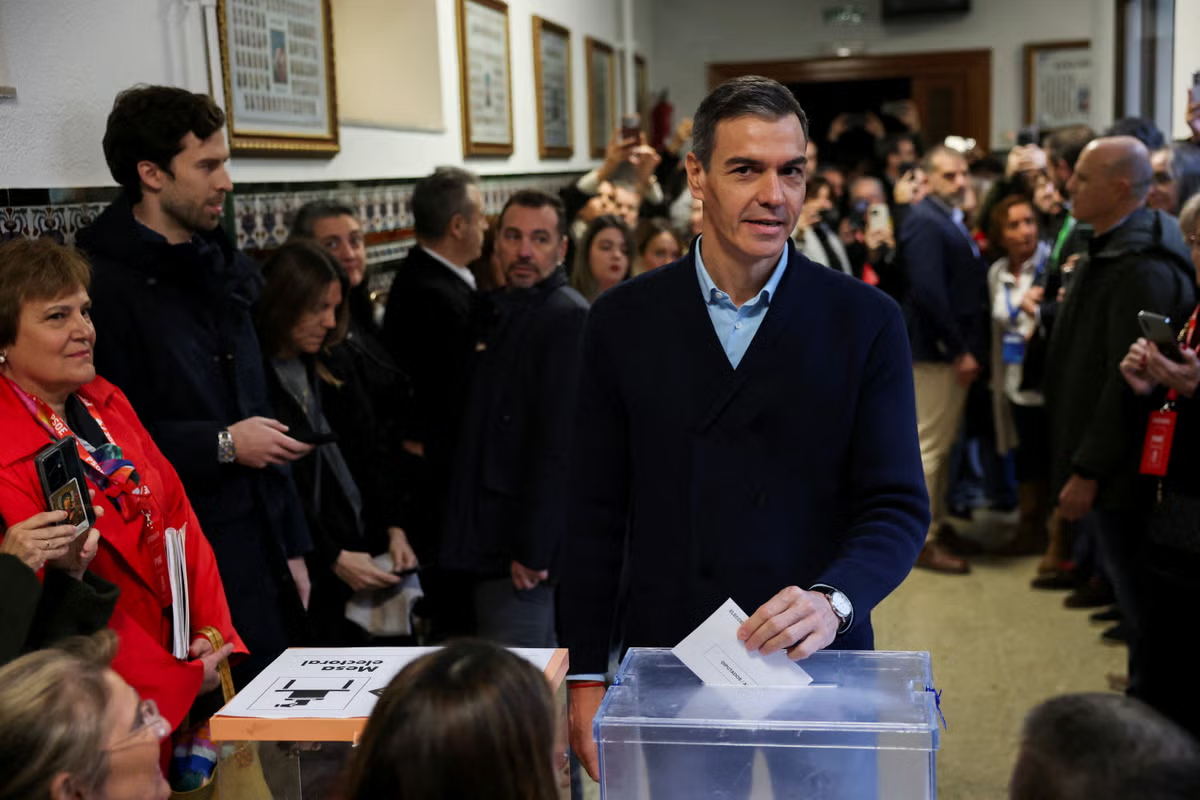
Carmen Sanchez, 27, voted in Madrid. She said: ‘I think they’re going to manage again – with more votes for the Socialists. As a young person, that makes me a little afraid of the future. They haven’t solved much.’
Pena Loren, 77, in Barcelona, warned: ‘We risk being thrown back a few decades, and I think it’s important that we all vote.’ Her concern reflects fear of a return to restrictive social policies.
What This Means for Spain and Europe
Spain’s election is part of a wider European political cycle. Far-right parties are expected to gain ground in France, Italy, Poland, Slovakia, and Greece next year.
If Vox enters government, Spain will shift further to the right. The party supports stricter immigration controls, lower taxes, and opposes climate action and expanded LGBTQ+ rights.
It would also prioritise Spaniards in housing queues and deport convicted foreigners—measures that could deepen social divisions and weaken civil rights.
Why This Election Matters
Spain’s political shift may signal a broader trend in Europe. Voters are deeply dissatisfied with housing, inequality, and political responsiveness.
While the PP and PSOE remain main contenders, the rise of Vox shows a growing demand for radical change. Such change may come at the cost of social inclusivity and environmental goals.
What to Watch Next
Official results will be released around 9pm local time. Early data suggests the PSOE may close the gap with the PP.
But that would come at the expense of the far left—key to Sánchez’s coalition. Any deal will face tough negotiations, especially over immigration and climate policy.
For more on Spain’s political shift, see our coverage on Spain’s Parliamentary Election Carries Risk of Far Right Entering Government.
Explore the full context in Spain Voting in Election That Could Put Far Right in Power for First Time Since Franco.
Read about the housing crisis and far-right gains in Spain’s Election Dominated by Housing Issues and Far-Right Gains.
Spain’s election reflects deep public dissatisfaction with housing affordability, economic inequality, and political responsiveness. While the PP and PSOE remain the main contenders, the rise of Vox signals a shift in the political landscape that could have lasting effects.
Sources & further reading
Featured image: original publisher image. Via original publisher. Image source