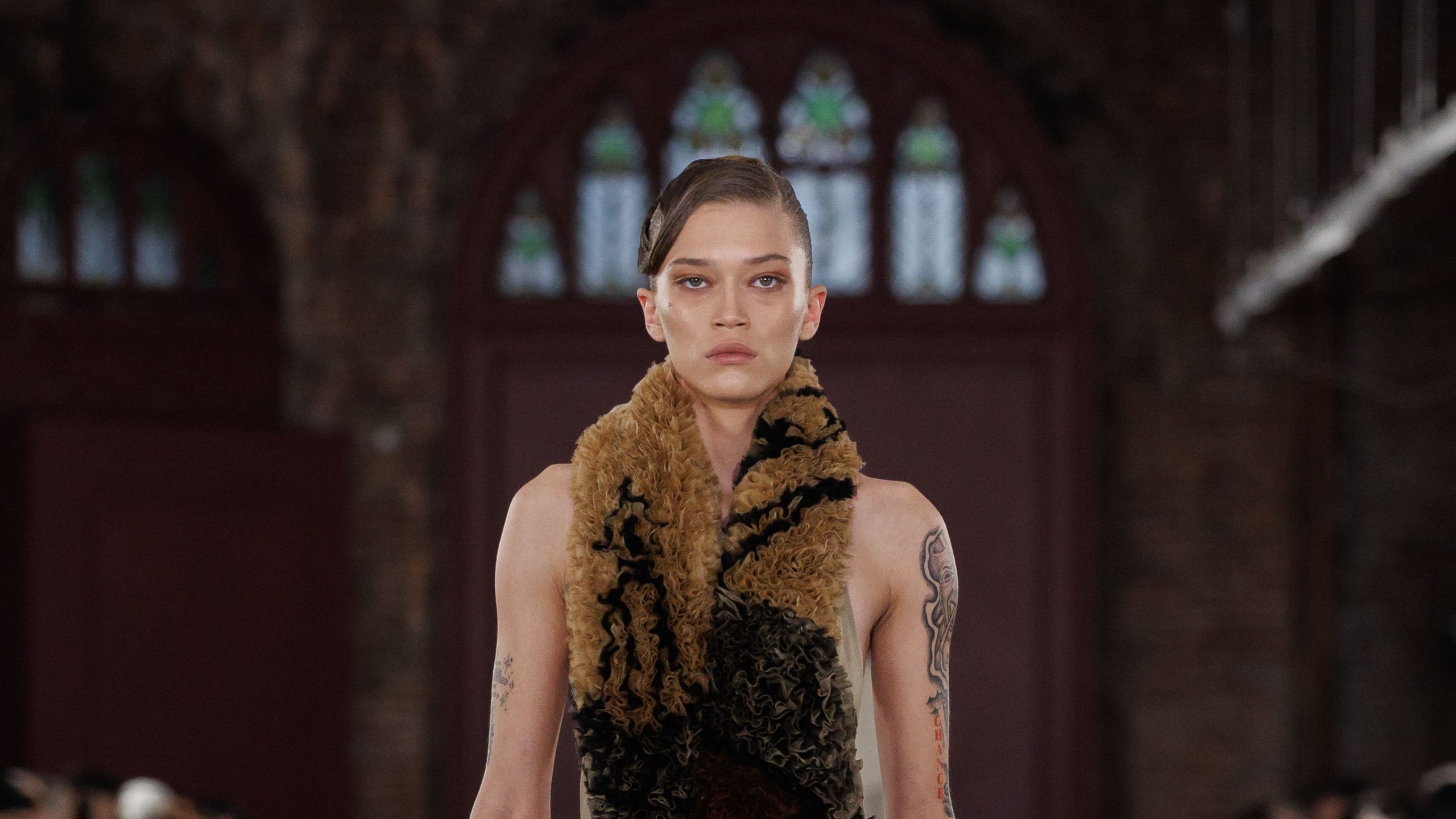
It was a week of firsts for Rachel Scott. The first first was her debut collection for Proenza Schouler, the American brand for which she was named creative director last year. The second was the political statement she made with her Diotima show. Given the crises engulfing us here in the United States, there might have been more of them over the past few days of New York Fashion Week, but most designers opted not to use their platform to engage this way. Scott, who has always been outspoken, proved again that she’s not like most designers.
It was another radical feminist, Carol Hanisch, who coined the phrase “The personal is political.” Today, it was Scott’s personal admiration for the late Cuban artist of African and Chinese descent and current subject of a Museum of Modern Art retrospective, Wifredo Lam, that, in turn, made her collection and show so political. “His work has had so much influence on my life and what I want to do with Diotima,” she said. “His whole idea was that he was this Trojan horse. That he could push through an anti-imperialist statement through beautiful work.”
Of course, Scott has been doing that since she launched Diotima in 2021, employing Jamaican crochet artisans the way French couture houses tout their petites mains. But her collaboration with Lam’s estate, which was initiated by the designer last October without knowing about the upcoming MoMA exhibition and came together in record time, made it explicit. Discussing Lam’s art at a preview, Scott said, “There are things that look like heliconia-slash-sugarcane-slash knives. Like whips. It’s very much anti-colonial, but also rooted in Santeria and the syncretic religions of the region, with mystical creatures…and a very powerful charge.”
One of his Femme Cheval paintings became the basis for the show-opening dress and a pair of long skirts using the three-dimensional organza intarsia technique Scott introduced last season. Another Femme Cheval canvas inspired the fine-gauge merino knit intarsias of second-skin dresses. The modernist, mystical Omi Obini became a tapestry jacquard she used for a wrap skirt and a jacket with a dramatic collar and undulating peplum, only the painting’s exploding color is on the reverse, saved for the inside of the garment.
Elsewhere, Scott emphasized her tailoring; a dark checked trench was a classic of the genre, while trouser skirts had an inventive novelty. The lapels of just-this-side-of-ladylike brushed-alpaca coats and jackets were trimmed with curly bits of viscose that did a believable job of mimicking fur.
Can you really resist injustice through fashion? Scott is doing her part to ensure it. This season, in addition to her ongoing collaborations with women artisans in her native Jamaica, she did her own anti-colonial work via a project with Refugee Atelier, a nonprofit that supports women artisans in New York City.