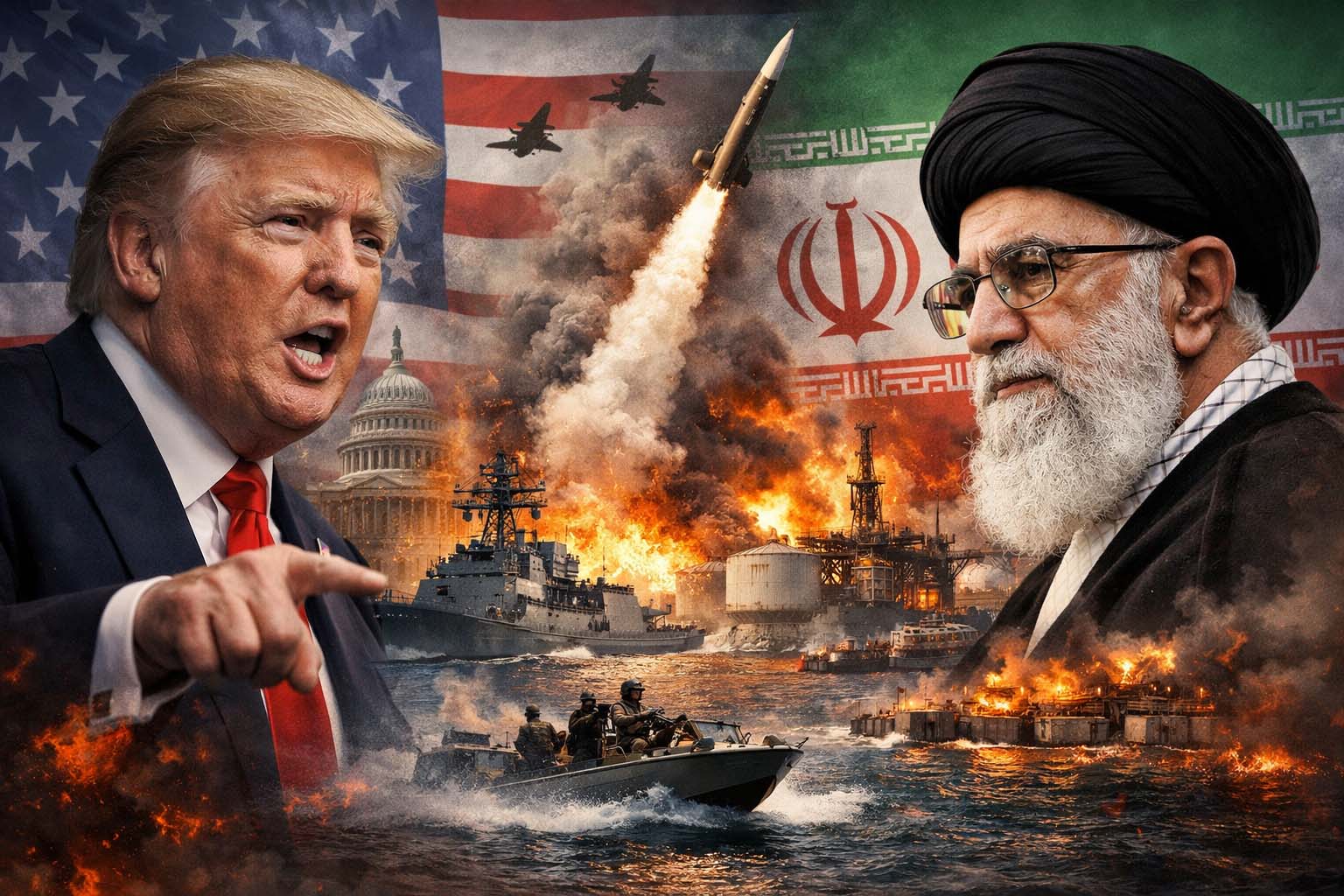
On the latest day of the Middle East conflict, Iran rejected Donald Trump’s claim that Washington and Tehran had held “very good and productive” talks. Trump’s announcement was not a ceasefire: it was a five-day postponement of planned U.S. strikes on Iran’s power plants and energy infrastructure, after he said there were “major points of agreement.” Iran’s response was blunt, calling the idea of talks “fake news” and accusing Washington of trying to manipulate oil and financial markets.
What happened on Day 24?
The latest escalation came after Trump said the United States and Iran had made progress toward a possible deal to end hostilities. Reuters reported that Trump said U.S. envoy Steve Witkoff and Jared Kushner had spoken with Iranian officials and that the two sides had “major points of agreement.” He also said he would give the process five days before deciding what to do next.
Iran then publicly denied that any such dialogue had taken place. Reuters reported that Iranian parliament speaker Mohammad Baqer Qalibaf said, “No negotiations have been held with the U.S.,” and described the talk narrative as “fakenews” used to manipulate the oil and financial markets. Iran’s Revolutionary Guards also dismissed Trump’s remarks as psychological operations.
What exactly was Trump’s announcement?
Trump’s announcement had three main parts. First, he said the U.S. had held “very, very strong talks” with Iran. Second, he said there were “major points of agreement” and suggested a deal could come soon. Third, he said the U.S. would postpone for five days a plan to strike Iran’s power grid, power plants, and energy infrastructure.
That is the key point many headlines are compressing: Trump did not announce peace, a ceasefire, or a full military halt. He announced a temporary delay on a specific category of strikes while presenting the move as a diplomatic opening.
Did Trump announce direct U.S.-Iran talks?
Not clearly. Trump presented the contacts as serious and advanced, but Reuters also reported that a European official said there had been no direct negotiations, with messages instead being passed via Egypt, Pakistan, and Gulf states. That means the public picture remains murky: Trump described major progress, while Iran denied talks altogether, and outside officials pointed to indirect message-passing rather than formal face-to-face diplomacy.
Why Iran rejected the claim
Iran’s denial appears to serve both political and strategic goals. Publicly admitting talks while strikes continue could look like weakness at home. At the same time, Tehran accused Washington of using diplomacy headlines to calm markets and reduce oil prices. Reuters reported that oil fell sharply after Trump’s statement, then rebounded after Iran denied the talks.
What was happening on the battlefield at the same time?
The fighting did not stop. Reuters reported that Iran launched multiple waves of missiles at Israel on March 24, triggering sirens in Tel Aviv and causing property damage in northern Israel, though no deaths were reported in that round. Reuters also reported that the war, launched on February 28, has killed more than 2,000 people so far.
Israeli Prime Minister Benjamin Netanyahu said after speaking with Trump that Israel would continue its attacks in Lebanon and Iran. That reinforced the sense that, despite talk of diplomacy, military operations remain active and the wider conflict is still volatile.
Did Trump pause all U.S. action?
Not based on the reporting available so far. Reuters separately reported a Semafor-cited U.S. official saying the five-day stop applied only to Iran’s energy sites, not to military sites, naval assets, ballistic missile facilities, or the defense industrial base. Reuters said it could not independently verify that report, so this should be treated as an important but not fully confirmed detail.
Why markets reacted so strongly
Trump’s announcement briefly gave markets hope that a wider war or deeper energy shock might be avoided. Reuters reported that Brent crude fell more than 10% on Monday after Trump delayed strikes on Iran’s power plants. But once Iran denied the talks, oil rebounded sharply, with Brent rising back above $103 a barrel and WTI above $91.
This matters because the Strait of Hormuz remains central to the crisis. Reuters reported that roughly one-fifth of the world’s oil and liquefied natural gas passes through the strait, and current disruption there has become one of the biggest economic consequences of the conflict.
What happens next?
The next few days matter because Trump has framed them as a window for diplomacy. Reuters reported that direct talks to end the war could possibly take place in Islamabad as soon as this week, although there was no immediate confirmation. That means the story is now moving on two tracks at once: public denial and private signaling.
For now, the clearest reading is this: Trump is presenting a five-day diplomatic opportunity, Iran is publicly rejecting the idea that talks exist, and the military conflict is still live. Until those three facts change, the situation remains unstable rather than resolved.
FAQ
What was Trump’s announcement about Iran?
Trump said the U.S. had held “very good and productive” talks with Iranian officials, claimed there were “major points of agreement,” and postponed for five days planned strikes on Iran’s power plants and energy infrastructure.
Did Iran confirm talks with Washington?
No. Iran denied that negotiations had taken place. Reuters reported that Iranian parliament speaker Mohammad Baqer Qalibaf called the claim “fakenews” and said it was being used to manipulate markets.
Did Trump announce a ceasefire?
No. The announcement was a temporary five-day delay on planned strikes against energy infrastructure, not a ceasefire or a full stop to military action.
Are the U.S. and Iran holding direct talks?
That remains unclear. Reuters reported a European official saying there were no direct negotiations, but that messages were being relayed through Egypt, Pakistan, and Gulf states.
Why did oil prices react so sharply?
Markets briefly interpreted Trump’s statement as a sign of de-escalation, pushing oil down. After Iran denied the talks, prices rebounded as supply fears returned.
Is the conflict actually slowing down?
Not yet. Missile attacks, Israeli operations, and U.S. pressure all continued alongside the diplomatic claims and denials.