Artificial intelligence is growing faster than ever. But with it comes a rising energy cost. Data centers running AI models now consume vast amounts of electricity—often more than traditional computing tasks. As AI models grow in size and complexity, the computational demands increase exponentially. This surge in demand translates directly into higher energy consumption, which in turn drives up operational costs and environmental impacts. Source: wired.com.
Energy Costs Are a Major Barrier
Modern AI training and inference processes require massive parallel processing, primarily carried out by graphics processing units (GPUs). These GPUs operate at high temperatures and require extensive cooling systems, which consume a significant portion of total energy.
These energy demands are not just about the power needed to run processors. They also include the cost of cooling, power distribution, and infrastructure maintenance. In a world where carbon emissions and energy sustainability are increasingly prioritized, such high consumption presents a major ethical and economic challenge.
Many AI labs and cloud providers are now relocating their operations to regions with abundant renewable energy, such as Scandinavia. Countries like Norway and Sweden offer low-cost, clean power derived from hydropower and wind. These regions have already seen a rise in data center construction, driven by the need for energy-efficient computing environments. However, even in these ideal locations, the expansion of data centers faces resistance due to environmental concerns and local opposition.
Enter Photonic Processors
German startup Q.ANT is developing a new type of chip that uses light instead of electricity to perform calculations. These are called photonic processors. Unlike traditional GPUs that move data using electrons, photonic processors use waves of light to transmit and process information.
Electrons moving through silicon circuits generate heat as a byproduct, which necessitates constant cooling. This heat generation is one of the primary contributors to energy waste in data centers. In contrast, light waves do not generate heat during transmission and can carry multiple data streams simultaneously, enabling faster and more efficient data processing.
How Light Can Do Math
Light behaves as a wave. A sine wave, for example, is a smooth, repeating pattern. This mathematical function can describe shapes like circles with just a few points—something linear functions would require thousands of data points to approximate. This property makes light exceptionally well-suited for handling complex, nonlinear equations.
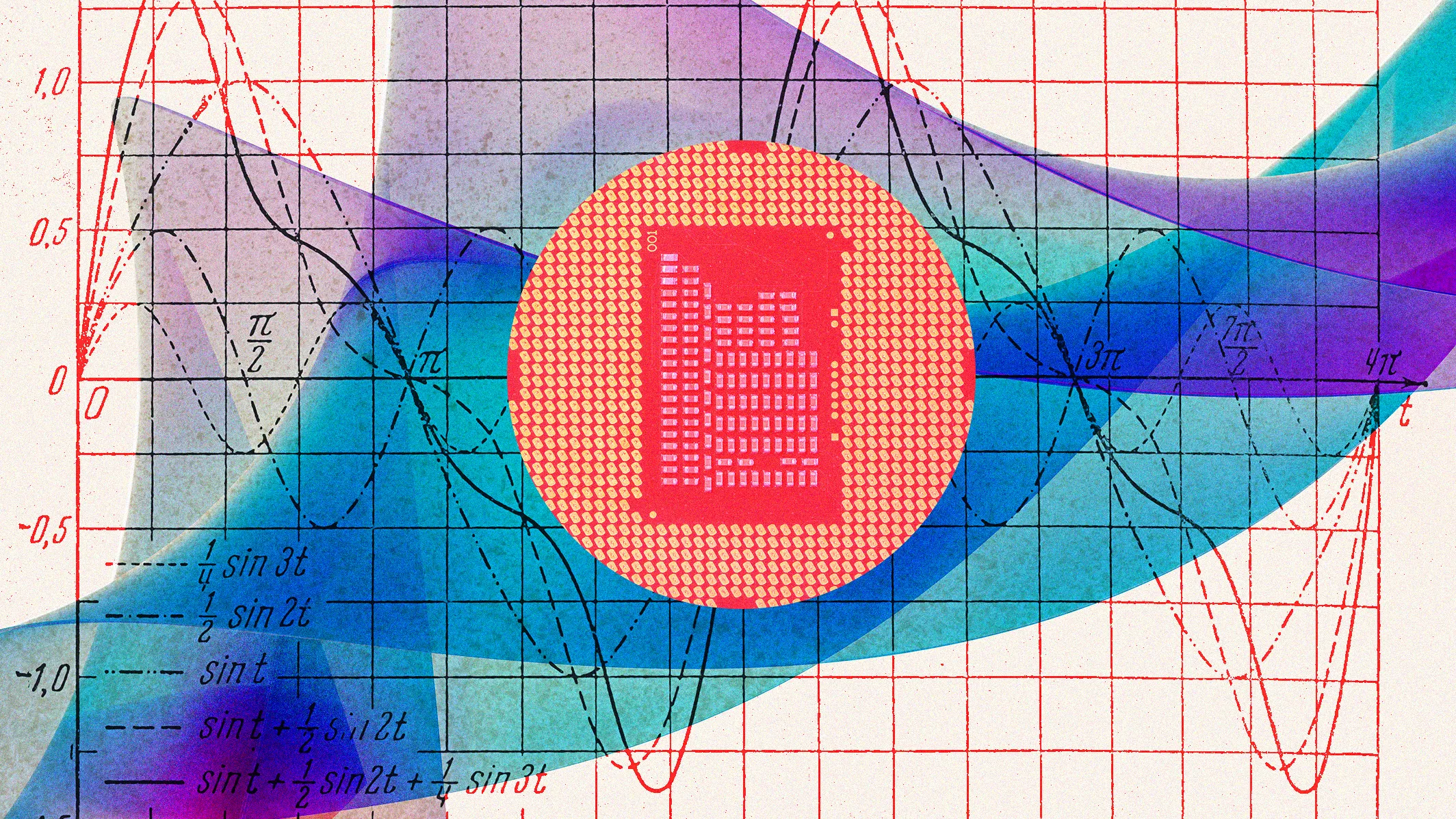
Q.ANT founder Michael Förtsch explains: Light is very, very gifted to operate on complicated equations.
The company believes photonic processors are especially strong at handling nonlinear math—common in image recognition, video generation, and robotics. For instance, recognizing a cat in a photo requires identifying shapes, textures, and patterns. These are nonlinear problems. A photonic processor can handle them more efficiently than a GPU.
Photonic Chips Work Best as a Coprocessor
Q.ANT does not aim to replace GPUs. Instead, it wants to run photonic processors alongside existing hardware. Traditional GPUs excel at linear math—like simple additions and multiplications. These are common in many AI tasks. Photonic chips, by contrast, are better at complex, nonlinear calculations—such as those needed for image segmentation or object detection.
For example, in autonomous driving systems, a vehicle must detect lane markings, traffic signs, and pedestrians in real time. These tasks involve analyzing visual data with high precision and adaptability. The nonlinear nature of such tasks makes them ideal for photonic processing. By offloading these computations to photonic chips, AI systems can achieve faster response times and greater accuracy with less energy.
Energy Efficiency: What the Numbers Show
Under simulation, Q.ANT reports a potential energy reduction of four to five times compared to traditional chips. This is a significant improvement, especially when considering the long-term operational costs of AI systems.
However, this is still theoretical. The company has not yet demonstrated these gains in real-world hardware. The actual performance in live data centers remains unverified. Real-world conditions—such as temperature fluctuations, data load variability, and signal interference—can affect how efficiently light-based systems perform compared to simulations.
Challenges in Adoption
Photonic processors are not yet widely used. A key barrier is the lack of developer tools and pre-optimized AI models. Most existing AI models are designed for GPUs. Running them on photonic hardware requires code adjustments, such as reconfiguring neural network layers or modifying data flow patterns.
This creates a ‘chicken and egg’ problem: developers won’t build models for photonic chips until they are widely available, and cloud providers won’t offer them until developers demand them. Q.ANT acknowledges this. We are building a new chicken, so you can start producing eggs. Let’s find out together whether they’re tasty or not.
The company is taking a collaborative approach, inviting developers and researchers to experiment with photonic computing from the ground up.
Supply and Manufacturing Limitations
Hardware production is slower than software. Q.ANT says it could produce 100,000 chips if ordered—but it’s uncertain whether suppliers can meet demand. The production of photonic chips relies on existing semiconductor foundries, which have historically prioritized traditional silicon-based chips.

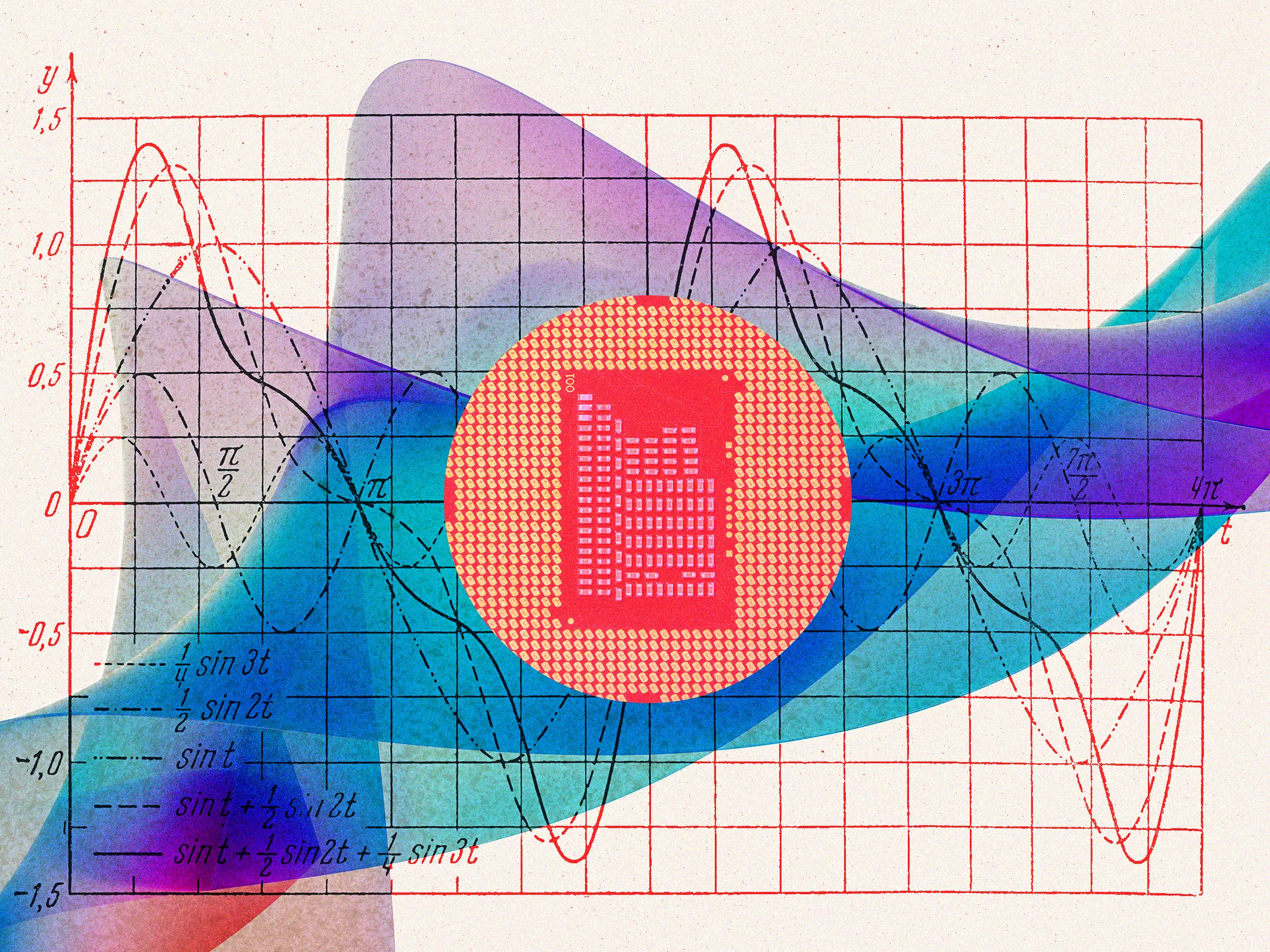
Photonic chips use 90-nanometer node technology, a standard from the 2000s. Many foundries already produce chips at this scale. This means Q.ANT doesn’t need expensive new facilities. It can use existing production lines to make high-performance chips at a lower cost. This is a critical advantage over newer, more expensive chip technologies that require massive capital investment and specialized infrastructure.
Compatibility with Existing Hardware
Q.ANT chips are not tied to any single GPU brand. They are designed to work with Nvidia, AMD, or any other processor. The company emphasizes it is not competing with GPUs. Instead, it complements them. The goal is to create a hybrid system where each chip handles the tasks it’s best at—GPUs for linear math, photonic processors for nonlinear math.
Will AI Models Run Entirely on Light?
Q.ANT sees a future where photonic processors play a larger role. But it does not expect full replacement of GPUs in the near term. Whether photonic chips will dominate depends on how future AI models are designed. If models grow more data-intensive or rely heavily on nonlinear math, photonic computing could become essential.
For now, the focus is on energy efficiency. The company believes the future of AI lies in models that deliver high performance with minimal data movement—reducing energy use without sacrificing quality. As AI applications evolve—especially in robotics, autonomous systems, and real-time visual processing—this trend may accelerate.
What to Watch Next
Q.ANT has launched a pilot program with cloud provider IONOS. Over 30 engineering teams are now working on AI models optimized for photonic computing. These teams are testing how well photonic processors perform in real-world scenarios, including image classification, video analysis, and motion detection.
As more developers test these models, real-world performance data will emerge. If energy savings are confirmed, cloud providers may begin integrating photonic chips into their infrastructure. This could lead to a broader shift in how AI systems are designed and deployed—prioritizing energy efficiency from the outset.
Until then, photonic processors remain a promising but unproven solution. Their success depends on collaboration between hardware engineers, AI developers, and cloud operators. With the right partnerships and continued innovation, photonic computing could help AI grow more sustainably—without compromising performance or increasing its environmental footprint.
Sources & further reading
Featured image: original publisher image. Via original publisher. Image source