A Sunday morning at El Tajín archaeological site in Veracruz reveals quiet stillness. The crowds thin past the entrance. The ancient pyramids, with 365 carved niches, stand amid lush hills. Chef Lucho Martínez describes the place as feeling ‘forgotten’—a peaceful, unspoiled space amid modern tourism. Source: cntraveler.com.
Veracruz: A Hidden Culinary Heartland
Veracruz is a narrow state along Mexico’s Gulf Coast. It’s known for its port city and early Spanish colonization. Yet, it remains under-visited compared to Riviera Maya or Cabo San Lucas. Martínez sees this as a missed opportunity. He believes the state offers more than ports and oil refineries. The region’s natural beauty—towering green mountains, volcanic gray-sand beaches, and coastal plains—has long been present. But its food and culture have not drawn the same attention from international travelers.
Martínez was born in Coatzacoalcos, southern Veracruz. He moved to the U.S. with his mother at age five. He returned to Mexico at 14. His journey from rural Veracruz to Mexico City reflects a deep personal connection to his roots. He moved to Cancún before settling in the capital. There, he opened his first restaurant, Emilia, named after his now-eight-year-old daughter.
In 2020, the restaurant moved to a new space and earned a Michelin star—making it one of the first in Mexico City to receive such recognition. Since then, Martínez has opened Martínez, a casual bistro, and Ultramarinos Demar, a seafood restaurant. These ventures are not just about serving food. Each dish tells a story. For instance, the crispy gordita—now served at Em with crème fraîche and caviar—is a symbol of regional pride. It replaced Em’s bread course because it captures the texture, flavor, and cultural heart of Veracruz.
Vanilla Farm in Gaya
After a four-hour drive from Mexico City, the pair arrives at a vanilla farm in Gaya. Martínez presses a vanilla pod between his fingers, testing its flexibility. Good flexibility means high quality. This is a centuries-old tradition. Vanilla quality is judged by elasticity and aroma.
The fourth-generation owner, Isabel, greets Martínez with a warm smile. She explains the farm uses traditional methods—hand-picking, drying in shaded rooms, and packing in natural containers. Martínez notes that while Madagascar is often linked to vanilla, the plant was first cultivated in Mexico. Specifically, in Veracruz, during the 16th century. This fact highlights the region’s deep culinary roots. It challenges the global belief that vanilla comes only from tropical islands.
Local Food in Gutiérrez Zamora
Next, they stop in Gutiérrez Zamora, along the Tecolutla River. Martínez identifies La Galera, an open-air café. The menu offers traditional dishes: cheese empanadas, molotes (crispy, deep-fried corn masa pockets filled with chicken), and gorditas (corn tortillas tossed in oil).
He calls the gordita a staple of local cuisine. At La Galera, he drizzles cream over a warm, puffed-up gordita. He says it’s like an all-day breakfast. The dish is so beloved that he replaced Em’s bread course with a crispy gordita. It’s served with crème fraîche and topped with caviar. This shows how local traditions can be elevated in fine dining—without losing authenticity.
San Rafael: A French-Influenced Town
They drive into San Rafael, settled by French immigrants in the 19th century. The architecture reflects that heritage—low-slung buildings with wood shutters and white columns. Narrow streets and courtyards create a sense of intimacy. This contrasts with the commercialized environments of larger tourist hubs.
Martínez and his family stay at Maison Couturier, a former 19th-century agricultural estate. It’s now a design-focused hotel by Grupo Habita. The building’s stone walls, hand-carved woodwork, and open-air courtyards connect to the region’s agricultural past. Martínez sees such spaces as vital to preserving local identity and culture.
When the hotel is full, they move to its sister property on Costa Esmeralda. Hotel Azúcar, a cluster of whitewashed buildings, becomes their base. The resort is nestled along a stretch of coastline where sun-bleached structures sit between the road and the sand. It lacks the high-end resorts of Cabo or the Riviera Maya. Instead, it offers a real, unfiltered coastal experience.
Seafront Dining at Hotel Azúcar
At the beach, they sit barefoot in warm, shallow water. The scene is unpretentious—no foreign tourists, no flashy resorts. The restaurant serves grilled prawns and fish, cooked over an open fire. The food is simple. No orange wine. No elaborate menu. It reflects local cooking. Martínez values this authenticity. He sees such meals as about connection—not presentation or extravagance.
Breakfast at Maison Couturier
The next morning, they return to Maison Couturier for breakfast. After wandering the grounds, they settle at a table inside the old farmhouse. Martínez orders esponjaditas—extra-fluffy gorditas—served with crème fraîche and eggs in a tomato sauce. The tortillas are fried in oil and folded for a delicate, airy texture. This daily ritual shows that food in Veracruz is not just eaten—it is lived, shared, and passed down.
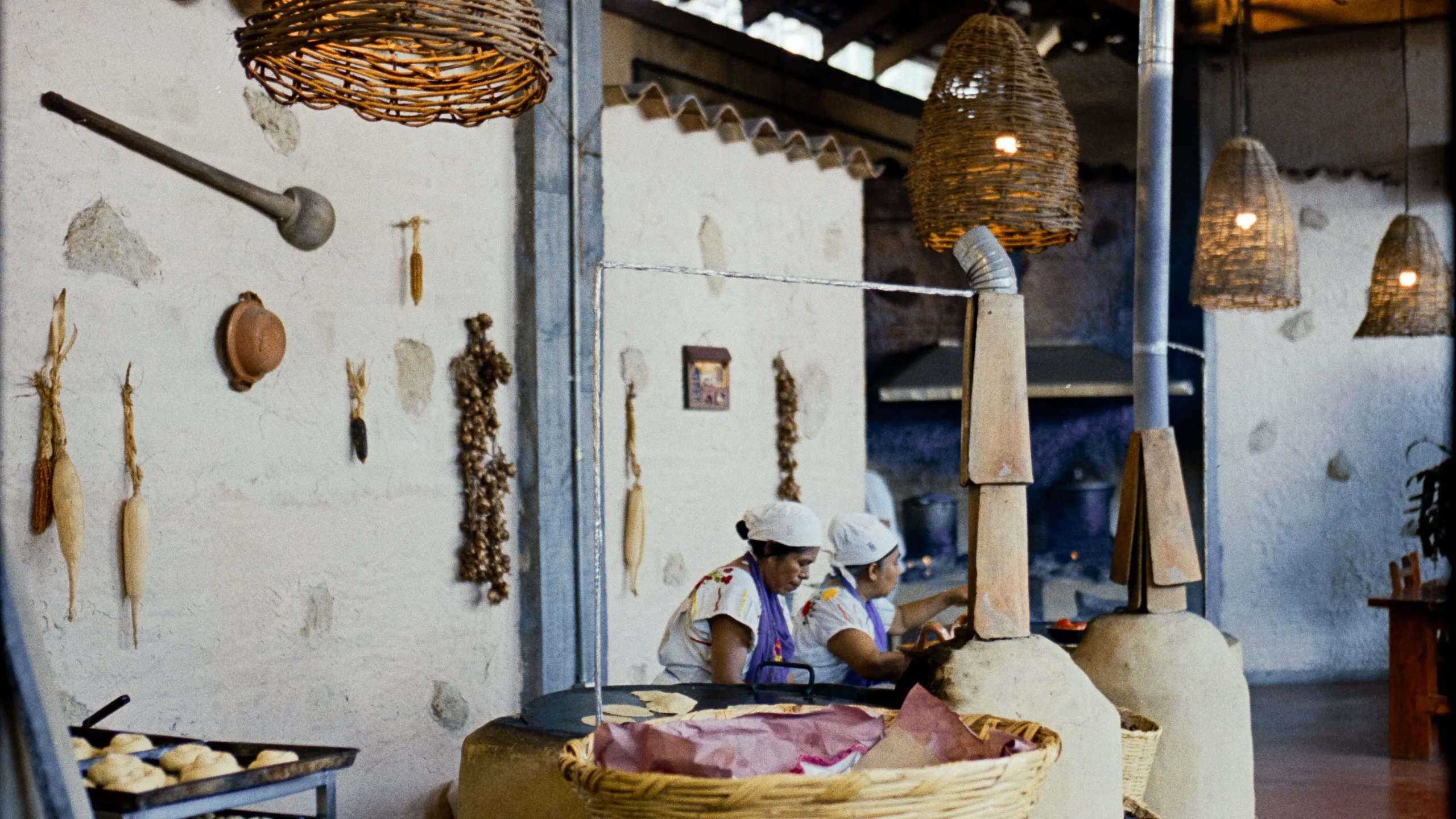
Later, they stop in Tajín to enjoy tamales at Nakú Restaurante Papanteco. Traditional dancers in dresses and hats perform during preparation. Women press tortillas onto comals with rhythmic precision. The scent of toasted maize fills the air. Martínez notes he is the only foreigner. This moment captures the region’s cultural authenticity. Live dance and communal food preparation show how food is performed, celebrated, and woven into daily life.
Veracruz may feel overlooked by tourists. But Martínez sees that as part of its charm. The state’s natural beauty and culinary traditions remain underappreciated. His work aims to shift that perception.
He continues to source ingredients from the region. His restaurants in Mexico City reflect these roots. The journey from Coatzacoalcos to San Rafael is not just a trip—it’s a connection to a living food culture. It offers a personal, grounded look at a region often overshadowed by Mexico’s more famous coastal destinations.
Sources & further reading
Featured image: original publisher image. Via original publisher. Image source