Featured image: The image shows a large, concrete building with a repetitive, block-like design. AI-generated image; not a photograph of the reported event.
Protests in Albania have turned violent. Demonstrators and police clashed in major cities including Tirana, Durrës, Shkodër, Lezhë, Vlora, Gjirokastër, and Korçë. Source: bbc.co.uk.
What Happened
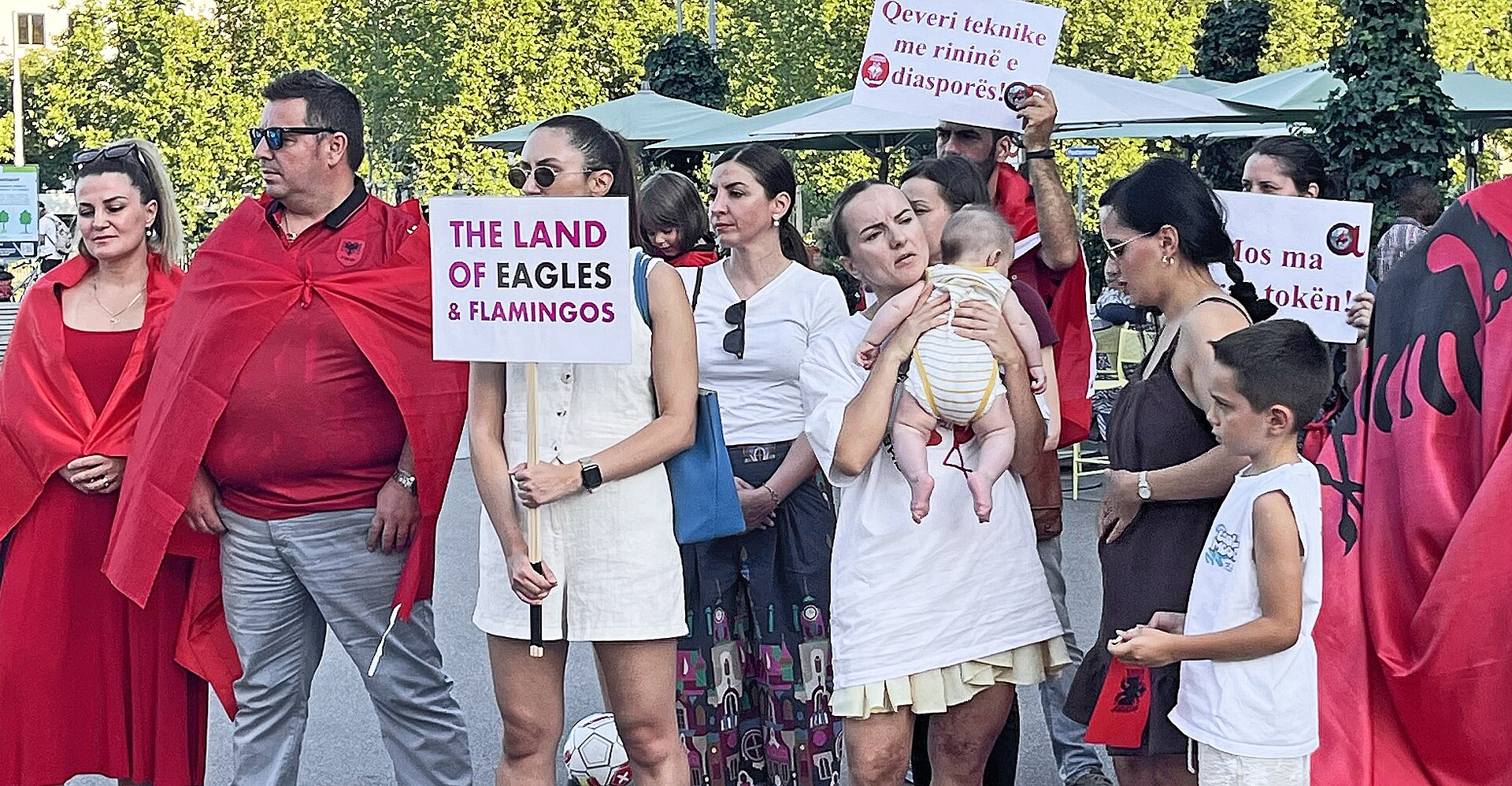
For months, a student-led group called the ‘Flamingo’ movement held nightly protests in central Tirana. They displayed pictures of a pink flamingo and called for Prime Minister Edi Rama to resign.
The protests were peaceful at first. Participants included young people, parents, and grandparents. Many cleaned up after each session, showing pride and civic responsibility.
On Tuesday, the protests changed. Masked protesters threw stones at police. Police responded with water cannons, tear gas, and batons.
Footage showed a young man being carried away with a broken leg. The scene sparked outrage. Apologies were made, but the situation did not calm.
Later, the floor of the Ministry of Education was set on fire. Other government buildings were damaged too. This suggests a deeper intent than just expressing dissent.
Origins of the Movement
The protests began over a luxury tourism project near Vlora. The project, linked to Jared Kushner, son-in-law of former U.S. President Donald Trump, raised environmental concerns.
Protesters feared the project would destroy a local flamingo population. The pink flamingo is a national symbol. Its extinction was framed as a moral and ecological crisis.
At the same time, families faced rising costs. Tuition fees and textbooks grew. Living expenses increased. Education became harder to afford.
Secondary schools joined the movement. Students organized campaigns. They discussed costs and government roles. The movement gained youth support.
Key Facts and Claims
- Participants included young people, parents, and grandparents. Many cleaned up after each protest, showing civic pride.
- Livia, a young woman, said the government mocked their concerns. She called it a ‘clear message’ that their voices would not be heard.
- Brunela said she fears how the government and media are reacting. ‘I am very terrified because the media and the government is reacting, especially now. It was not just my voice, it is the voice of Albanian youth.’
- One deputy prime minister fled. Another was ordered to step down. Investigations continue.
- Prime Minister Edi Rama blamed Sali Berisha. He called the unrest a ‘blind struggle’ fueled by ‘irrational hatred’.
- Rama ruled out resigning. He said he will ‘listen’ and ‘address legitimate concerns’.
- Albania’s government warned that violence damages its image. It affects tourism and EU ambitions.
Government and Political Responses
Rama toured damaged buildings. He accused Sali Berisha of causing chaos.
He said the unrest is a ‘blind struggle’ driven by ‘irrational hatred’. He claimed it is orchestrated by forces opposed to Albania’s EU integration.
He said: ‘These are foreign hands that do not wish for Albania to be at peace… they do not want Albania to be part of the united European family.’
He added that every time Albania gets a green light for EU progress, ‘flames erupt’. This appears to be rhetorical, but shows deep anxiety about EU prospects.
Opposing Views and Skepticism
No official link has been made between the student movement and the current unrest. No representative from the student group has confirmed an overlap.
Sali Berisha’s party has long challenged Rama. But its support remains smaller than current turnout. This suggests the unrest may not be a political coup.
It may instead be a surge of frustration over ignored demands and corruption.
Media and Foreign Allegations
Albanian media have suggested foreign intelligence services may be involved.
Some commentators point to Serbia. They suggest Belgrade is envious of Albania’s EU prospects. These claims are unverified and not supported by evidence.
Rama echoed the idea but did not confirm it. He warned against unfounded accusations while acknowledging the sensitivity of the issue.
Why This Matters
Albania is a strong EU candidate. The unrest threatens that path. Public trust in institutions is eroding.
Political stability is being tested. The violence undermines confidence in governance and could delay reforms in education and anti-corruption.
The tourism industry is also at risk. Albania relies on international visitors. Any perception of instability could deter travel and investment.
What to Watch Next
Authorities must manage the situation without escalating violence.
Public trust in government is at risk. The government’s response will be critical.
International observers, including the UK, have urged travelers to avoid demonstrations and follow local advice.
Investigations into corruption among officials are ongoing. If the protests are found to be politically or externally influenced, it could trigger a review of Albania’s democratic safeguards.
For more on the student-led protests and government building attacks, see our coverage: Students Attack Government Buildings in Albania Amid Protests.
Albania’s political stability remains under pressure. The situation reflects broader concerns about governance, youth engagement, and national identity. As the country navigates this crisis, the balance between democratic expression and public order will be a defining test of its democratic maturity.