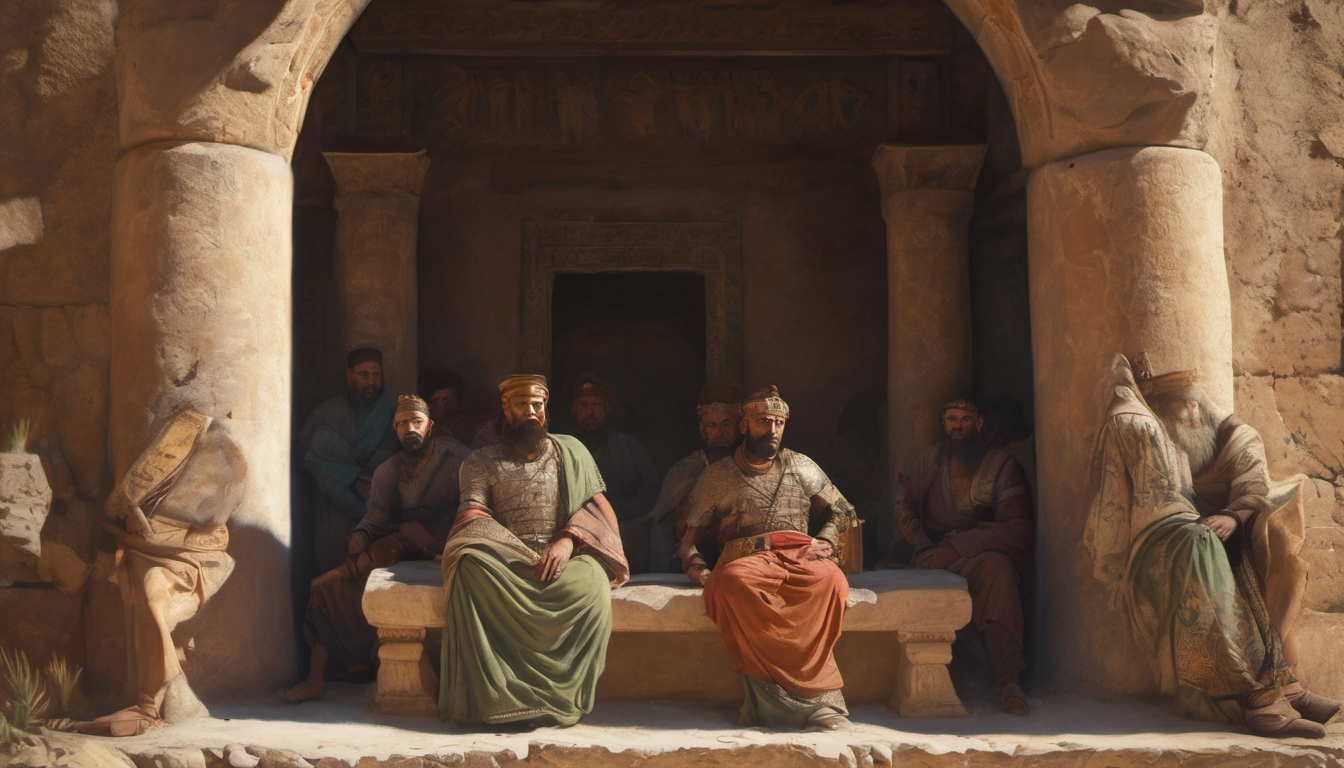
Featured image: A group of men are seated on stone benches within a large, ancient stone structure. AI-generated image; not a photograph of the reported event.
A late 4th-century BC Macedonian tomb near Agios Athanasios, Greece, has yielded flawlessly preserved fresco paintings.
Key Features of the Tomb
The tomb is encased in a concrete protective shell beneath a 12-meter-high burial mound.
Though ancient grave robbers removed the gold from the chamber, they left the frescoes untouched.
Facade and Pediment
The tomb’s facade includes a striking pediment guarded by golden-winged griffins.
Symposium Frieze
Beneath the pediment, a detailed symposium frieze depicts a lively banquet.
- Six garlanded men recline on couches drinking wine.
- Female musicians accompany the scene.
- A procession of hunters, horses, and heavily armed infantry approaches.
Guard Figures
Flanking the stone doorway are two life-sized, melancholic young guards standing in a permanent vigil.
Location and Access
The site is located on the right side of Leoforos Athinon, heading west from Thessaloniki.
It lies near agricultural and industrial zones in Agios Athanasios.
Visitors can find a fenced grassy mound with a modern shelter built into the side.
Hours and Entry
- Admission is free.
- Open from 8:30 AM to 3:30 PM, closed on Tuesdays.
- Hours may vary due to the site’s smaller size and limited recognition.
- It is advisable to confirm with local tourism offices in Thessaloniki before visiting.
Historical Significance
The tomb offers rare insight into daily life and social rituals in ancient Macedonian culture.
The symposium scenes reflect the importance of banquets in elite society, where music, wine, and conversation were central.
The presence of armed figures suggests a connection between social gatherings and military life.
Preservation and Conservation
The frescoes have survived due to the tomb’s isolation and the absence of looting of the artwork itself.
Modern protective measures ensure the site remains stable and accessible for future study.
Why This Site Matters
This discovery provides one of the few surviving visual records of a Macedonian symposium.
It helps archaeologists understand the cultural and social dynamics of the late 4th century BC.
Limitations and Open Questions
While the frescoes are remarkably preserved, the tomb’s full context remains incomplete.
Further research is needed to determine the tomb’s occupant and its exact cultural role.
What to Watch Next
Future archaeological surveys may uncover more tombs or related structures in the area.
Conservation efforts could lead to new public access or digital exhibitions.
For more on ancient Greek tombs and archaeological discoveries, see the original source.