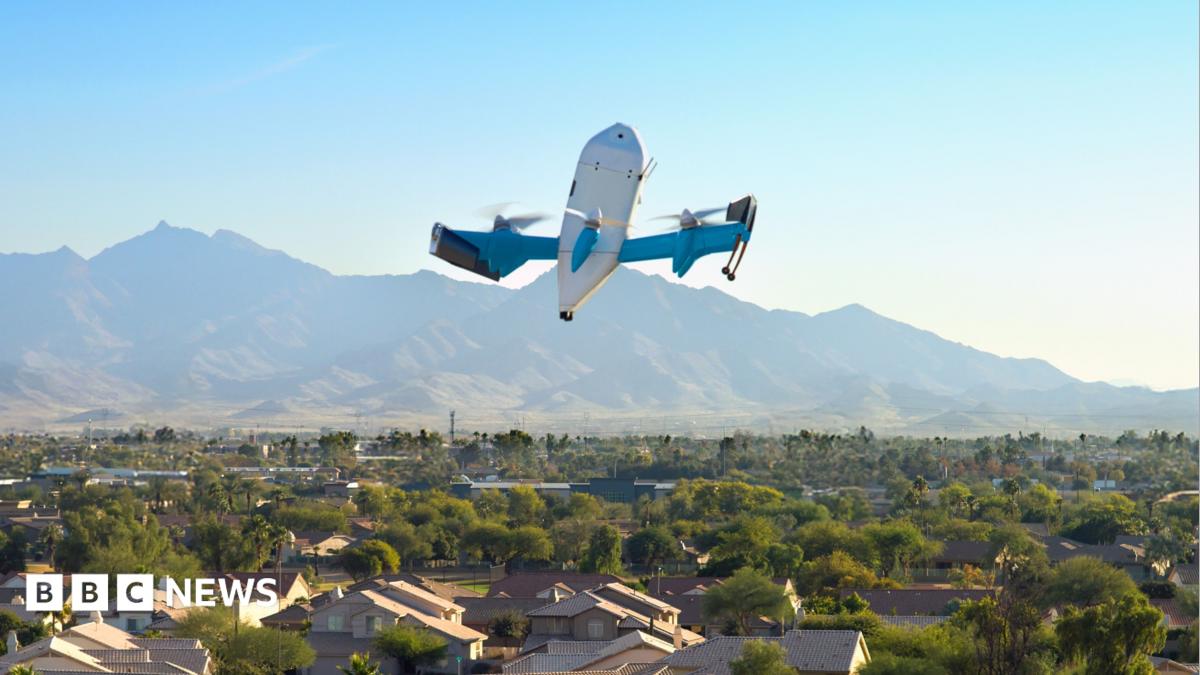
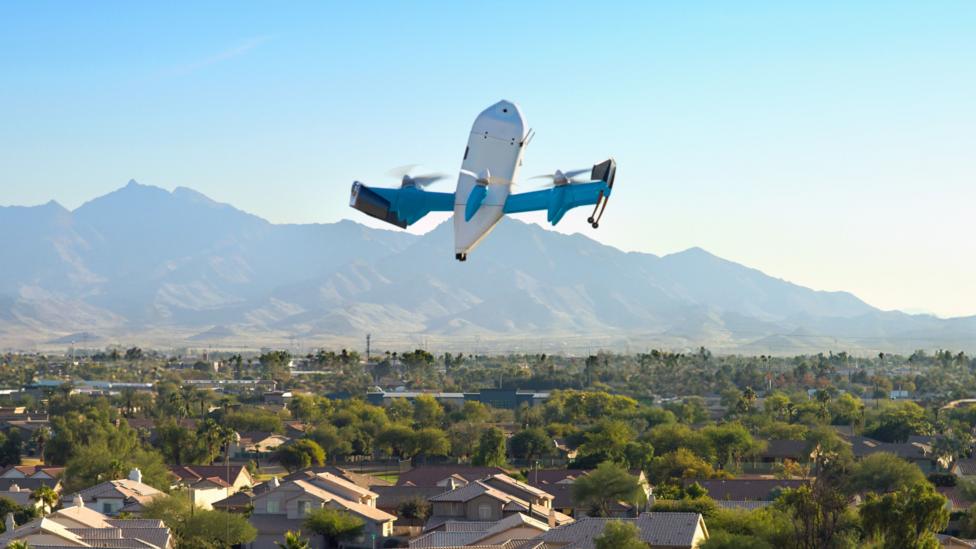
As drone deliveries grow in the US, a quiet problem is emerging: the noise they generate. While the promise of faster, more efficient home deliveries has excited consumers and companies alike, many residents are now reporting discomfort from the sound of drones flying overhead. Source: bbc.co.uk.
Residents Report Annoying Drone Buzz
Ashley Schmidt, a 44-year-old administrative assistant in North Garland, Texas, no longer visits her garden or local parks. She stopped cycling to take photos of bugs and lizards because of the sound of delivery drones overhead.
“They emit this very annoying buzz,” she says. “It triggers my fight or flight response. I can hear them on approach, inside my home, and as they leave.”
She is not alone. More people are reporting discomfort from drone deliveries, especially in residential areas where drones fly at low altitudes. The issue is not just about volume — it’s about the suddenness and unpredictability of the sound. Unlike the steady hum of traffic or the regular rhythm of a refrigerator, the drone’s high-pitched whine cuts through ambient noise with a sharpness that feels intrusive.
Why Drones Sound So Noticeable
Unlike planes, which fly high and are often expected, drones operate at low altitudes and often pass directly over homes. This proximity makes their sound more immediate and personal.
Antonio Torija Martinez, a professor of acoustic engineering and psychoacoustics at the University of Salford, explains that people respond strongly to a noise when they consider the source to be “novel, intrusive, or frequent.” The human brain is wired to detect changes in sound, especially when the source is unfamiliar. A drone, for instance, is not part of the typical urban soundscape — it doesn’t belong in a neighborhood where the background noise is already familiar.
“When a noise is perceived as new, intrusive, or frequent, it stands out,” he says. “People who benefit from drone deliveries may be less bothered, as they see the service as a positive innovation. But others, especially those with sensory sensitivities, are more likely to react negatively.”
As drone services expand — with Amazon Prime Air now operating in nearly 500 cities and towns — complaints about drone noise are expected to grow. While current issues are localized, the broader rollout of drone delivery networks means that more communities will be exposed to this new sound. The problem is not just about volume; it’s about how the sound fits into the daily rhythms of life.
Efforts to Reduce Drone Noise
Greenjets, a London-based startup, has developed a propulsion system that reduces noise by at least two-thirds. Standard drones use spinning propellers that slice through air, creating a high-pitched buzz. Greenjets encloses blades in a pod, directing noise away from the ground and reducing vibration. The system also uses slower rotor speeds and noise-dampening materials.
Greenjets has tested its technology with police and harbour security teams in Germany, where it enables silent surveillance without alerting suspects. In Africa, conservationists use the quiet drones to track poachers without being detected — a critical application where stealth is essential. These real-world uses demonstrate that quiet drone technology is not just a theoretical concept, but one with practical and ethical value.
Similarly, US Special Forces have shown interest in quieter drones, though at an experimental level. Robert Tollast, a research fellow at The Royal United Services Institute (RUSI), notes that in current conflicts, such as the war between Russia and Ukraine, speed is prioritized over stealth. “Make it faster, not less quiet,” he says. This reflects a broader trend: in military applications, performance and agility often outweigh noise reduction.
How One Entrepreneur Found a Quieter Solution
Greg Sharrow, a Detroit-based entrepreneur, began working on quiet drones after needing to film a violinist in 2012. He realized the noise came from the tips of the propellers, not the motor. The blades, as they sliced through the air, created turbulence and vibration that generated the loud buzz.
He asked himself a simple question: “What would a tipless propeller look like?” Based on this, he designed a propeller with twisted, loop-shaped blades that have no sharp tips. The design reduces turbulence and eliminates the high-frequency noise associated with blade tips.

Initially, he tested the concept on a boat, where the absence of air resistance allowed for clearer performance evaluation. Now, Sharrow Engineering focuses on developing ultra-quiet drone rotors. “We have validated that the technology works in drone applications and that it is dramatically quieter,” he says. The innovation has potential not only for consumer deliveries but also for environmental monitoring and emergency response.
Major Drone Companies Are Also Improving Sound
Amazon says it has made “measurable sound improvements” to its drones. Its latest designs use custom-designed propellers that produce almost half the perceived sound of earlier models, with a milder tone. This improvement is part of a broader effort to address community feedback and ensure that drone operations don’t disrupt daily life.
Wing, which supplies drones for Walmart deliveries, says its propellers are designed to minimize noise. In addition, the company varies flight paths to prevent repeated overflights of any single home or neighborhood. This strategy reduces the frequency of exposure, which helps mitigate the psychological impact of repeated drone noise.
What Comes Next?
For Ashley Schmidt, the only solution is to stop drone deliveries in her area. “I would like them to completely stop until they figure out how their services stop being a nuisance,” she says. While this may seem extreme, it reflects a growing concern among residents who feel that current drone operations are not yet compatible with peaceful living environments.
As technology advances, quieter drones may become more common. However, the balance between convenience and community well-being remains a critical issue. Regulatory bodies like the US Federal Aviation Administration (FAA) oversee drone operations, but they emphasize that local operators and community leaders must address concerns directly. The future of drone delivery may depend not only on speed and efficiency, but on how well these machines integrate into the soundscape of everyday life.
For now, the buzz of drones continues — but with new technologies, quieter versions may soon be a reality.
Sources & further reading
Featured image: An Amazon drone flies over an US city. In the background are mountains and a blue sky.. Via original publisher. Image source