A fresh release from Anthropic has rattled investors across Europe’s “data and legal services” sector, triggering a sharp selloff in companies that sell legal research, compliance tools, and information services. The market reaction wasn’t subtle: investors quickly repriced the idea that these businesses are “safe” from AI disruption.
Quick takeaways
- Anthropic launched role-specific plug-ins for its Claude Cowork agent, including a Legal plug-in designed to speed up contract review and compliance workflows.
- Shares fell hard: Reuters cited drops of ~18% for Thomson Reuters, ~14% for RELX, and ~13% for Wolters Kluwer during the selloff.
- Investors fear AI could squeeze subscription pricing and “seat-based” revenue models by automating work that justifies expensive tools.
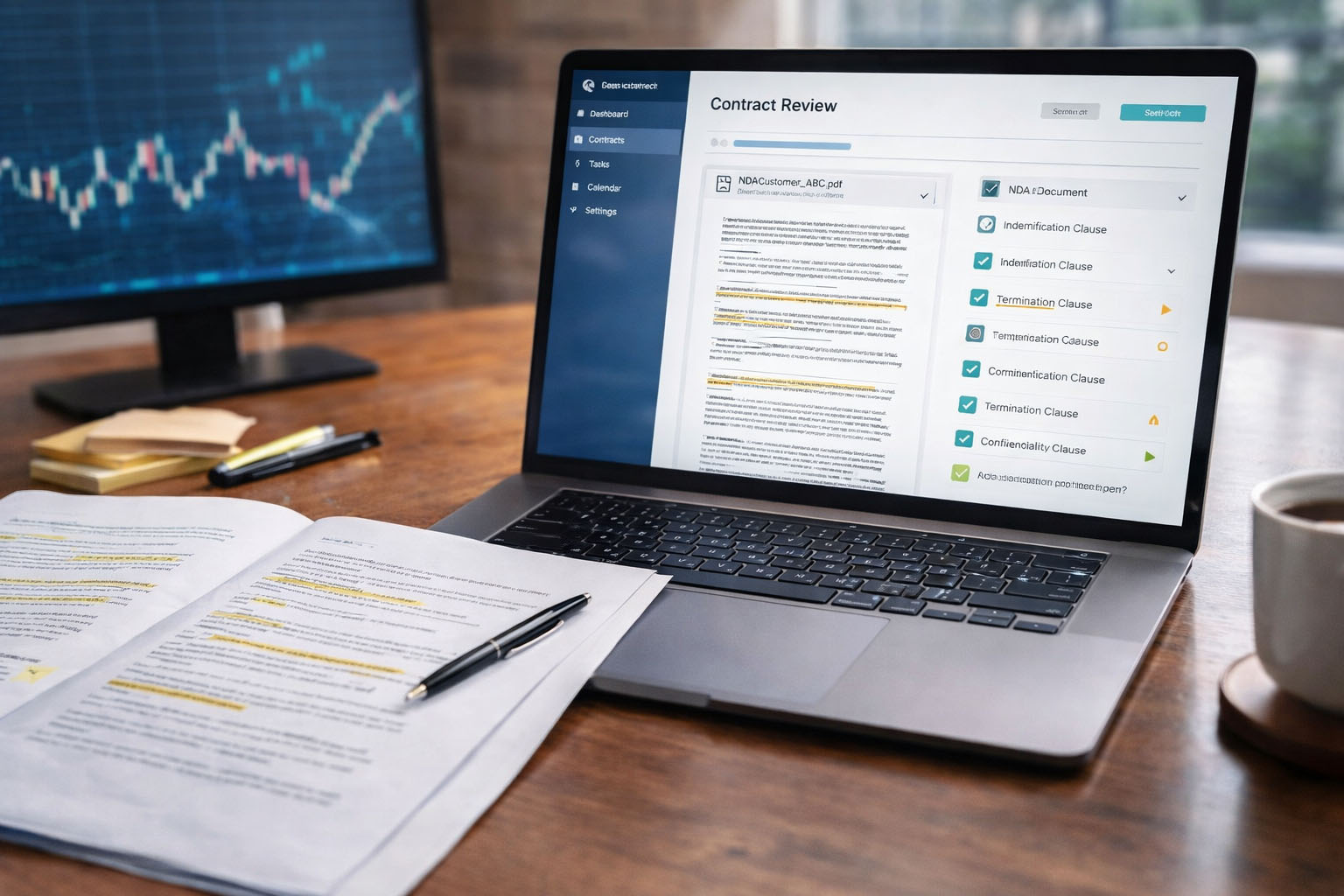
Photo (Hero image): A modern office desk with a laptop showing “Legal Workflow” (generic), printed contract pages, and a subtle market chart on a second screen.
Image prompt: Realistic photo, corporate desk, laptop with generic “Legal Workflow” dashboard (no brands), contract pages, highlighter, second monitor with generic chart, warm natural daylight, high detail, no text overlay.
What exactly did Anthropic launch?
Anthropic released a set of “knowledge work” plug-ins for Claude Cowork, aimed at automating repeatable business workflows across departments—legal, sales, marketing, data analytics, and more.
The Legal plug-in is positioned for in-house teams and focuses on:
- contract review
- NDA triage
- compliance workflows
Why did European data and legal stocks drop so sharply?
The selloff comes from a simple investor fear: AI is moving up the value chain—from “chatbot answers” to workflow automation that can reduce the need for multiple paid tools.
Reuters reported that markets are increasingly anxious AI could erode traditional user-based software pricing, especially in sectors built on repeatable knowledge work (legal research, compliance, analytics).
This matters because many incumbents’ profits rely on:
- seat licences (charging per user)
- bundled workflow features (drafting, research, clause comparison, compliance steps)
- long enterprise contracts
When investors see a credible alternative workflow layer, they immediately question future renewals, pricing power, and margins.

Which companies were hit (and why those names)?
Reuters highlighted significant declines in companies exposed to legal/data subscriptions, including:
- Thomson Reuters (nearly 18% down)
- RELX (around 14% down)
- Wolters Kluwer (around 13% down)
- LegalZoom (almost 20% down)
Other coverage also described a broader knock-on effect across European information and publishing names as investors reassessed “AI disruption risk.”
What the Legal plug-in can (and can’t) replace
Where AI can win fast
- First-pass contract/NDA triage
- Summaries and clause spotting (with playbooks)
- Drafting standard internal briefs and emails
- Turning long documents into structured checklists
Where incumbents still have strong advantages
- Licensed, authoritative datasets and editorial content
- Enterprise governance (permissions, audit trails)
- Deep integrations, compliance reporting, and support expectations
In practice, many legal teams will likely run a hybrid stack: AI for speed + incumbent platforms for authoritative content, controls, and defensibility.
What businesses should do next (practical checklist)
If you run a business or legal team, the smart approach is: use AI, but make it defensible.
- Create a “never automate” list (final sign-off, regulated advice)
- Build playbooks (approved clauses, risk tiers, escalation rules)
- Require human review for anything binding or client-facing
- Keep an audit trail (who approved what, and why)
- Train staff to treat outputs as drafts, not facts

What to watch next (markets + product)
These signals will show whether this is a one-day shock—or a real shift:
- How quickly incumbents respond with product upgrades and pricing changes
- Whether large legal teams reduce seat counts or consolidate vendors
- Whether regulators and procurement teams demand stronger governance and auditability
- Whether Anthropic’s plug-ins become “default tooling” in enterprise workflows
FAQ (Yoast FAQ Schema-ready)
Q1: What is Anthropic’s new AI legal tool?
A: It’s a Legal plug-in for Claude Cowork designed to speed up contract review, NDA triage, and compliance workflows for in-house legal teams.
Q2: Why did RELX and Wolters Kluwer shares fall?
A: Investors fear AI workflow tools could reduce reliance on traditional subscription platforms and squeeze margins built on “per-seat” pricing models.
Q3: Which stocks were hit the hardest?
A: Reuters cited sharp declines including Thomson Reuters (~18%), RELX (~14%), Wolters Kluwer (~13%), and LegalZoom (~20%) during the selloff.
Q4: Does this tool replace lawyers?
A: It automates parts of legal workflow (triage, summarising, drafting), but human oversight remains essential for judgement, risk, and final legal sign-off.
Q5: What should businesses do to use AI safely in legal work?
A: Use AI with guardrails: playbooks, escalation rules, human review for binding decisions, and audit trails for approvals.