On a quiet morning after family time, a mother noticed her wilting plant and felt guilt. Her daughter poured water into it, and the plant revived. The moment sparked a deeper reflection.
What Happened in the Morning
After days of outdoor adventures, Amy Banks, a doctor and writer, returned home to a simple breakfast. She was reading a crossword, sipping toast, when her daughter burst in with a question.
“What happened to this poor plant?” she asked, pointing to a small plant wilting beside a pitcher of water.
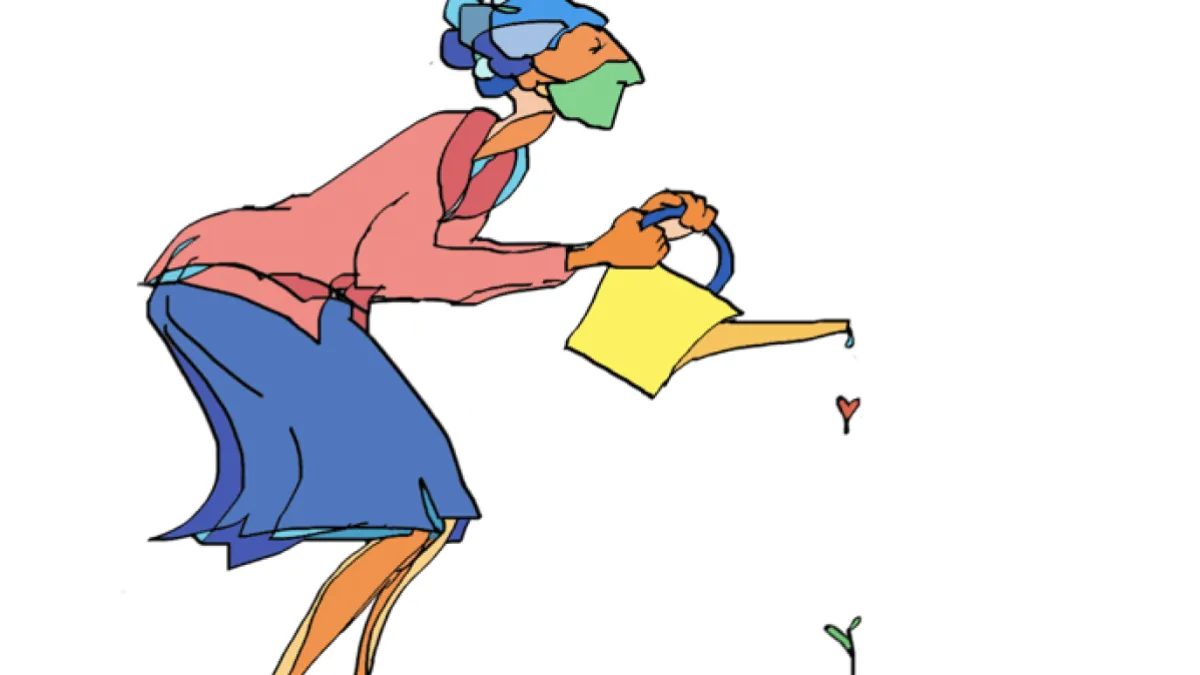
Banks had ignored the plant all morning. She felt immediate guilt. Her daughter took the pitcher and watered it. Within 30 minutes, the plant perked up. The act was small—but it changed how Banks saw her world.
From Human to Living Things
Banks identifies herself as relational. She believes humans are biologically wired to connect. This impulse is rooted in our DNA and physiology. From early infancy, infants show a preference for social interaction—turning toward faces, smiling at voices, and forming bonds with caregivers. These behaviors are not merely learned; they are hardwired through neural pathways that develop in early life and remain active throughout adulthood.
Yet, she observes a tension between this biological drive and the “power over” dynamics of modern institutions. These systems prioritize hierarchy, competition, and individual achievement. In schools, workplaces, and social structures, success is often measured by output, performance, and status. This model fosters a culture where people are evaluated not by their capacity to connect, but by how much they produce or how high they climb.
She defines “power over” as a structure where status grants authority to define others’ worth. Differences become rankings. Subordinate groups are treated as less valuable. Fear is used to maintain control, leading to chronic stress and disrupted mind-body relationships. This dynamic is not limited to human interactions—it extends into how we treat the natural world.
Power Over in Nature
She sees the same logic in how nature is treated. When people are valued only for their usefulness, nature becomes an exploitable resource. Forests are cleared for development, rivers are diverted for industry, and species are removed for profit. This mindset turns relationship into a question of what can be taken rather than what can be shared.
For example, in many industrialized societies, trees are seen as raw materials—wood to be harvested, carbon to be extracted, or land to be developed. This view treats ecosystems as static, finite, and disposable. It ignores the dynamic, interdependent systems that sustain life. When a tree is felled, it is not just a loss of a single organism—it disrupts a web of relationships that includes soil, fungi, insects, and other plants.
Tree Networks and Mutual Exchange
Research shows trees communicate through underground networks. These networks, made of mycelium, connect roots and allow exchange. The mycelial network functions like a vast underground internet, enabling trees to share nutrients, water, and even warnings about danger.
According to Peter Wohlleben and Blair Stainton, trees share nutrients with fungi. In return, fungi provide trees with carbohydrates from photosynthesis. This exchange is not one-sided. The relationship is reciprocal—each organism contributes and benefits.
Roots, in turn, give fungi 20 to 40 percent of their photosynthetic products. This mutual exchange suggests a system of mutual care, where no entity is entirely self-sufficient.
Some pioneer plants, which grow in barren land, develop root structures that mimic mycelial filaments. This allows them to compensate for the absence of fungi. These plants demonstrate an adaptive strategy that mirrors the symbiotic relationships seen in mature forests, showing how life finds ways to connect even in the absence of full networks.
Defensive Communication in Forests
When a tree is attacked by insects, it releases chemical signals through its roots. Nearby trees detect these signals and respond by releasing bitter tannins—compounds that deter predators. This behavior is not random; it is a form of communication that spreads through the network, protecting the entire forest.
Historically, Russian biologist Tokin identified airborne substances—now called phytocides—that kill microbes. These compounds travel through the air and protect plant life. This natural defense mechanism shows that plants are not passive entities—they are active participants in their own survival and in the health of their environment.
What If We See All Living Things as Connected?
Banks wonders: What if society began to see all living beings—not just humans—as part of a relational web?
She believes this would mean recognizing that humans are not separate from nature. Instead, we are part of it. This shift challenges the idea that differences between people or species mean separateness or lesser value. Connection does not erase difference; it asks us to see difference as a variation in expression, not a sign of worthlessness.
For instance, a Black person, a person of Indigenous descent, or someone from a marginalized community may face systemic barriers due to historical power imbalances. Yet, if we see all living beings as part of a shared ecosystem, we begin to recognize that these differences are not signs of inferiority, but of diverse ways of being in the world.
Practical Steps Toward Relational Awareness
Banks suggests a simple practice: notice the needs of living things around you. Respond with care. This could mean checking on a garden, observing a bird’s nest, or simply being present with a pet or a plant.
That morning, the act of watering a plant became a symbol. It showed how a small gesture can reframe how we relate to the world. It is not about changing the entire system overnight. It is about shifting attention—from what we take, to what we notice and respond to.
She does not claim this shift will fix systemic issues like inequality or environmental degradation. But it can help reduce the fear and anger that stem from power-based relationships. By cultivating a sense of relationality, we begin to heal the mind-body disconnection caused by hierarchical systems.
She concludes with a personal note: “Notice the need in front of you, and respond. That morning, connection began with a pitcher of water.”
For more on the science of tree networks, see the original source at Psychology Today.
- Mycelial networks allow trees to exchange nutrients and communicate.
- Roots and fungi engage in mutual exchange of minerals and carbohydrates.
- Tree networks can detect insect attacks and respond with defensive chemicals.
- Phytocides are airborne compounds that protect plants from microbes.
- Relational awareness can reduce fear and anger linked to power-based systems.
- Infants show early signs of social bonding, indicating a biological drive to connect.
- Industrial systems treat nature as a resource to be exploited, not a shared ecosystem.
- Pioneer plants adapt by mimicking mycelial structures, showing resilience in absence of fungi.
- Defensive chemical signals in trees protect entire forests, demonstrating interdependence.
- Systemic power imbalances affect people of marginalized backgrounds, just as they affect ecosystems.
- Connection does not erase difference; it reframes difference as expression, not value.
- Small daily acts of attention can begin to shift how we relate to the world.
- Relational awareness supports mental and emotional well-being by reducing chronic stress.
- Human and non-human life share a biological imperative to connect and care.
- Environmental degradation stems from a failure to see nature as part of a shared web.
- Shared ecosystems require mutual care, not extraction.
- Children and caregivers show early signs of relational sensitivity.
- Biological roots of connection exist in both human and non-human life.
- Power-based systems generate fear and anger, disrupting mind-body harmony.
- Relationality with nature can serve as a model for human relationships.
- Attention to living things can foster empathy and emotional resilience.
- Every organism has a role in a larger system of care and exchange.
- Changing how we see living things begins with presence, not policy.
These findings support a broader view: our biological drive to connect may extend beyond human relationships to include all living things. While the science is growing, the philosophical shift remains personal. It begins with attention—not theory.
Sources & further reading
Featured image: original publisher image. Via original publisher. Image source