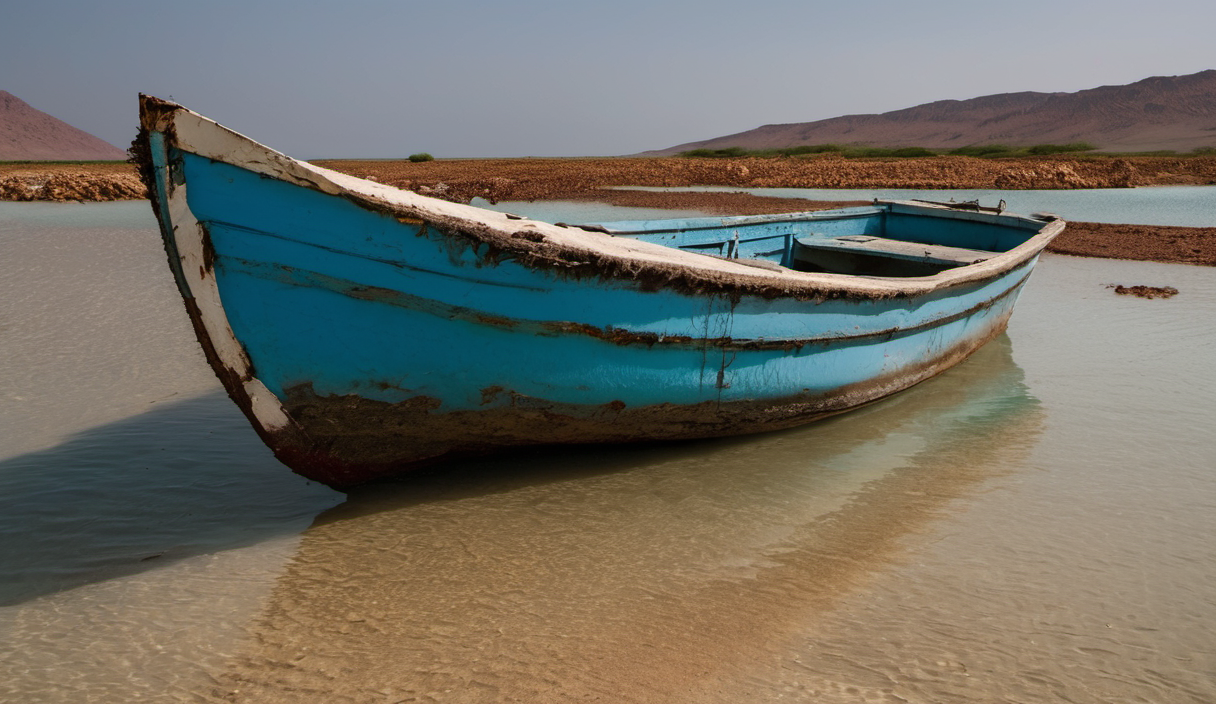
Featured image: A small, blue boat is the main foreground subject. AI-generated image; not a photograph of the reported event.
A boat carrying migrants from Ethiopia to Yemen capsized off Djibouti’s port town of Obock on Thursday night. Source: bbc.co.uk.
What Happened
The vessel, carrying 350 people, sank near Obock in the Bab el-Mandeb Strait.
At least 109 people died. The International Organization for Migration (IOM) confirmed the death toll in a statement on Friday.
Around 80 people were rescued. All survivors are Ethiopian nationals and have access to medical care in Obock.
Key Facts
- At least 109 migrants died.
- 116 people remain missing.
- 80 people were rescued.
- The IOM is providing healthcare and family contact support to 64 survivors.
- Since 10 September, over 20,000 movements from Ethiopia to Djibouti have been recorded.
- More than 900 migrants died or went missing on this route in 2025.
- There has been an increase in attempts on this route compared to previous years.
Background: The Migration Route
Migrants from the Horn of Africa travel to Yemen to seek safety and work opportunities.
Yemen remains in a decade-long civil war. The region faces instability, poverty, and climate change.
Despite these risks, thousands continue to cross the Bab el-Mandeb Strait, often using small, unseaworthy boats.
The IOM has observed a sharp rise in crossings since September 2025.
Why It Matters
This incident highlights the extreme dangers faced by migrants on the move.
It underscores how climate, conflict, and poverty drive people to take perilous journeys.
The IOM says the tragedy is a ‘stark reminder’ of the risks migrants face at sea and on land.
Response and Support
Local authorities are arranging burials for the deceased.
The IOM is working with local officials to provide medical care and support to survivors.
It is also working to prevent future deaths at sea and on land.
What to Watch Next
The IOM will continue monitoring movements along this route.
Further data on migrant patterns and safety risks may be released in coming weeks.
Source: International Organization for Migration (IOM), BBC News
For more on migration in Africa, see the full BBC report.