

Tsvetana Paraskova
What I Cover
Tsvetana Paraskova is an energy and commodities journalist who has contributed to Oilprice.com for nearly a decade, covering global energy markets, commodities,…
Set us as your preferred Google source
Premium Content
By Tsvetana Paraskova – Aug 17, 2026, 5:00 PM CDT
- AI and autonomous freight could reduce U.S. fuel demand by improving efficiency and cutting fuel consumption per shipment.
- Driverless trucking is already scaling, with Aurora and Gatik expanding commercial operations across major U.S. freight routes.
- Diesel supplies about 22% of U.S. transportation energy, making freight automation potentially meaningful for petroleum demand.
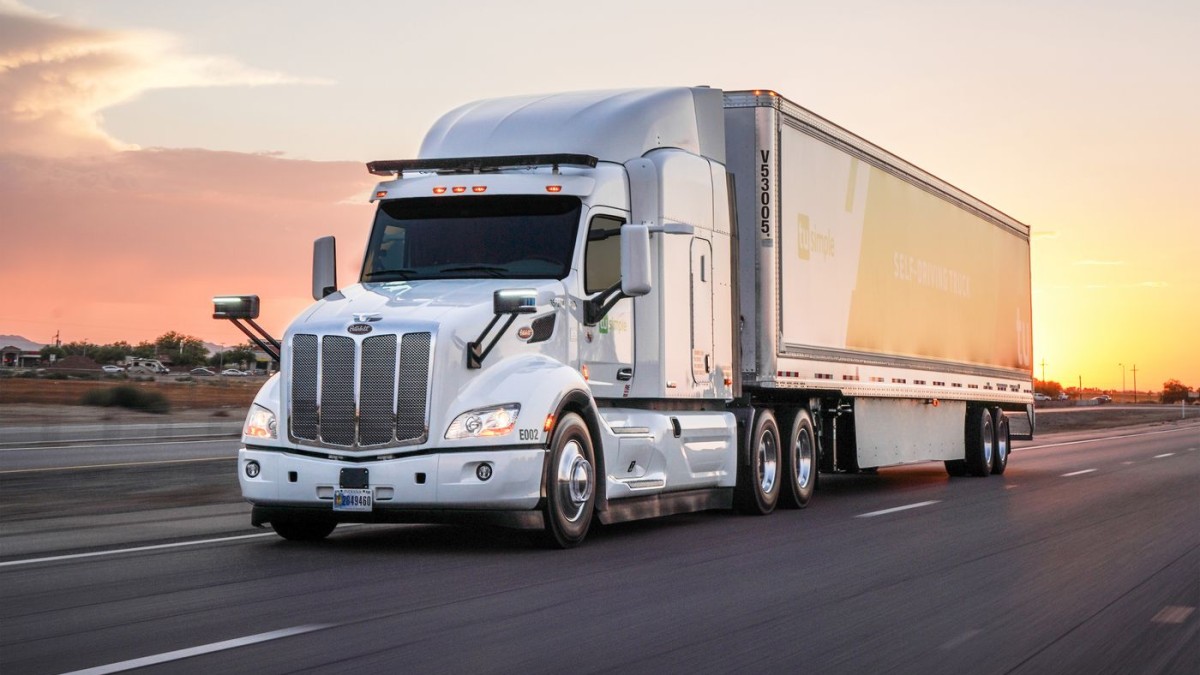
The rise of automation, AI, and electric trucks can fundamentally change the freight transportation industry in the United States, leading to a revolution in transport fuel demand.
Various vehicle and technology companies and U.S. cities and states have launched in recent years automation trucking pilot programs. In barge transportation on the Mississippi River, AI-assisted co-pilot projects are already being used to make transportation more efficient.
The increase in efficiency, via technological, autonomous, or AI-enabled systems, could optimize freight efficiency, including by reducing fuel per-unit use and inefficiencies in supply chains, Reuters columnist Gavin Maguire argues.
Vehicle automation is a promising fuel-reducing strategy. Moreover, truck platooning, the linking of trucks in a convoy to travel closer together by using connectivity technology and automated driving support systems, is a “likely contender to reduce energy requirements for the heavy-duty vehicle sector,” says the transport and mobility research team at the National Laboratory of the Rockies.
Platooning allows multiple vehicles to travel closer together, accelerate or brake simultaneously, and reduce aerodynamic drag to create significant energy or fuel savings, NLR notes.
Self-driving trucks in Texas and AI-assisted navigation on the Mississippi River are making inroads in boosting the efficiency of freight transportation in the United States.
Aurora Innovation, a self-driving freight developer, last year launched a commercial self-driving trucking service in Texas, starting regular driverless customer deliveries between Dallas and Houston.
This year, Aurora Innovation and its manufacturing partner Roush launched their second-generation driverless trucks. Aurora plans to deploy the new fleet across its commercial network, which currently encompasses 10 driverless routes throughout the U.S. Sun Belt, to serve additional customers.
Related: Libya Power Crisis Explodes as Grid Fails Again
“By working with a world-class manufacturing partner like Roush, we can meet our customer demand and continue to make the movement of goods safer and more efficient across the country,” said Chris Urmson, CEO and co-founder of Aurora Innovation.
Also this year, PepsiCo and Gatik announced a multi-year strategic partnership to bring autonomous freight into PepsiCo’s North America food and beverage supply chain. This is the largest commercial autonomous freight deployment to date, PepsiCo said. Today, Gatik is already operating for PepsiCo across Texas, Arizona, and Arkansas.
Gatik’s autonomous trucks help PepsiCo’s regional transportation networks, where products move daily from site to site.
“Autonomous trucking has reached commercial scale when it operates inside one of the most demanding supply chains on the planet,” Gautam Narang, CEO and Co-Founder of Gatik, said in June.
“That is what Gatik is doing with PepsiCo. Our autonomous trucks are already moving products every day across Texas, Arizona, and Arkansas, and this partnership is proof that Gatik is becoming central to how the world’s largest companies move goods.”
Jim Farrell, Senior Vice President of Supply Chain, PepsiCo, said, “Gatik is already operating inside our networks and brings the autonomous freight technology, commercial experience, and scale we need to strengthen service, add capacity, and move products more consistently for our customers.”
On the Mississippi, maritime autonomy and situational awareness systems developer Mythos AI last year installed its Advanced Pilot Assist Systems (APAS) on a Southern Devall tow vessel, the first deployment of this type of technology on the Mississippi River.
Technology and automation could soon transform American inland shipping, too.
All these advances in freight transportation technologies suggest that U.S. fuel demand could fundamentally change in the coming years thanks to fuel savings and electrification.
In 2025, transportation accounted for about 29% of total U.S. energy consumption. Petroleum products accounted for about 89% of the total energy use of the U.S. transportation sector, according to data from the U.S. Energy Information Administration (EIA).
In 2025, the annual use of diesel, the backbone of the freight sector and a driver of any economy, in the transportation sector accounted for about 75% of total U.S. distillate consumption and about 14% of total U.S. petroleum consumption. On an energy content basis, diesel fuel accounted for about 22% of total energy consumption in the U.S. transportation sector and for about 6% of U.S. total primary energy consumption, per EIA data.
Automation and other technology breakthroughs could soon reshape energy use in the transportation sector.
By Tsvetana Paraskova for Oilprice.com
More Top Reads From Oilprice.com
- Japan’s Oil Crisis Eases, But the Import Bill Keeps Climbing
- Iraq-Syria Oil Pipeline to Bypass Hormuz Is 4 Years and $15 Billion Away
- China’s Renewables Boom Faces Record Clean Power Curtailments
Download The Free Oilprice App Today


Tsvetana Paraskova
What I Cover
Tsvetana Paraskova is an energy and commodities journalist who has contributed to Oilprice.com for nearly a decade, covering global energy markets, commodities,…
