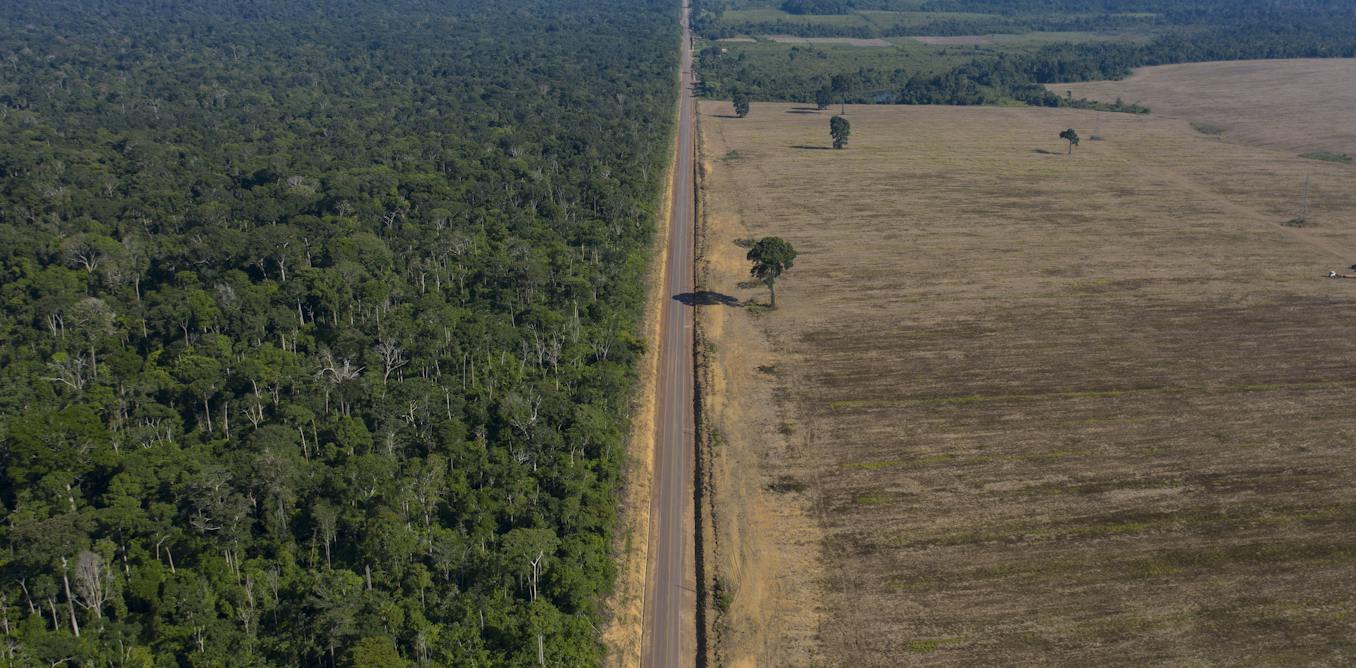
Recent drops in Brazil’s deforestation have been celebrated as a historic achievement. Forest loss in the Amazon fell by 23.5 per cent in 2025 compared to the previous year. This drop contributed to a 21 per cent national reduction in overall clear-cutting — the lowest level recorded since 2016.
Federal governance and control plans, such as Brazil’s Plan for the Prevention and Control of Deforestation in the Amazon, have been important drivers of this reduction.
However, turning this temporary relief into lasting protection requires extending effective enforcement to other biomes across Brazil. As a researcher studying environmental policies and forest degradation, I still see significant political obstacles ahead.
Lessons from the past
To understand the challenge of sustaining deforestation reduction, Brazil must look to its own history. Between 2004 and 2012, the country reduced Amazonian deforestation by almost 85 per cent through rigorous enforcement, real-time satellite monitoring and strong institutional co-ordination.
That progress was later undermined. During President Jair Bolsonaro’s administration from 2019 to 2022, severe dismantling of Brazil’s political institutions weakened environmental enforcement.
The number of federal environmental inspectors dropped from 1,311 to 691, while regulatory changes restricted agents’ authority to destroy machinery used in environmental crimes. This staffing shortage caused a near-total collapse in the number of fines issued.
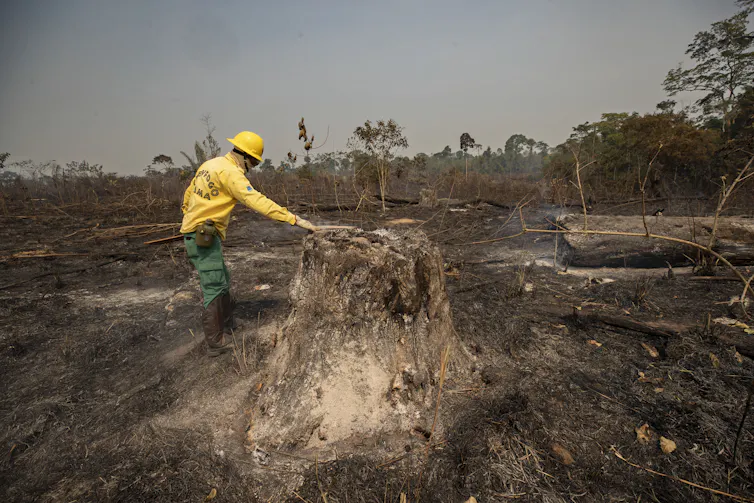
Deforestation reached a 15-year high in 2022, surging past 13,000 square kilometres. This crisis left federal agents exposed to severe threats from armed loggers and a complete lack of government support.

(AP Photo/Andre Penner)
Led by President Luiz Inácio Lula da Silva’s administration starting in 2023, overcoming this setback required a shift towards much faster enforcement. Brazil combined real-time satellite monitoring with immediate digital embargoes. Issued remotely by federal environmental agencies, these digital shutdown orders block illegal activities at a small fraction of ground costs.
In 2019, only five per cent of deforestation was subject to effective control actions. The current administration has since reintroduced active sanctions, including heavy fines and property embargoes for illegal deforestation.
Credit restrictions are an important part of this approach. They ban rural loans to embargoed or irregular properties, cutting off an important source of financing for illegal activity.
Supply chain agreements, such as the Amazon Soy Moratorium, have also helped curb deforestation. Established in 2006, this pact bans the trade of grains grown on areas deforested after 2008, heavily driving the initial deforestation reductions of that decade.
When oversight breaks down
During the years of weakened oversight, criminal expansion in the countryside developed into a severe public security issue.
Criminal factions deeply embedded themselves in parts of the Amazon through illegal logging operations. Clandestine mining and international drug trafficking also became intertwined with timber crimes and illegal land occupation.
Along these routes, local residents and field agents face constant threats and, in some cases, brutal murders. In response, the government has deployed police and military forces in joint operations alongside environmental inspectors.
Despite working alongside armed forces, environmental inspectors hold some of the lowest federal salaries and lack institutional backing. This vulnerability drives high staff turnover and weakens enforcement.
Political pressure
The environmental pressure also extend beyond the Amazon rainforest. Despite a slight decrease in deforestation, Brazil’s massive Cerrado savanna continues to account for a large share of the country’s vegetation loss, largely because of agricultural expansion.
These agricultural interests have significant political support. At the federal level, the Rural Caucus (Bancada Ruralista) is a congressional bloc that represents the interests of Brazil’s agricultural sector.


(AP Photo/Leo Correa)
As Brazil’s agricultural powerhouse, Mato Grosso state is crucial to this dynamic. Its government recently targeted trade pacts by restricting tax incentives, pushing agribusiness to exit the Soy Moratorium and boost regional commodity exports. Other state decrees permit intensive grazing inside reserves in the fragile southern wetlands.
At the federal level, the Rural Caucus backed a bill prohibiting rural-property embargoes based solely on satellite evidence. The bill has moved to the Brazil senate and could make rapid enforcement more difficult.
The Rural Caucus has also stripped tax benefits from companies complying with the Soy Moratorium.
These pressures also extend into protected Indigenous territories. Although deforestation in Amazonian Indigenous lands dropped by 25 per cent, specific areas continue to experience environmental collapse. In the Batelão Indigenous Territory, clear-cutting skyrocketed by about 10,000 per cent following illegal occupation by non-Indigenous outsiders and the establishment of pastures.
Cascading environmental risks
Beyond visible clear-cutting, Brazil faces severe, continuous environmental degradation from extreme regional droughts and wildfires.
The Brazilian savannas lost half their native cover through large-scale conversion to crops. This process refers to replacing natural vegetation with agricultural fields.
Conversion to crops can cut atmospheric water recycling by up to 44 per cent and raise local air temperatures by as much as 3.5 C. This cycle creates a dangerous regional warming loop across the landscape.
The Brazilian Pantanal, the world’s largest tropical wetland, has lost thousands of square kilometres of surface water over the past four decades due to climate change and land-use pressures.
The wetland is drying out at alarming rates, increasing the risk of high-intensity fires. Halting the loss of Brazil’s natural heritage therefore requires integrated environmental governance.

(AP Photo/Andre Penner)
Making progress permanent
Scientific literature shows that consistent reductions in deforestation depend on solid state capacity. Public land allocation, legal security and traceable supply chains are essential to this process.
Federal environmental enforcement cannot stop deforestation while congressional policies cater to agribusiness interests. Protecting nature and farming are linked, as ecosystem damage destroys the climate stability that agriculture needs.
Securing long-term environmental stability requires permanent state policies that strengthen environmental agencies and maintain preventive planning. Rigorous land regularization must accompany economic incentives for agriculture on already cleared lands.
Unified regional action remains essential for protecting Brazil’s invaluable natural heritage forever. The challenge now is to make those gains permanent and extend effective protection across the country’s forests, savannas and wetlands.
- 5 ways teachers can respond to residential school denialism in the classroom
-

-

-