This is a rush transcript. Copy may not be in its final form.
AMY GOODMAN: This is Democracy Now!, democracynow.org, The War and Peace Report. I’m Amy Goodman, broadcasting from Sheffield Live! in England from the Sheffield DocsFest.
We turn now to the troubled state of higher education in the United States. The Trump administration is now attempting to impose its views on academic scholarship in universities by rewriting the federal rules that govern all of higher education. Last month, the Office of Management and Budget issued a new rule requiring all federal grants undergo a review to ensure they, quote, “demonstrably advance the president’s policy priorities.” The proposal could threaten scholarly research and teaching on race, immigration, gender studies and history, as well as research in the sciences and health. Another rule, proposed by the Education Department, would require colleges to have, quote, “intellectual diversity” in order to receive federal funding.
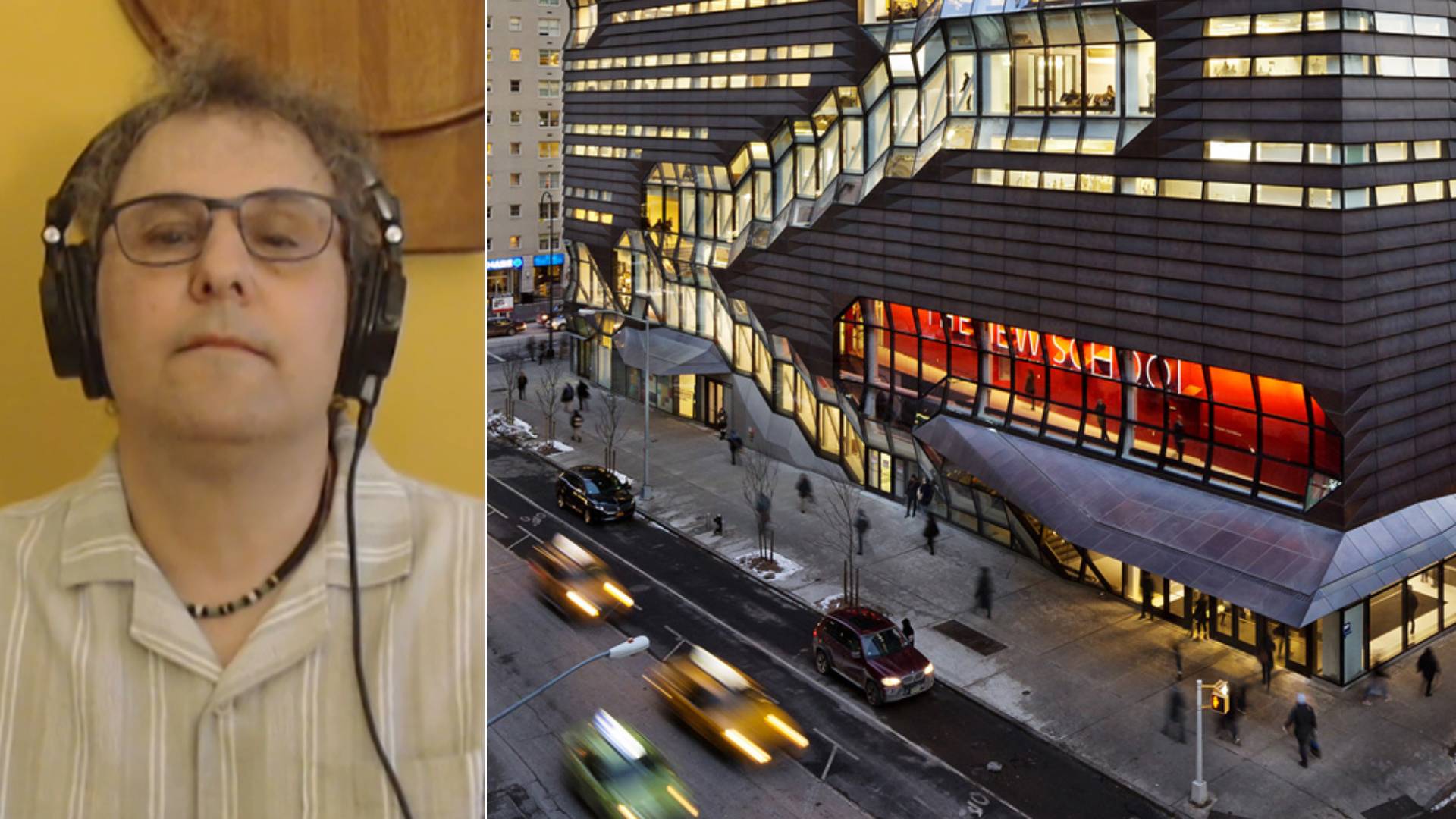
The pressure from the federal government comes at a time of private, nonprofit colleges turning to austerity measures to deal with their financial challenges and declining enrollments. Last week, one of New York’s most iconic universities, The New School, which was founded as a haven for anti-fascist, anti-Nazi intellectuals, laid off 19 full-time faculty, 68 staff members, as well, along with coerced voluntary separations and early retirements since last year, December. These mass firings constitute a major gutting of The New School’s full-time faculty.
For more, we go to Jeremy Varon, professor of history at The New School, where he’s taught since 2008. And he’s president of the New School chapter of the AAUP — that’s the American Association of University Professors. He’s been personally impacted by the recent firings, took a two-year early retirement package. He’s the author of three books, including, most recently, Our Grief Is Not a Cry for War.
Professor Varon, thanks for joining us. Explain what’s happened at The New School, and then put it into a national context.
JEREMY VARON: OK, so, with its severe and reckless austerity, The New School has struck a blow against its own faculty and students, its proud progressive traditions, and professors everywhere. Facing budget deficits of disputed origin, it’s trying to fire its way to a balanced budget, including by firing full-time faculty and tenured professors. For those who are fired, it’s devastating, of course. Most are in the social sciences and humanities, where The New School earned its global reputation as a haven for dissident intellectuals and critical thought. It was a completely top-down process. Nobody asked to be fired.
And to the last part of your question, it’s a chilling message to all of academia. Nationwide, the last two years have seen nearly 300 program closures and faculty and staff firings. And we fear that the number will grow as universities act more and more like corporations concerned above all with the bottom line. So, we are a cautionary tale and also a very live struggle where we still have current demands.
AMY GOODMAN: So, talk about what’s happened, your colleagues and you, yourself.
JEREMY VARON: Yeah, well, you know, we were told that we’re not only dispensable, but a liability, because we simply, you know, cost too much. So, for an entire year, they were threatening to fire people. They wouldn’t say who. They wouldn’t say by what criteria. Very afraid of being fired, I took a two-year phased retirement. And I’ll retire at age 61 and have to figure out how to pay the bills and afford healthcare without a salary or a profession. And then, what they’re trying to do is save money by letting go of the most experienced, most highly compensated faculty, and then shifting teaching labor to part-time, contingent, precarious and less well-compensated, you know, faculty. So it’s a cost-saving move that irrevocably alters a meaning — the meaning of a faculty and diminishes, I think, the strength and reputation of The New School. And again, this is a model that’s being followed nationwide, and will be more so in the future.
AMY GOODMAN: How do universities fire tenured faculty?
JEREMY VARON: Right, so, tenure, you know, is typically awarded after a rigorous and lengthy process of evaluation. It’s commonly seen as lifetime employment. It is a fundamental guarantee of academic freedom. You don’t want trustees or administrators or state legislators firing people based on what they teach and what they write. And yet, The New School has declared tenure essentially meaningless. They claim that you can declare an academic program deficient or simply restructured and fire people at will. And then, our big concern is that presidents everywhere are watching and will lustily follow the New School model, which is an easy way to cut costs by attacking your own workforce.
AMY GOODMAN: A recent article in Hechinger Report and NPR cites a report from the Huron Consulting Group projecting 442 private, nonprofit four-year colleges are at risk of closing or merging in the next decade. This is a quote from Peter Stokes, managing director of Huron: quote, “We have too many seats. We have too many classrooms. So over the coming five to 10 years, this shakeout is going to take place,” unquote. Jeremy Varon, what is the Huron Consulting Group, and what is its history at The New School?
JEREMY VARON: I mean, it’s one of these management consulting groups that advises, you know, companies of many varieties in downsizing, austerity, internal reorganization. And The New School has had a sort of on-again, off-again relationship with Huron. They were one player in the recent austerity that The New School executed. And, you know, the statistics they cite are chilling. It points to a major, major decline of the place of higher education within the broad American cultural landscape.
AMY GOODMAN: And can you talk, as a historian, about the history of The New School, I mean, back to its anti-fascist, anti-Nazi youths, German professors fleeing the Holocaust?
JEREMY VARON: Right. I mean, so, yeah —
AMY GOODMAN: And what these cuts mean for the humanities and social sciences?
JEREMY VARON: Right. So, The New School was founded in 1919 in defense of free speech rights around World War I. In the interwar years, it was a safe harbor for dissident intellectuals persecuted by European fascism. In the decades since, it has had scholars in exile. And it’s always tried to stand up for the underdog and the persecuted. And all over the world — Latin America, Europe, parts of Asia — it means something, and it signifies to the world freedom and resistance to authoritarian power.
As you indicated, the recent cuts attack the humanities and social sciences. That’s where a lot of the critical thinking occurs, you know, not exclusively. And we’re afraid that the historic mission and legacy of The New School will be, you know, severely diminished. And we still attract free-thinking students who want to participate in this glorious history and mythology, but the administration is making all these things about The New School less true. And then, the great irony is that if this kind of austerity can happen at The New School, it can happen everywhere. So, faculties all over the country need to be on guard. They need strong labor unions, AAUP chapters, and strong coalitions of faculty, students, alumni and parents.
AMY GOODMAN: Jeremy Varon, professor of history at The New School, where he’s taught since 2008, president of the New School chapter of the American Association of University Professors, has recently, as a result of the recent firings, took a two-year early retirement package, author of three books, including Our Grief Is Not a Cry for War.
The original content of this program is licensed under a Creative Commons Attribution-Noncommercial-No Derivative Works 3.0 United States License. Please attribute legal copies of this work to democracynow.org. Some of the work(s) that this program incorporates, however, may be separately licensed. For further information or additional permissions, contact us.