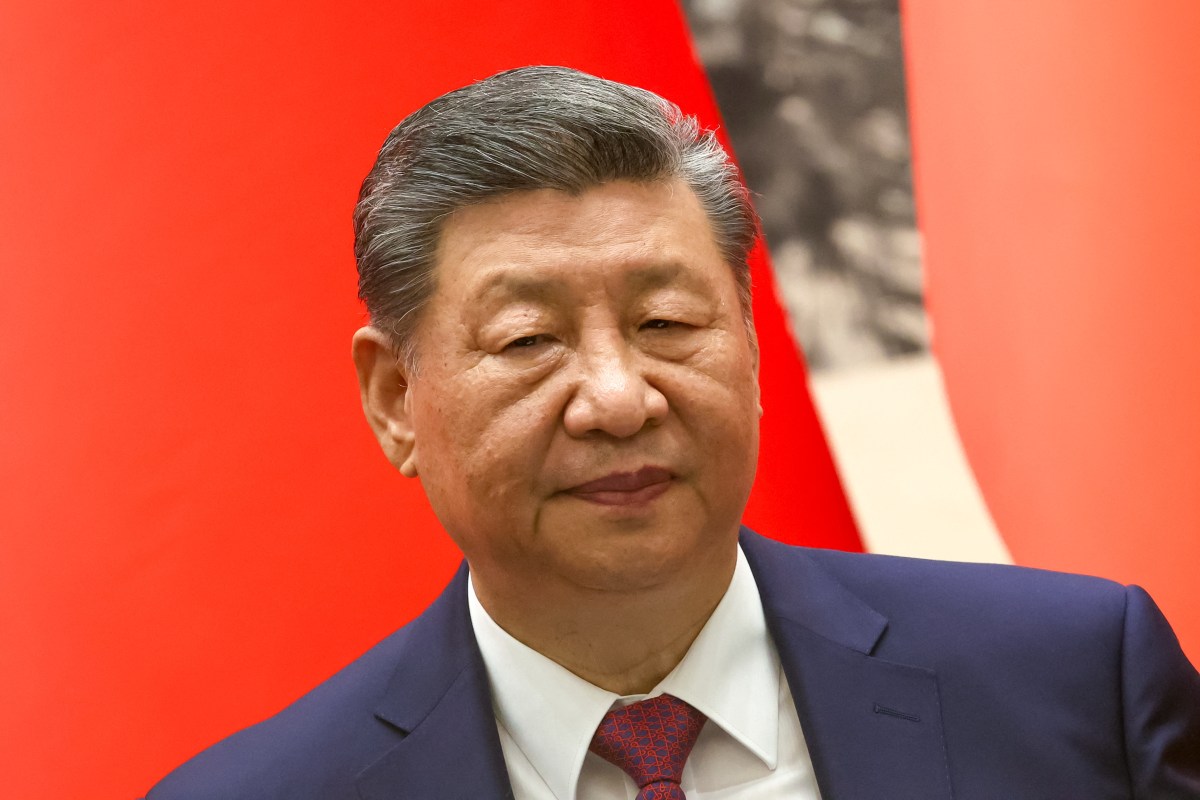
When Xi Jinping arrives in the U.S. next month for a state visit, he will watch out for the details that matter greatly to the Chinese leader: the warmth of the reception, the size of the red carpet, the grandness of the protocol.
But Xi also will bring with him China’s playbook for dealing with U.S.-China relations—nudge President Donald Trump to bypass normal political and bureaucratic channels and to engage in “top-down management.”
He will be nudging on an at least half-open door, as it’s something the U.S. president is known to like. Yet there’s a term for it in China—both Xi and his Russian counterpart Vladimir Putin have openly pursued it for years—“head-of-state leadership,” or, using a little translation license to get the full sense, “leader-led leadership.”
A confident Chinese Communist Party is betting that “summitry” is the best way to manage its most important foreign relationship according to members of a rare U.S. delegation that recently visited China, where they met with dozens of officials in the foreign ministry, the military, the economy, think tanks, businesses and more. They briefed a small group of reporters, including Newsweek, on the trip late last week.
The White House has confirmed to Newsweek that Xi’s state visit—his first to the U.S. in 11 years—begins on September 24, but did not answer questions about China’s tactics in managing Trump; if he was being manipulated; and what the President hopes to achieve when he hosts the CCP General Secretary.
In fact, the growing use of “summitry” by Beijing is a way to avoid answering hard questions on a granular level on a range of issues that roil the U.S.-China relationship from trade and technology to sanctions lists and military tensions in Asia—that was a main takeaway for the U.S.–China Economic and Security Review Commission (USCC), a bi-partisan legislative agency that has advised Congress on China relations since 2000.
Led by Chairman Randall Schriver and Vice Chair Mike Kuiken, the five commissioners’ five-day, “fact-finding” mission to Beijing, Hangzhou and Shanghai in late July was the first in seven years, reflecting how U.S.-China relations are growing more tense, whatever the surface optics.
“They’re pushing a lot into this process of ‘summitry,’ and in some ways, that’s a management mechanism,” said Schriver, a former Assistant Secretary of Defense for Indo-Pacific Security Affairs.
“And I think they either said explicitly, or alluded to the fact, that this is the ability for leaders to give direction down to the bureaucracies … rather than the bureaucracies creating the initiatives and the agenda,” Schriver said. “It’s a top-down management, which of course they’re very comfortable with in their system.”
“It enables the Chinese side to dodge hard questions from the Americans,” Schriver said. “Whenever an issue was raised, they would sort of throw it into that bucket immediately. ‘Well, that, you know, may be addressed in September. That could be a topic for our leaders.’”
Summitry and Stability
If China wants “summitry,” it also says it seeks “stability”—a reference to an agreement reached in Beijing during the U.S. President’s own state visit there in May to build a relationship of “constructive strategic stability.”
Yet China made plain at the time that it believes that there are “structural contradictions” that will not resolve easily. That’s CCP code for real, long-term problems.
The commissioners said that “malign” behavior runs underneath the rhetoric they heard from officials.
That suggests that a summit serves rather as a deliberate place-holder for China that masks the true power dynamic: control the public narrative, continue the policies.
“[T]he risk is that that becomes sort of cover for continuing malign behavior, misbehavior, and I think what we’ve observed since President Trump’s trip is still some concerning activity,” Schriver said.
That included new State Council economic and trade decrees, “continued coercion against Taiwan including ramped up Coast Guard patrols east of Taiwan, we’ve seen continued coercion in the South China Sea directed at the Philippines, a U.S. treaty ally,” he said. Japan, which is upgrading its military to defend against China, was a key target of Beijing’s ire, they said.
The commissioners’ interlocutors made clear that they wanted the U.S. to isolate its regional allies such as Japan and the Philippines. Both states are increasingly bearing the brunt of Beijing’s diplomatic and hybrid warfare and expanding territorial claims as it seeks to break through the “first island chain”, a defensive line in the western Pacific that includes those island nations and Taiwan.
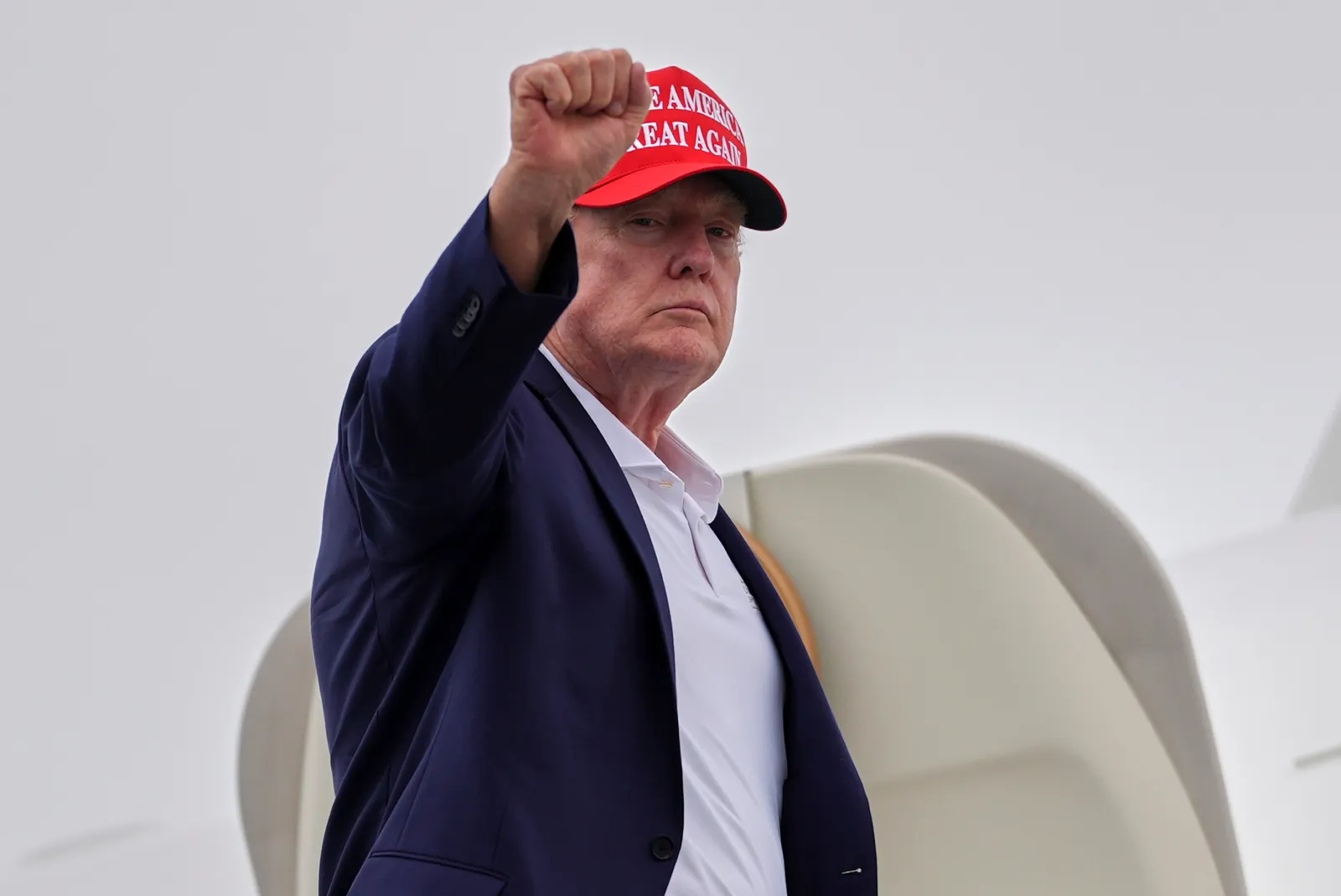
Chinese officials view countries that are not the U.S. or China as “meddling middle powers” that China would like the U.S. to drop, Vice Chair Mike Kuiken said.
“A couple times we’d ask just about approaching things in a multilateral way, or how they think about allies and trade,” but Chinese officials’ reactions was, ‘No, let’s focus on these bilaterally … other countries can be a nuisance in this process,’” Kuiken said. The Chinese side did not name the other countries.
“‘[Y]ou United States, you Americans keep getting dragged in by these meddling middle powers,’” was China’s message, he said.
Low on Specifics
If there was lots of talk of summitry and stability, a third “s” was missing: Specifics.
Despite multiple meetings with officials from the foreign and trade ministries, the military, the central government and at the provincial level including in Zhejiang, with state think tanks and U.S. businesspeople and organizations, the commissioners said they came away with few specifics.
“I think it was by design that there’s no details behind [it],” said Kuiken. I think on their part, I think they think that summitry is what brings the stability…. I think that was the sort of takeaway I took from it. It’s just they don’t really have interest in the details. They have interest in being able to use it as a talking point.”
Schriver agreed: “Sometimes they do want to be less specific so that they have a platform and a mantra from which they can then criticize us for stepping away,” he said.
Trump’s proposed boards of trade and investment were seen as a possible bright spot as it may be a way to depart from traditional U.S. bureaucracy which has banned many China-made technology products and sanctioned many Chinese companies for ties to the military or other security issues. Most recently the Pentagon placed the online e-commerce giant Alibaba on its 1260H list of “Chinese Military Companies” for its connections to China’s “military-civil fusion” system, a state policy that is directed by Xi.
“They have an intense interest in this board of trade and board of investment, because I think they see that as a process through which they can sort of institutionalize the management of things, and so that is a tool that I think … that they’re comfortable with,” said Kuiken.
“They believe that building on that via these new boards of trade, which again are outside of the American traditional American bureaucracy, are something that they believe will be effective tools for management,” he said.
An area where the Chinese side—already projecting an atmosphere of confidence—was palpably confident was AI, said Commissioner Chris Slevin.
The visit took place shortly after a major AI meeting in Shanghai in mid-July where Xi announced a new global coalition aimed at shaping global AI governance and expanding technological access for the “Global South,” known as WAICO, the World Artificial Intelligence Cooperation Organization. The U.S. is not a member, though Canada and Cuba joined; in Europe only Belarus is on board; the majority of members are in Africa and Asia.
“[T]here’s a lot of messaging I think from Xi in really taking a step on the global stage when it comes to leadership on AI, and sort of defining what success looks like,” said Slevin.
A Double Strategy
Overall, the commissioners pointed to China’s apparent confidence, and something Kuiken called a double strategy, or an “inside voice-outside voice dynamic.”
“[T]have a very loud, clear outside voice. ‘We want summitry, we want stability,’” Kuiken said.
“But there is almost a hope that we don’t hear the inside voice or the ‘inside the family conversation,’ which is, yeah, but we’re going to keep doing what we’re doing. So we’re going to keep doing all the things that we do in the South China Sea…We’re going to keep doing all of the pressure points with the Philippines. We’re going to keep putting pressure on the middle powers,” he said, with Japan a particular focus.
“We’re going to keep trying to pursue AI in the way we want to. And so, this idea of like an inside-outside voice was something that I had as a real takeaway from this trip.”
That’s another Chinese phrase: “inside and outside are different.”
So summitry and stability but few specifics; an “inside-outside” approach; yet the bigger point may be whether Trump can see through and deal with China’s tactics and push hard for U.S. interests, or if he follows Xi and Putin through that summit-loving, “head-of-state leadership” door.