Connie Raines shares a snapshot of her garden in Griffin, Georgia, more than a year after moving into her home. The garden has evolved from a transplant project into a living, evolving space filled with flowers, foliage, and a homegrown watermelon. Source: finegardening.com.
What Happened
Connie moved to Griffin, Georgia, and began rebuilding her garden from scratch. She transplanted many of her existing plants to the new location, adapting them to the local climate and soil conditions. This process required careful planning, as Georgia’s humid subtropical climate presents both opportunities and challenges for plant growth.
Over the past year, she has continued to refine the garden, adding new plants and adjusting layouts. Her work reflects a hands-on approach to gardening, with attention to both plant health and space efficiency. The garden is not a static design but a dynamic ecosystem that responds to seasonal changes and environmental conditions.
Key Plants and Features
- Delphinium (Delphinium cvs., Zones 3–7) paired with coleus (Coleus scutellarioides, annual) — a combination that adds height and color to the garden. Delphiniums provide vertical structure with their tall spikes of blue, purple, or pink flowers, while coleus offers vibrant, colorful foliage that changes with the seasons, enhancing visual interest throughout the growing season.
- Native swamp rose mallow (Hibiscus moscheutos, Zones 5–9) and zinnias — both native and vibrant, thriving in the region’s warm, humid climate. These plants are well-adapted to Georgia’s soil and rainfall patterns, requiring minimal intervention once established. Hibiscus moscheutos, in particular, is known for its large, showy flowers and tolerance to wet soils, making it ideal for areas with poor drainage.
- A perennial begonia (Begonia grandis, Zones 6–9), a soft mahonia bush just planted this spring, and amaranth — all contributing to seasonal interest and texture. Begonias offer long-lasting blooms with a wide range of colors, while mahonia provides a soft, evergreen structure that adds year-round interest. Amaranth, with its bold, upright stems and colorful leaves, brings both visual drama and a touch of wildness to the garden.
- A watermelon grown by her husband, which grew in a new area created by a stepped retaining wall. The fruit is described as oblong and large. This demonstrates how gardeners can use structural elements to create productive growing zones, especially in areas with uneven terrain or limited flat space.
- Her hearts-a-bustin’ (Euonymus americanus, Zones 6–9) was transplanted from a crowded spot to allow more room to spread. This adjustment illustrates a key principle in garden design: plant spacing directly affects growth, health, and air circulation. Overcrowding can lead to disease and poor development, so relocating plants is a common and necessary step in garden maintenance.
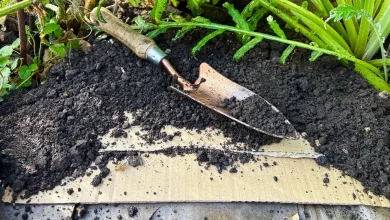
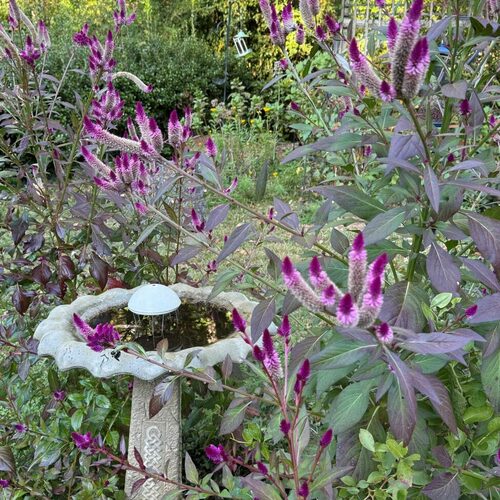
- A celosia (Spicata group) grew from seeds saved from a pot of plants last summer. The area was once a tree site, with rotting roots now forming soft, fertile soil. This example highlights how gardeners can repurpose spaces that were once used for trees. The decomposition of roots enriches the soil with organic matter, creating a naturally fertile environment that supports plant growth.
What It Means for Gardeners in the Southeast
Connie’s garden offers a practical example of how a new homeowner can build a garden from the ground up. It emphasizes adaptability, using existing plant material and working with natural conditions. The region’s climate, with hot summers and mild winters, demands plant choices that are both resilient and low-maintenance.
Her use of native and hardy species reflects a growing trend in sustainable gardening. These plants are typically better adapted to local conditions, reducing the need for irrigation, fertilizers, and pest control. This approach not only saves resources but also supports local biodiversity.
The garden demonstrates how gardeners can repurpose spaces — such as removing a tree and using its root zone to enrich soil. This method turns a potential liability into a valuable asset, showcasing how thoughtful observation and planning can lead to long-term garden success.
Personal Experience and Gardening Philosophy
Connie describes her garden as a ‘work in progress.’ This reflects a realistic and sustainable approach to gardening — one that values patience, observation, and continuous improvement. Rather than aiming for perfection, she focuses on progress, adjusting as she learns from each season.
She notes that the garden has evolved through trial and error. For instance, the transplanted euonymus was once crowded and now has space to grow. This shows how plant placement can be adjusted over time to meet plant needs. Her experience underscores that gardening is not a one-time project but a lifelong learning process.
Her success with the celosia from saved seeds illustrates the value of seed saving and plant propagation. It also shows how gardeners can build resilience by relying on their own plant stock rather than store-bought varieties. This practice reduces dependency on commercial suppliers and helps preserve genetic diversity.
Why It Matters
Connie’s garden is a real-world example of sustainable, low-impact gardening. It avoids reliance on imported or exotic plants, using native and hardy species that are well-suited to the region. This approach supports ecological balance and reduces environmental impact.
It also reflects a growing trend among homeowners to create gardens that are both beautiful and functional — with food production, like the watermelon, as a key component. This integration of food and aesthetics aligns with the broader movement toward edible landscapes.
For readers, it offers inspiration and practical ideas for starting or improving a garden in a similar climate. The garden serves as a model for how to balance beauty, function, and sustainability in a home garden.
Limitations and Open Questions
While the garden is detailed, the source does not specify the variety of watermelon grown. The husband’s success is noted, but no variety or taste details are provided. This gap suggests that future updates could include more specific information about crop selection and harvest experiences.
There is no mention of soil testing, irrigation methods, or pest management — key considerations in long-term garden health. These elements are critical for maintaining plant vitality and preventing disease outbreaks, especially in humid environments.
The garden’s development is described as a ‘work in progress,’ indicating that it is not yet fully optimized. This reflects the reality of gardening — progress is gradual and ongoing. Gardeners must remain attentive to seasonal cycles and environmental shifts to ensure long-term success.
What to Watch Next
Connie has promised a follow-up update, likely covering fall planting, winter preparation, or further plant additions. This shows how gardeners can maintain a long-term, evolving project. Such updates are essential for tracking seasonal cycles and adapting to changing conditions.
Readers are encouraged to submit their own garden photos through the Fine Gardening submission form. The site welcomes stories of successes, failures, and favorite plants from gardeners across the country. These personal narratives enrich the community and provide diverse perspectives on gardening in different regions and climates.
For more on small-space gardening strategies, see Strategies for Optimizing a Small Garden Space.
For inspiration on native plants, explore the Super Cool Plants podcast.
And for a broader look at sustainable native plant gardens, check out the Garden Tour of a Sustainable Native Plant Oasis.
Sources & further reading
Featured image: THUMBNAIL-1×1. Via original publisher. Image source