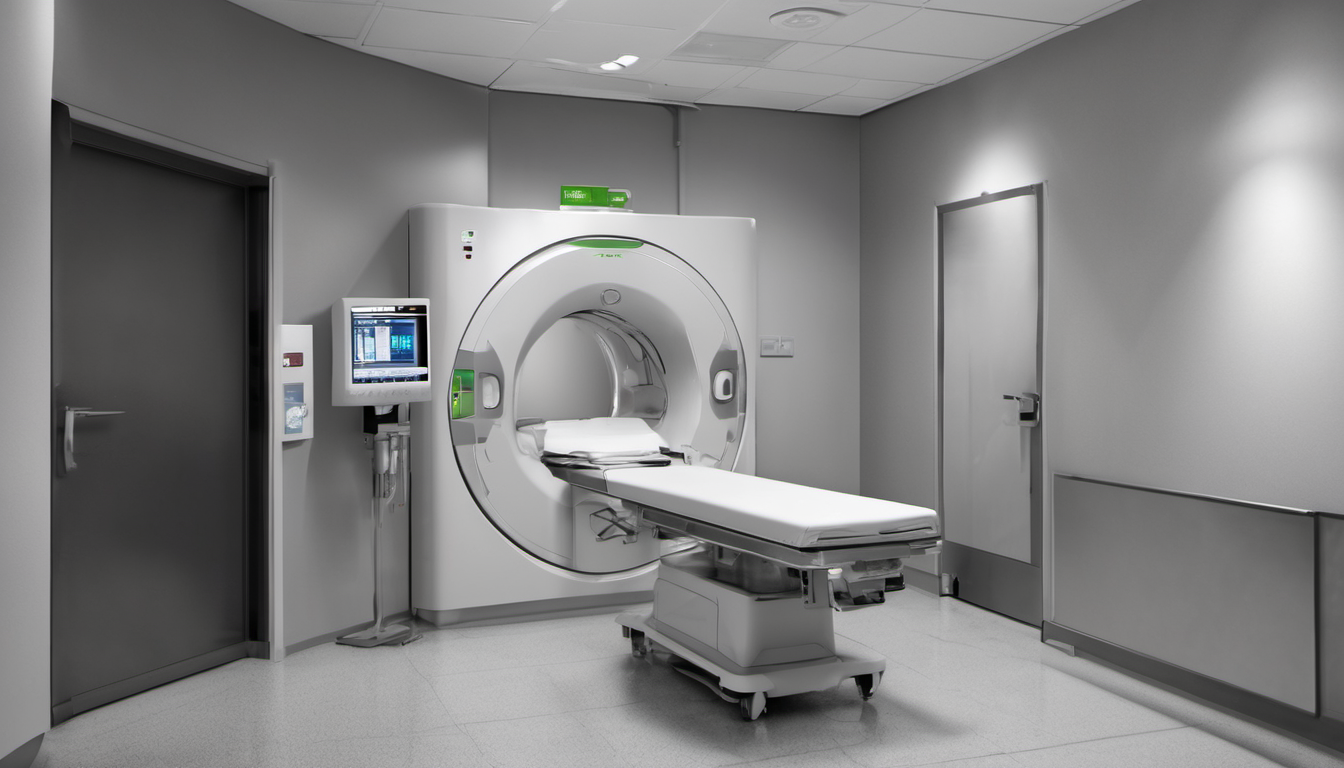
Featured image: A medical imaging scanner, specifically a CT scanner, is the main foreground subject. AI-generated image; not a photograph of the reported event.
Caroline Bailey began with sharp, stabbing pain in her abdomen. The pain stayed strong and didn’t improve with rest. Source: bbc.co.uk.
Initial Symptoms and Medical Response
She first blamed the pain on her contraceptive coil. The coil was causing intense discomfort in the center of her belly.
She visited her GP repeatedly. Each time, she asked for the coil to be removed.
Her local GP had no availability. So she was referred to a sexual health clinic. Staff there said the coil couldn’t be removed.
As pain grew worse, she entered the doctor’s office on her hands and knees. She said, ‘I wanted to rip it out myself, but you can’t. I thought it was killing me.’
She later said, ‘I wish it was easier for women to get diagnosed. It’s not just about symptoms — it’s about how quickly they’re taken seriously.’
Diagnostic Pathway and Blood Test
Her doctor ordered a CA125 blood test. This test checks for a protein linked to ovarian cancer.
Caroline took the test. The result showed 72 units per ml — above the 35 U/ml threshold for women over 40, as set by Ovarian Cancer Action.
She was placed on a two-week pathway. She described it as ‘in this crazy world of, oh my God.’ She felt the system moved slowly and without clarity.
Imaging and Cancer Diagnosis
Scans revealed a 13cm (5in) tumour pressing against her contraceptive coil.
A biopsy confirmed stage three ovarian cancer. The cancer had spread to the omentum — a fatty layer near the womb and ovaries.
The NHS lists common symptoms: bloating, abdominal pain, loss of appetite, and urgent or frequent urination.
Caroline said, ‘I actually thought, ‘I won’t live for another two years.’ That moment changed how she saw her health.
Treatment and Recovery
Caroline started chemotherapy at The Christie Hospital in Manchester. After four rounds, the tumour shrank to 8cm (3in).
On October 26, she had a total hysterectomy. The surgery removed her womb, cervix, omentum, and appendix. It lasted six hours.
Now, she has no evidence of disease. But she was told ovarian cancer can return. It’s unpredictable and often comes back.
One month after surgery, her grandson Roman was born. This gave her emotional strength. In January 2024, she had two more chemotherapy rounds and follow-up CT scans.
Genetic Findings and Preventative Steps
Genetic testing found mutations that raise the risk of both breast and ovarian cancer.
Caroline is now in a trial for a double mastectomy — removing both breasts — with reconstruction and implants. Her family members are also being tested.
She said, ‘The best thing about having ovarian cancer is my girls know what they’re dealing with and they can have preventative surgery.’
She added, ‘My diagnosis makes me live for now… and what I know now is, tomorrow is definitely not guaranteed.’
Lifestyle and Financial Impact
During treatment, Caroline moved homes, went through a divorce, and lost her job. At times, she lived out of her car.
She said money was her ‘biggest worry.’ Her life changed significantly because of her illness.
Now, she urges other women to check any unusual symptoms. ‘I’ve definitely had to change my life because I had cancer,’ she said. ‘My motto is: Be healthy, be happy, be kind.’
Broader Context and Statistics
Ovarian cancer is the 16th most common cancer in the UK. About 7,700 new cases are diagnosed each year, according to Cancer Research UK.
Welsh government data shows only 51.3% of women started treatment within 62 days of first suspecting gynaecological cancer — far below the 75% target.
This gap shows delays in care. Caroline’s story shows how a common device — a contraceptive coil — might mask a serious illness.
It also shows how women often face barriers in getting timely care when symptoms don’t immediately point to a life-threatening condition.
Her experience reminds us: any persistent symptom should be checked — even if it seems simple at first.
For more on ovarian cancer and early detection, see the original source: BBC News.
- Caroline Bailey was diagnosed with stage three ovarian cancer.
- She underwent a total hysterectomy and removal of the omentum and appendix.
- Genetic testing revealed mutations increasing risk of breast and ovarian cancer.
- She is now part of a trial for preventative mastectomy.
Early diagnosis remains critical. Caroline’s story shows how persistent symptoms, even if dismissed at first, can lead to life-saving care.