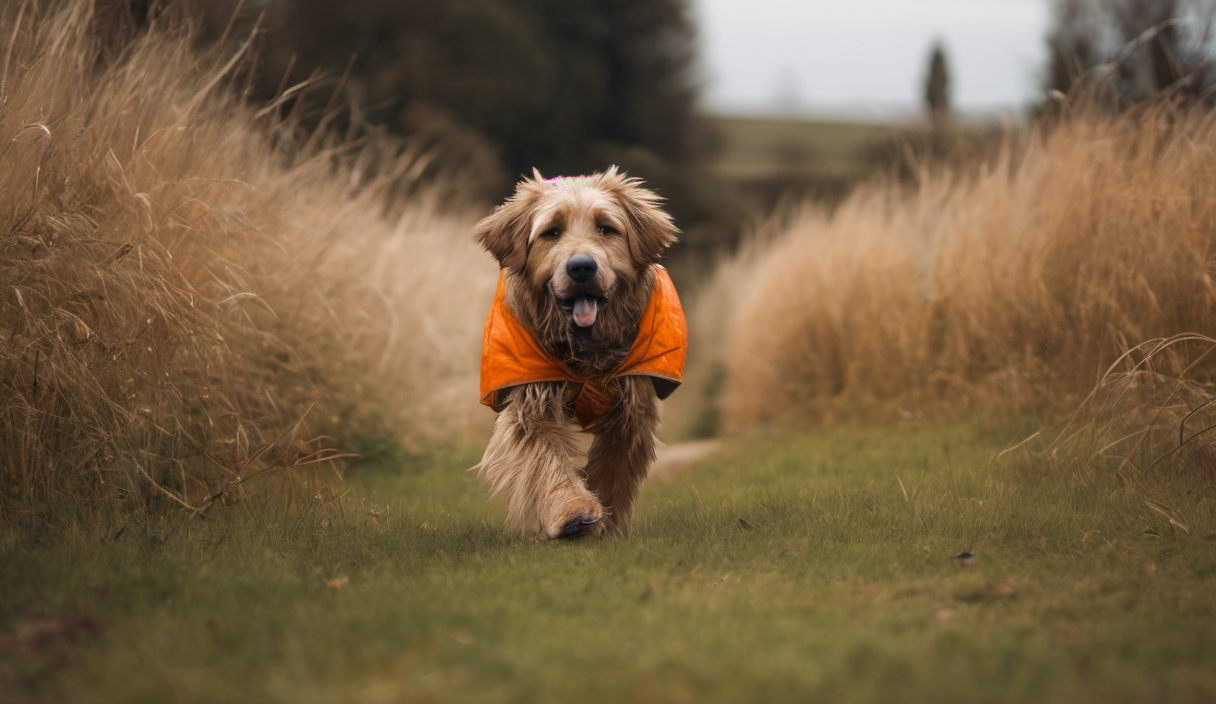

Featured image: A medium-sized dog with a shaggy, reddish-brown coat is running towards the viewer across a grassy field. AI-generated image; not a photograph of the reported event.
Donna and Pete O’Brien say their dog Misty’s health declined after a walk near Ty Mawr in Wrexham. Source: bbc.co.uk.
What Happened to Misty?
Misty, a dog, returned from a walk covered in a greasy, orange film.
The couple noticed her health deteriorating quickly. She began coughing up blood and showed signs of distress.
Vets found a heart tumour—rare in dogs—along with possible growths in her stomach and lungs.
Link to Historical Contamination?
Donna and Pete believe the illness was tied to historical chemical dumping in the area.
They first noticed the substance during a walk in December 2019. At the time, they thought it might be copper or iron.
But the substance stank and left a greasy residue on Misty’s coat. It stained her for weeks.
They stopped walking near the area after that. Yet Misty’s condition worsened over time.
She would stop mid-walk and rest, a change in behaviour they found concerning.
How Did the Concerns Emerge?
The couple became alert after watching the BBC’s Buried documentary.
It featured descriptions of greasy, oily orange deposits—similar to what Misty had been exposed to.
They attended a meeting of the Monsanto Contamination Action Group and heard stories from other dog owners with similar experiences.
These accounts made them believe there may be a wider pattern of health impacts from environmental contamination.
Why Pet Records Might Matter
Pete says animal illnesses often develop faster than in humans.
Many suspected or undocumented dump sites exist in rural public areas.
He argues that pet medical records could reveal clusters of rare illnesses, offering evidence of long-term environmental harm.
He believes pet data should be examined alongside human medical records to understand the full impact of ‘forever chemicals’ in communities.
Local Response and Concerns
Councillor Derek Wright raised the issue at a Wrexham council meeting.
He questioned why the area is fenced with only a three-foot barrier and lacks signage about chemical contamination.
One pond has become a public footpath, used by families and dog walkers, despite no publicised tests of its contents.
The council said investigations with Natural Resources Wales found deposits originated from mining activity.
They concluded no further action was needed.
What This Means for the Public
Many visitors to Ty Mawr may not know about the contamination risks.
There is no public warning or testing of water or soil in these areas.
Owners of pets and children are potentially exposed to unknown substances.
Without clear monitoring, risks remain unaddressed.
The O’Briens are calling for transparency and a review of pet health data to identify patterns.
- Donna and Pete O’Brien are dog owners in Wrexham.
- Misty developed a heart tumour after exposure to an orange, greasy substance.
- Her illness coincided with a walk near the Cefn Viaduct and Ty Mawr.
- They believe the contamination is linked to historical mining activity.
- They are calling for pet medical records to be reviewed for illness clusters.
Source: BBC News
Original article