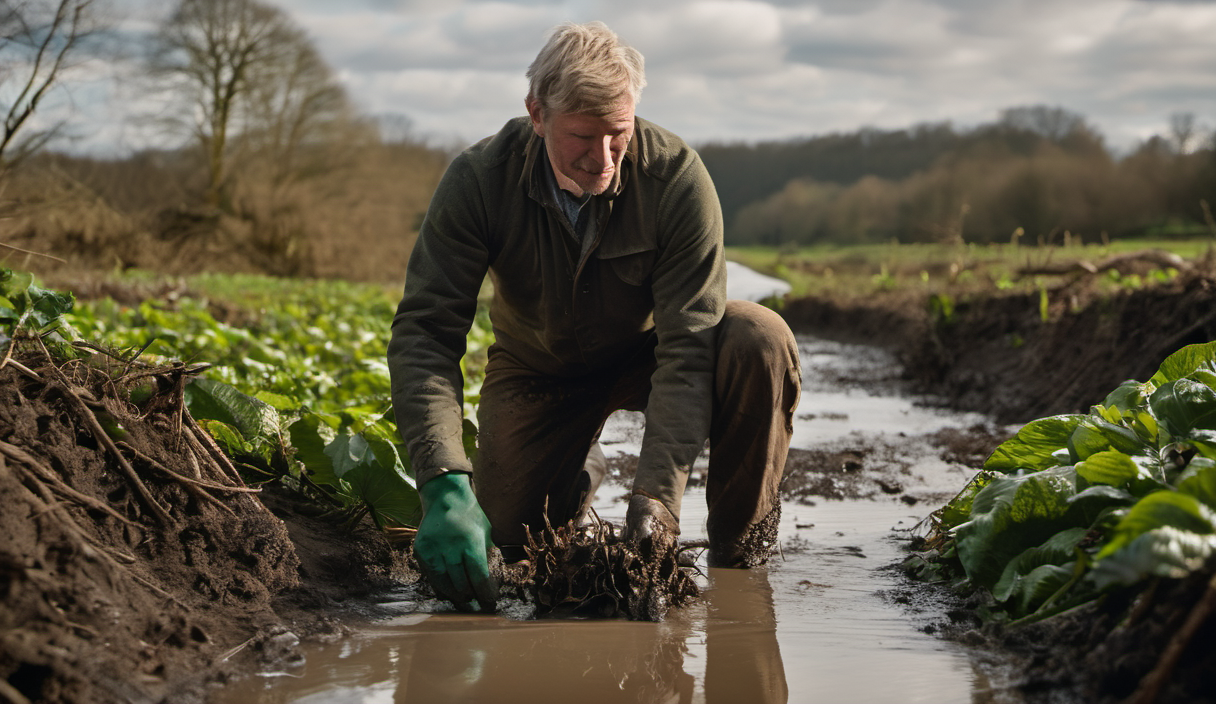
Featured image: A middle-aged man is kneeling in a muddy ditch. AI-generated image; not a photograph of the reported event.
A plant known for its strong, unpleasant odor has been removed from a stretch of the River Alderbourne in Buckinghamshire. Source: bbc.co.uk.
What Happened
Over 2.5km of the River Alderbourne was treated to remove American skunk cabbage.
The work was carried out by Groundwork South, an environmental charity, with support from Affinity Water’s INNS Out Scheme.
Surveys after treatment showed ‘promising early results’, indicating the invasive species has been successfully contained.
Key Facts
- The plant is native to swamps and wetlands in the Pacific Northwest.
- It emits a smell described by BBC Gardeners’ World Magazine as resembling ‘rotting meat’.
- It was found at Harding’s Row Nature Reserve near Iver Heath.
- Groundwork South received £9,900 from Affinity Water to carry out the removal.
- The River Alderbourne is part of the Colne catchment, a globally significant chalk stream system.
Background
American skunk cabbage is not native to the UK. It was introduced to North America from Asia and has since spread in wetland areas.
While it grows naturally in certain environments, it can become invasive when introduced to new regions.
When it spreads, it can outcompete native plants, reducing biodiversity and disrupting local ecosystems.
Why It Matters
The River Alderbourne flows through a region with globally significant chalk streams.
Chalk streams are rare and ecologically valuable. They support unique species and habitats.
Protecting these systems from invasive species is vital for long-term environmental health.
Support and Next Steps
Groundwork South’s project manager, Matt Mountain, said the support from Affinity Water was crucial.
He added: ‘This is a real win for local and regional wildlife and the wider ecosystem.’
Further monitoring will be needed to ensure the plant does not return.
What to Watch For
Environmental groups will continue to monitor the river for signs of regrowth.
Community-led projects like this one are part of a broader effort to manage invasive species in UK waterways.
More such initiatives may follow, especially in areas with wetland habitats.
Source: BBC News https://www.bbc.co.uk/news/articles/c6rrydykw44lo?at_medium=RSS&at_campaign=rss