One neighbor’s festive holiday display can become a source of tension. Bright lights, loud music, and large decorations may bring joy to some, but they can disturb others. Source: gardeningknowhow.com.
How Many Christmas Lights Are Too Many?
There is no federal or state law in the United States that sets a limit on how many Christmas lights a homeowner can use. This means that individuals are generally free to decorate their properties with as many lights as they desire, provided the display does not violate local regulations or community rules.
Property owners typically have broad rights to decorate their yards, and courts have consistently upheld these rights in the context of holiday decorations. In legal precedent, courts have generally refused to interfere with personal expressions of holiday spirit, even when displays are large, bright, or involve flashing lights.
However, what constitutes ‘too many’ lights is subjective and depends on individual sensitivity, property layout, and the surrounding environment. For example, a neighbor with a large, illuminated tree or a full yard display may feel overwhelmed if the lights spill into their bedroom or cast strong shadows on their porch during evening hours.
Others may not perceive such displays as excessive, especially if they are accustomed to similar decorations or live in a neighborhood where holiday lighting is common.
It’s important to note that the perception of excess is often shaped by personal experience and cultural norms. In some communities, especially those with a long tradition of festive outdoor displays, such decorations are seen as a celebration of community spirit and seasonal joy.
Can Local Ordinances Limit Holiday Displays?
While most U.S. cities do not have specific laws that ban or limit holiday decorations, some municipalities have enacted ordinances related to outdoor lighting and noise that may apply to festive displays.
These ordinances typically focus on public safety rather than aesthetics. For instance, cities may regulate lighting to prevent tripping hazards on sidewalks or to avoid glare that could impair visibility for drivers or pedestrians. Such rules are more likely to apply to large, unshielded fixtures or installations that extend beyond a property line into public spaces.
Some local governments have implemented ‘light trespass’ laws, which prohibit unshielded or excessively bright lights that spill onto adjacent properties. These laws may be particularly relevant when a neighbor’s display shines directly into a bedroom or creates a glare that disrupts sleep.
Additionally, many cities have noise ordinances that regulate the volume and duration of outdoor sounds. If a neighbor plays loud music or sound effects late at night, these regulations may allow for a formal complaint.
It is important to note that enforcement of such ordinances is often inconsistent. Local authorities may not have the resources or jurisdiction to monitor every holiday display, and violations are rarely prosecuted unless there is a clear public safety concern.
Will HOA Rules Prevent Christmas Decoration Nuisances?
Homeowners associations (HOAs) frequently include specific rules about holiday decorations in their governing documents, such as covenants, conditions, and restrictions (CC&Rs;).
These rules are designed to maintain aesthetic consistency and prevent unreasonable disturbances. Common provisions include limits on the size, brightness, and duration of holiday displays. or prohibit the use of strobe or flashing lights to avoid startling residents or disrupting sleep.
HOAs may also restrict the placement of large inflatables or illuminated structures, ensuring that walkways, sidewalks, and shared spaces remain accessible and safe. Rules about music are often included as well, with limits on volume or the use of sound systems that could disturb other members of the community.
When a neighbor violates these rules, the HOA has the authority to issue warnings, impose fines, or require the removal of the display. Enforcement is typically handled through the association’s board or management team, and members are generally expected to comply with these community standards.
While HOA rules may seem restrictive, they are often intended to balance personal expression with collective well-being. The goal is not to suppress holiday spirit, but to ensure that all residents can enjoy the season without undue disruption.
Can an Outdoor Lighting Display Constitute a Legal Nuisance?
A holiday lighting display can legally qualify as a nuisance under U.S. common law, though such claims are rare and require substantial evidence.
A private nuisance occurs when a property owner’s actions unreasonably interfere with another person’s quiet use or enjoyment of their property. In the context of holiday displays, this typically involves light trespass—when bright, unshielded lights flood into a neighbor’s home or yard, especially during nighttime hours.
Courts have consistently held that minor annoyances—such as a single bright light or a brief burst of music—are not sufficient to establish a legal nuisance. The burden of proof is high, and such claims are generally considered a last resort.
A public nuisance would require harm to the broader community, such as obstructing traffic or creating a hazard on public roads. In holiday contexts, this is extremely rare, as a single residential display does not typically affect public safety or accessibility.

Can You Force Your Neighbor to Remove Their Christmas Display?
Generally, no. You cannot legally force a neighbor to remove their Christmas decorations. Property owners have a fundamental right to decorate their own property, and attempting to remove a display could result in trespassing charges or other legal consequences.
However, if a neighbor’s display violates established local ordinances, HOA rules, or community standards, the appropriate authority—such as a city council or homeowners association—may intervene. For instance, if a display violates a noise or light trespass regulation, a formal complaint can be filed with the relevant governing body.
In rare cases, where a display causes a proven, ongoing private nuisance, a legal action may be pursued. Even then, such claims are typically resolved through mediation or settlement rather than court judgment. The author, Teo Spengler, emphasizes that most disputes are resolved through open dialogue, mutual understanding, and community norms rather than legal action.
For those concerned about excessive displays, the best first step is often to discuss the issue with the neighbor. If that fails, checking local ordinances or HOA rules can provide a more structured path forward. Ultimately, the holiday season offers an opportunity to celebrate with nature and community, provided that all participants respect the boundaries of shared spaces.
For gardeners and outdoor enthusiasts, mindful decoration—balancing joy with neighborly respect—can foster harmony and shared joy during the winter months.
Those concerned about excessive displays can start by discussing the issue with their neighbor. If that fails, they can check their local ordinances or HOA rules.
For more on holiday gardening traditions, see Christmas Wheat Tradition: A Holiday Gardening Ritual.
Learn more about outdoor Christmas lights and landscaping at gardeningknowhow.com.
Explore HOA rules and community guidelines at gardeningknowhow.com.
Teo Spengler is a master gardener and legal writer with over two decades of experience in horticulture and law. Her work blends practical gardening with legal insight, offering clear guidance for everyday residents.
Sources & further reading
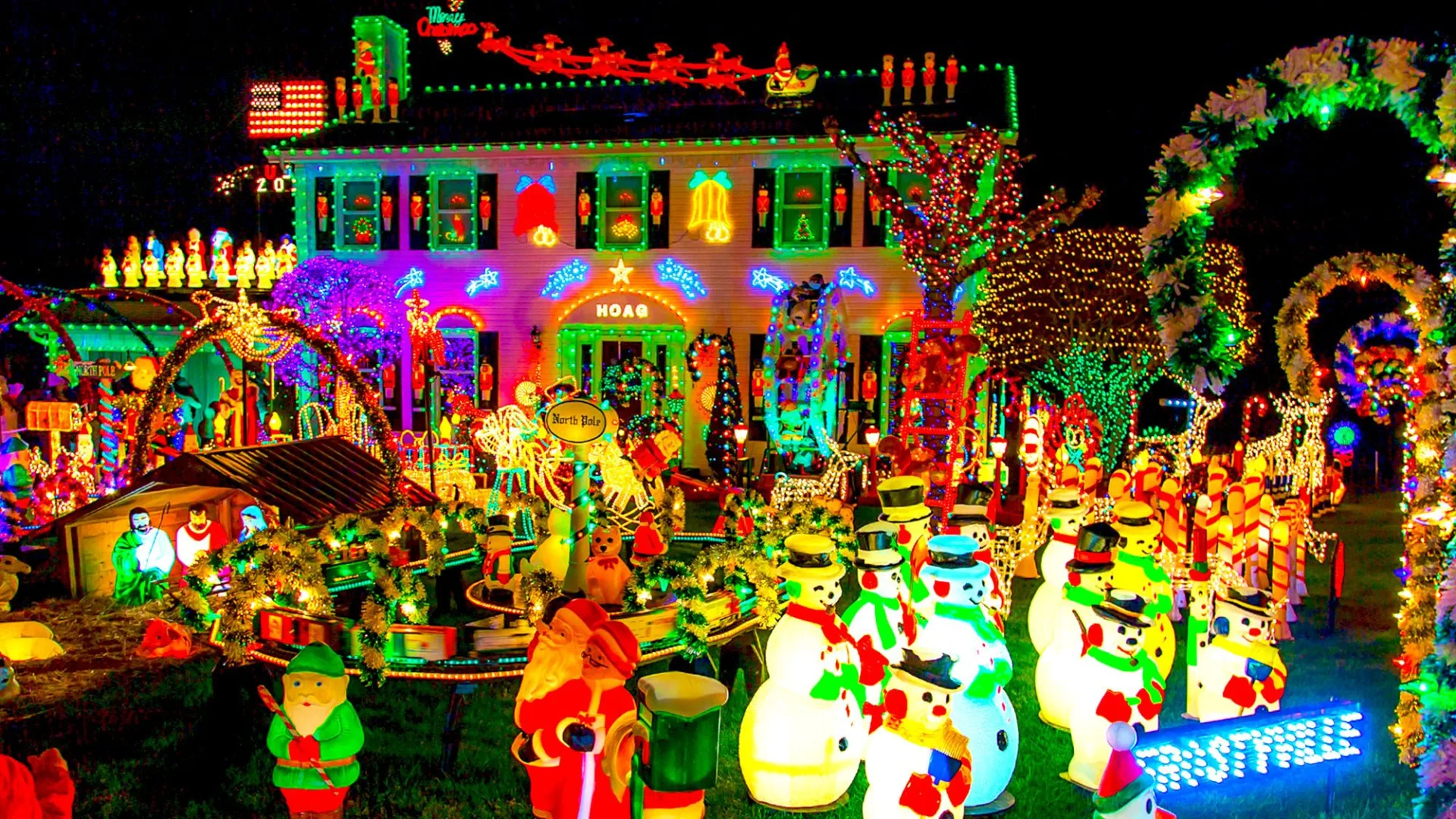
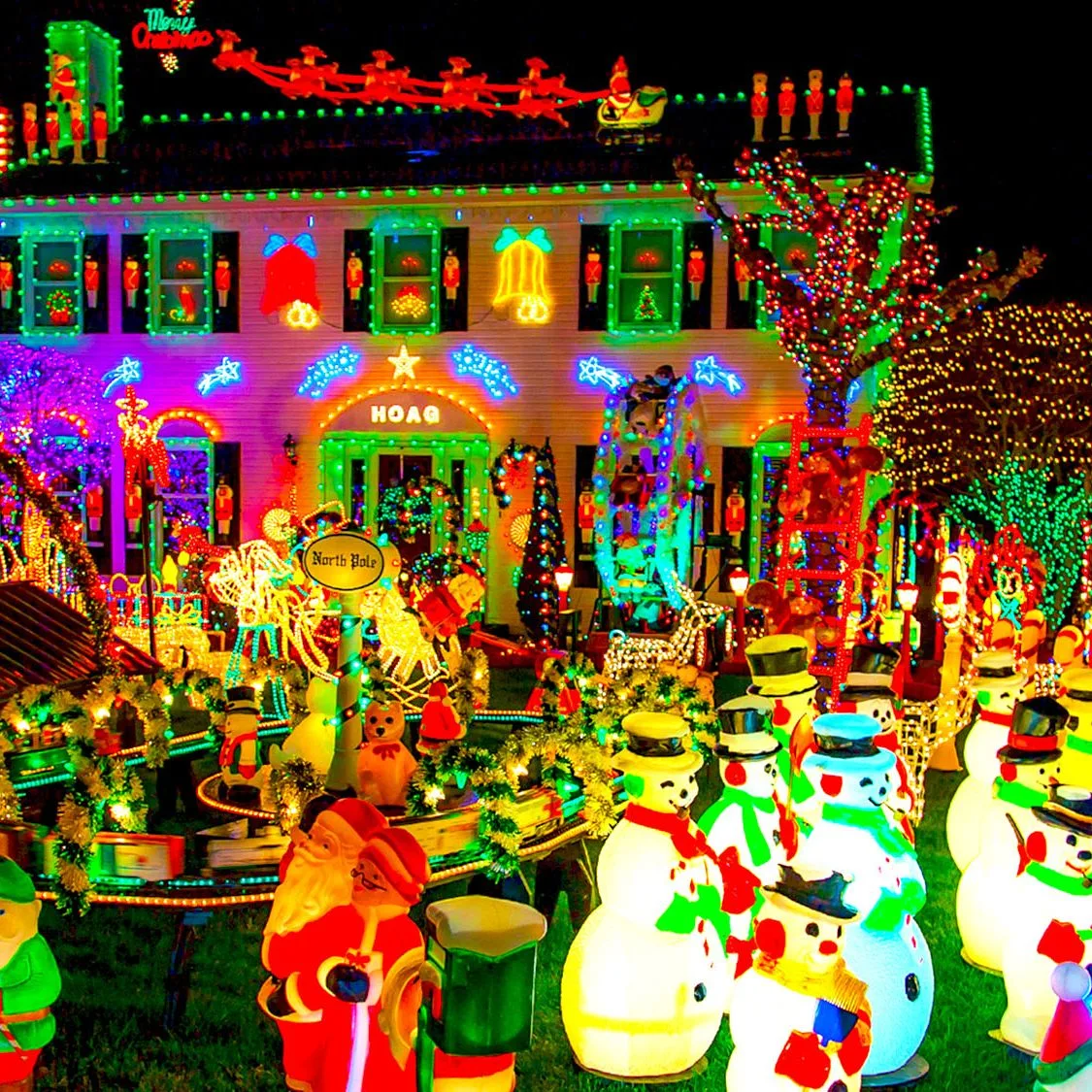
Featured image: House at Christmas with an elaborate festive light display in the front yard. Via original publisher. Image source