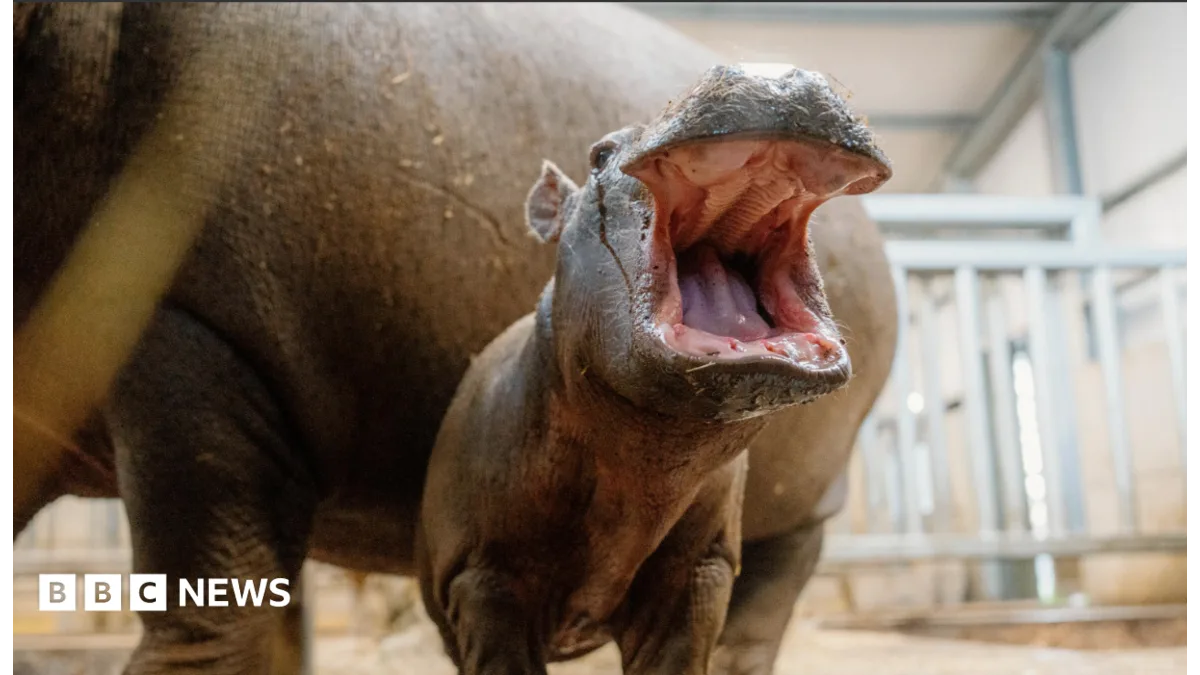
A hippo calf has been born at Longleat Safari Park in Wiltshire, marking the first such birth at the site in over 40 years. Source: bbc.co.uk.
The event is part of a broader European breeding programme aimed at supporting hippo conservation.
What Happened
The birth took place at Longleat Safari Park, a UK-based wildlife attraction in Wiltshire.
The calf is part of a coordinated breeding initiative involving multiple European zoological institutions.
Key Facts
- The hippo calf was born at Longleat Safari Park in Wiltshire.
- The birth occurred more than 40 years after the last hippo birth at the park.
- The event is part of a European-wide breeding programme for hippopotamuses.
- Longleat has a long-standing history of animal conservation and breeding.
Background: How the Programme Works
Longleat Safari Park participates in a European breeding programme designed to maintain viable populations of wild animals.
Such programmes rely on genetic diversity and careful monitoring to ensure the health and survival of species.
Hybridisation and inbreeding risks are managed through scientific oversight and collaboration between institutions.
Each breeding event is tracked to support long-term conservation goals.
Why It Matters
The birth reflects progress in animal breeding and conservation science.
It demonstrates that captive breeding can support species survival, especially when managed through international cooperation.
For public institutions like Longleat, such events reinforce their role in biodiversity preservation.
Limitations and Open Questions
While the birth is a positive development, it does not guarantee long-term population stability.
There is no public data on the calf’s health or survival rate after birth.
Experts have not confirmed whether this birth will lead to a sustained breeding population at Longleat.
Further research is needed to assess the programme’s long-term impact.
What to Watch Next
Longleat will likely share updates on the calf’s health and development.
Other European zoos may report similar breeding successes in the coming months.
Conservationists will monitor whether this event contributes to broader efforts to protect wild hippopotamus populations.
More data on breeding outcomes and animal welfare will be essential to evaluate the programme’s effectiveness.
For more on Longleat’s conservation work, see the original BBC report.
Sources & further reading
Featured image: Hippo calf that was born at Longleat with its mouth open. Via original publisher. Image source