Floating nature islands are being installed in five Glasgow parks as part of the legacy of the 2026 Commonwealth Games. Source: bbc.co.uk.
What Happened
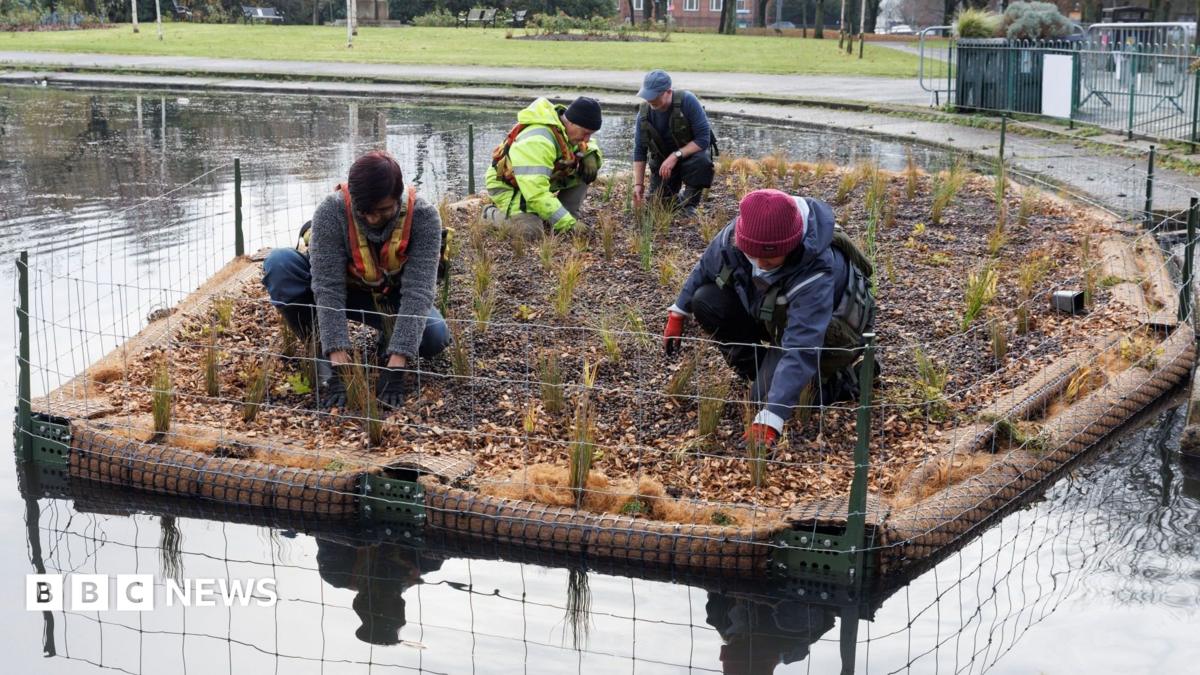
The project involves planting floating islands in ponds at Victoria Park, Elder Park, Richmond Park, Queen’s Park, and Hogganfield Loch.
Each island is designed to support wildlife and improve water quality in local ponds.
Key Facts
- The islands cover nearly 250 square metres of new habitat.
- They are expected to last about 20 years.
- Installation is being carried out by community groups, including local schools and ‘friends of the park’ organisations.
- The islands are made from recycled plastic materials, such as drinking water pipes.
- They are held together with marine-grade stainless steel and topped with leca (lightweight clay aggregate).
- Native aquatic plants like marsh marigolds, water forget-me-nots, and ragged robin are planted in the leca.
How the Islands Work
The roots of the plants grow into the water, helping to stabilise it and absorb nutrients.
These roots also provide shelter for aquatic life and nesting spaces for birds.
Ellen Hebdon, operations manager at Biomatrix Water Solutions, said the benefits take time to appear.
“It’s not an overnight solution, but over a period of time, you will see benefits in the clarity and the cleanliness of the water.”
Background: The Company Behind the Islands
Biomatrix Water Solutions, based in Forres, Moray, manufactures the floating islands.
The company has previously installed islands in Boston, Venice, and London.
They also floated islands onto the River Clyde at the Glasgow Science Centre in a separate project.
Why It Matters
For Glasgow 2026, sustainability is a core principle.
All competition venues are powered by renewable electricity.
Two-thirds of the transport fleet uses electric or hybrid vehicles.
As Selina Donald, the head of sustainability, explained, the project supports the city’s pride in its green spaces.
“I really saw the pride in all the parks, the pride in the green spaces, the pride in the natural environment across the city.”
She said the islands offer a way to celebrate and support Glasgow’s natural environment.
Limitations and Open Questions
The project is not a quick fix for water pollution.
Benefits are gradual and depend on long-term plant growth and ecosystem development.
There is no public data on how much algae reduction or water clarity improvements have been observed in the past.
Community groups are responsible for planting and maintenance, which may affect consistency and scale.
What to Watch Next
Monitoring water quality over the next decade will be key to assessing the islands’ effectiveness.
Future expansions or similar projects in other cities may follow if results are positive.
Residents and park users will be encouraged to observe and report changes in wildlife and water conditions.
Source: BBC News
Sources & further reading
Featured image: Four people, each wearing buoyancy aids, crouch down on a floating island while planting grasses.. Via original publisher. Image source