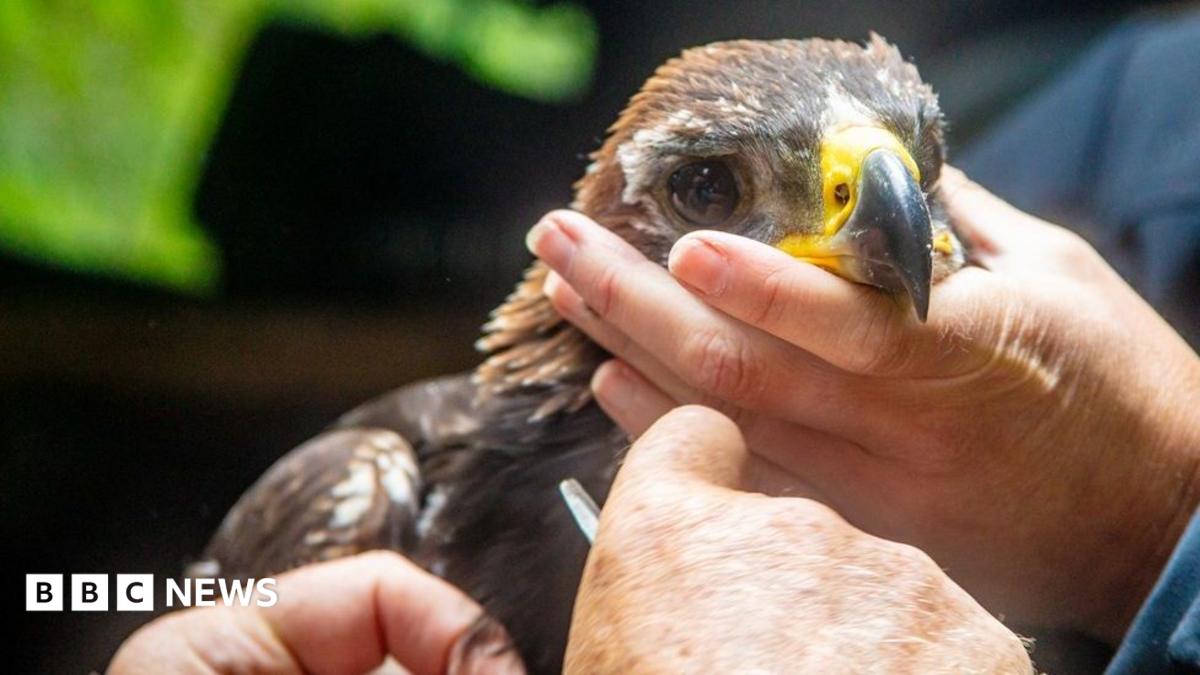
A golden eagle chick has fledged from a nest on a managed grouse moor in southern Scotland — a first in the region. Source: bbc.co.uk.
What Happened
The chick, named Beaky Junior, hatched in a nest in the Moffat Hills. The site is used for recreational gamebird shooting. It is one of five golden eagle chicks successfully fledged this year.
Beaky Junior’s fledging marks the first time a golden eagle has left its nest on a managed grouse moor in southern Scotland. The event happened at a location once seen as unsuitable for raptor breeding.
Why It Matters
Golden eagle numbers in southern Scotland once dropped to just a handful of breeding pairs. This decline followed persecution, habitat loss, and human-wildlife conflict.
Numbers are now at a record level of over 50. This recovery comes after years of effort and despite past incidents of birds being shot or poisoned.
How the Project Works
Restoring Upland Nature (Run) began relocating golden eagles from the Highlands to the Moffat Hills in summer 2018. The goal was to establish breeding pairs in a region where eagles had not previously thrived.
Landowners and gamekeepers support the project. They monitor nests, protect eyries, and maintain open moorland habitats. These actions help both gamebirds and raptors.
Gamekeepers involved have asked to remain anonymous to protect the nest’s location. This prevents disturbances and threats to the birds.
Mark Ewart, regional co-ordinator at the Southern Uplands Moorlands Group, said daily sightings of golden eagles show the project’s success. Such encounters reflect healthy ecosystems and strong partnerships.
Key Responses
Dr Cat Barlow, chief executive of Run, called the fledging of five chicks a ‘hugely significant milestone’. She said the project’s success is directly tied to landowners and gamekeepers.
Michael Clarke, who chairs Run, said people from all walks of life — including farmers and local communities — have helped golden eagles thrive. He said ongoing monitoring will continue with land managers and the public.
Sarah-Jane Laing, chief executive of Scottish Land and Estates, said it was thrilling to hear gamekeepers named the chick. She said Beaky Junior shows what can be achieved through trust and partnership between land managers and conservationists.
Limitations and Open Questions
Long-term survival remains uncertain. Persecution incidents still occur. The project has reduced risks but not eliminated them.
The effort is currently focused on one region. Its success in other areas is unproven. More research is needed on how eagles interact with gamebird shooting and other land uses.
What to Watch Next
Conservationists will track the fledged chicks. They will monitor survival, flight patterns, and movement. This data will show if golden eagles can thrive in managed moorland environments.
Landowners and gamekeepers remain essential. Their daily work — including habitat care and nest protection — is key to sustaining the population.
Any future expansion will depend on continued support, data collection, and policies that balance conservation and traditional land use.
Beaky Junior’s story is more than one bird. It shows a shift — where conservation and land use can coexist. Shared stewardship is now leading to real, positive outcomes for nature and people.
Sources & further reading
Featured image: A golden eagle being held in human hands. It is looking directly into the camera.. Via original publisher. Image source