On a cold November night in 2016, Ivan Tozzo picked up his phone and heard his club’s secretary screaming his name. The call came at 2am. The message was clear: a plane carrying Chapecoense football team had crashed into a mountain. Source: bbc.co.uk.
The Crash
The flight, LaMia 2933, was en route from Santa Cruz, Bolivia, to Medellin, Colombia. It was meant to carry Chapecoense to the first leg of the Copa Sudamericana final — a historic match for the Brazilian club.
At that moment, the crew had the opportunity to alert air traffic control and request emergency assistance. Instead, they continued the descent. Fourteen minutes later, the plane began its descent to Medellin airport. This request was not followed by a formal distress call, which would have triggered immediate emergency protocols.
Then, the lights went out. Defender Neto, one of the last survivors found, recalled: ‘I remember the lights went out suddenly; then I started praying, asking God to help us.’ The engines failed within five minutes. The team had been preparing for a milestone moment — their first continental final. All 22 players were on the flight.
At the time, the team was in high spirits. Goalkeeper Jakson Follmann, one of the three surviving players, said: ‘The team was very motivated, knowing that we were engraving our names inside the history of the club.’
Follmann, aged 24, had also been preparing for a wedding — a personal milestone — which he would not celebrate for months. The emotional weight of the impending match was palpable, and the players were fully committed to the journey.
Commentator Rafael Henzel, one of six survivors of the crash, described the Copa Sudamericana as the team’s ‘World Cup’ and said in 2017: ‘If anyone’s ever died happy, it was the people on that plane.’
This statement reflects the profound sense of purpose and joy that the players had carried into the flight — a sentiment that was tragically cut short.
Aftermath and Leadership
At the stadium in Chapeco, Tozzo watched the news on TV. He had originally refused to travel. He said: ‘It was a thing from God. It was not for me to go.’
He stayed home, feeling a deep unease about the trip. This decision was not made lightly. The night before, he had spoken with financial director Decio, who had organized all the club’s trips. Tozzo told him: ‘I will not go.’
Decio responded with frustration, saying: ‘You agreed to go, now you do not want to go? You have to go.’
Tozzo’s sister, standing beside him, urged him: ‘You need to go to this match, you worked so hard to get to this moment.’
But in his heart, he said: ‘No Ivan, I will not go.’
After the crash, Tozzo became the only surviving director. He took over as interim president. He said: ‘I think I had a mission here on Earth to continue Chapecoense after the accident.’
This moment marked a turning point — not just in the club’s operations, but in the emotional and spiritual trajectory of its leadership.
For the next week, Tozzo arranged flights for doctors, family members, and pastors. These flights were critical in the recovery process. The team needed medical assistance to identify and recover the remains of the victims. The emotional toll on families was immense, and the presence of medical professionals and spiritual leaders helped provide a sense of order and dignity in the chaos.
A memorial service was held at the Arena Conda. The event took place in pouring rain, a symbolic representation of the emotional weight of the tragedy. Coffins were brought into the stadium, and the community gathered to honor the fallen. At the service, Atletico Nacional, the opposing team, offered the Copa Sudamericana trophy and the prize money to Chapecoense — a gesture of respect and solidarity.
Rebuilding the Team
No surviving players were fit to play. Only two squad members had travelled — both were injured. The club had only a handful of academy players available. With no players in a condition to participate, the club faced a crisis of continuity.
Tozzo brought in Rui Costa, a former football director who had been dismissed from Gremio six months earlier. Costa had a strong track record of managing youth development and team culture. He accepted the role with Chapecoense, bringing experience and stability to the leadership structure. Tozzo then appointed Vagner Mancini as coach — a man known for his tactical discipline and ability to build cohesion in a team under pressure.
In a matter of weeks, 22 new players were signed — most of them on loan. These signings were not made lightly. Tozzo made it clear to the new players: ‘Our fans were very sad, Chapecoense was very sad, and playing again with joy was not easy.’
The players were told of their responsibility to honor the fallen, to represent the memory of the 19 players who died, and to embody the values of resilience and community.
First Return to the Pitch
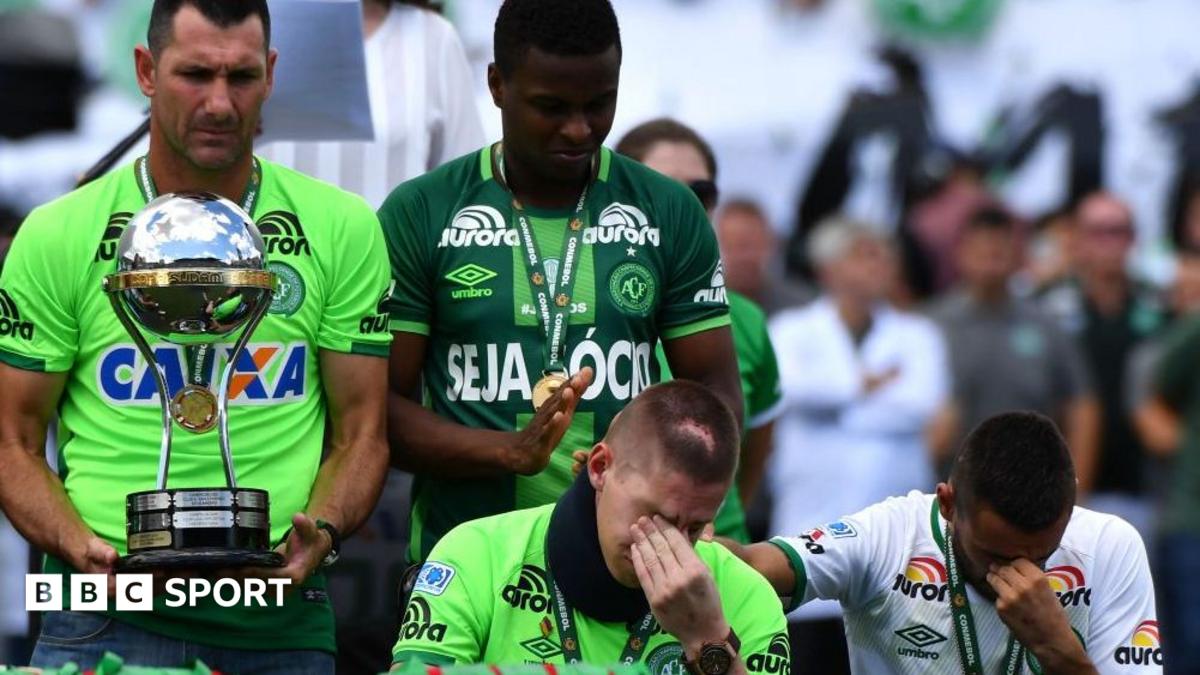
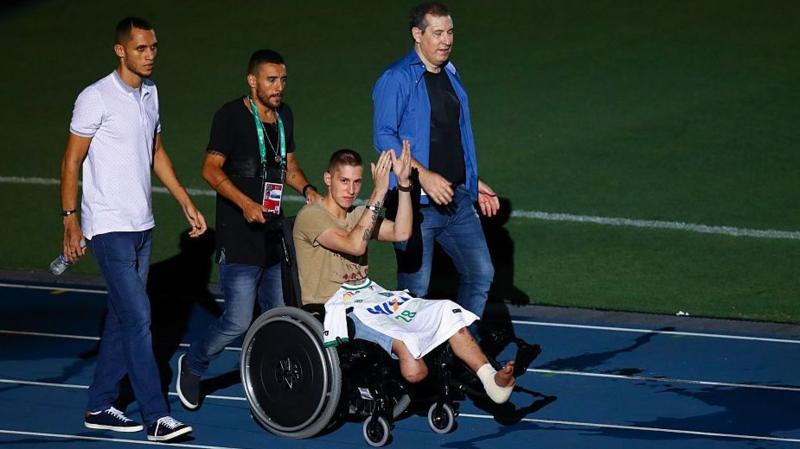
Chapecoense’s first match after the crash was a friendly against Palmeiras — eight weeks later. The match was symbolic, marking the first time the team had returned to the pitch since the disaster. Before the game, goalkeeper Jakson Follmann, in a wheelchair, joined defenders Neto and Alan Ruschel to receive the Copa Sudamericana trophy. The event was marked by fireworks that lit up the sky, a visual representation of hope and renewal.
Follmann said: ‘When I received the trophy, a movie went through my head because our captain Cleber Santana should have been holding it surrounded by all of us, celebrating.’
The memory of that moment — the celebration that never happened — became a central theme in the club’s recovery narrative.
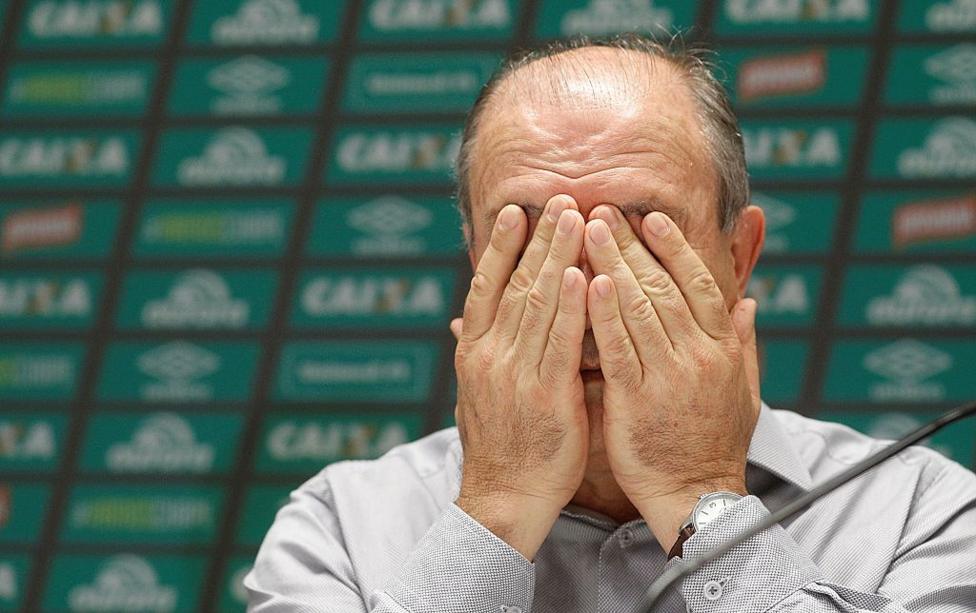
The friendly was the start of 80 matches in 2017 — only five of them were friendlies. The club stayed in the top flight through three seasons, despite no official relegation immunity. Tozzo rejected an offer from the Brazilian Football Confederation to guarantee the club’s survival for three seasons. He said: ‘How can you psych up the players to play their best if they know that their classification is guaranteed?’
This decision reflected his belief in integrity and accountability — the players had to earn their place on the pitch, not be protected from failure.
Continued Challenges
Chapecoense faced Atletico Nacional again in the South American Super Cup in 2017. This time, Tozzo travelled to Medellin. The experience was deeply emotional. He said: ‘I can’t believe it was so close.’ The team lost 6-3 on aggregate, but the loss did not define the club’s journey. Later that year, they won their state championship and finished as high as eighth in the national league — a sign of remarkable resilience.
Defender Bruno Pacheco joined the club in the following year. He said: ‘Stepping on to the pitch at the arena was an emotional experience. I was representing those who are no longer with us, as well as the fans.’
Pacheco has made nearly 150 appearances for the club in two spells, becoming a key figure in the team’s identity.
Long-Term Trajectories
After relegation from Serie A in 2019, Chapecoense won the Serie B title and earned promotion. They stayed in the top flight for one season before dropping back to Serie B. They have returned to Serie A this year — but will be relegated again. This fluctuation reflects the challenges of maintaining a competitive team without consistent financial backing or long-term planning.
Neto made one substitute appearance in a charity friendly in December 2017. The match was held to raise funds for the families of the victims. He now speaks as a Christian evangelist, supporting families who are still seeking justice. He continues to advocate for accountability and transparency in the aftermath of aviation disasters.
He helped Juventude win promotion to Serie A in his final game — ironically, swapping places with Chapecoense. In a video announcing his retirement, Ruschel said: ‘I lost friends, companions and people with whom I shared dreams and projects. And God gave me a second chance.’ He emphasized that his return to the pitch was not just about football, but about honoring the memory of those who died.
Goalkeeper Follmann eventually married and became a father. He declined an offer to join Brazil’s sitting volleyball team at the Paralympics. Instead, he pursued a career in singing, motivational speaking, and writing. He said: ‘I observe everything around me. I have issues with making plans for the future, because life showed me that I only have today to live.’
This philosophy has become central to his public speaking — a message of presence, forgiveness, and living fully in the moment.
Legal and Accountability Gaps
Investigators found that the pilot and the airline were directly responsible for the crash. The pilot, Miguel Quiroga, was also a co-owner of LaMia. A leaked audio tape shows him warning of a ‘total electric failure’ and a ‘lack of fuel’ — but he did not make a formal distress call. This failure to communicate was a critical lapse in emergency protocol.
Bolivia’s investigation concluded that the crash was avoidable. It found that the flight had run out of fuel due to an insufficient fuel load and that the pilot had not made a distress call. Colombia’s investigation, on the other hand, found no technical failure and blamed the pilot, the airline, and Bolivian regulators. However, no one has been found legally accountable.
Bolivia did not have a legal framework to prosecute companies for negligent homicide until 2021. Even then, the law did not cover air disasters. Charges were brought against individuals in LaMia’s management — they denied wrongdoing. A trial in 2020 was delayed by jurisdictional disputes and the fact that some defendants were abroad. As of now, there is no criminal conviction related to the crash.
Why This Matters
Chapecoense’s journey is not just about football. It is about how communities respond to tragedy, how leadership emerges in crisis, and how grief shapes purpose. The club’s survival — and its continued participation in football — reflects resilience. But it also highlights systemic gaps in accountability and justice after aviation disasters.
The story shows that recovery is not just about returning to play. It is about honoring the dead, supporting survivors, and confronting the silence that follows when no one is held responsible. The absence of legal accountability has left families without closure and has created a persistent sense of injustice.
For Chapecoense, the journey continues. The club still plays in the national league. The players still train. The fans still gather at the Arena Conda. But the legacy of the crash — and the silence around accountability — remains a central part of their story.
For those who lived through it, the truth is not in the trophies. It is in the silence after the crash. And in the decisions that followed.
It remains a powerful reminder that football is more than matches. It is a symbol of community, identity, and shared memory.
Sources & further reading
Featured image: Chapocoense's surviving players are emotional when receiving the Copa Sudamericana trophy. Via original publisher. Image source