For most of his life, Jimmy Clare had a second job—no pay, no hiring, just hours spent pretending to be normal. This wasn’t a real job, but a daily performance that became the foundation of his social existence. He didn’t earn a salary for it, nor was he ever officially hired. Yet, it consumed more time than any actual work he did. The job was simply pretending to be normal—fitting into the expectations of how people should behave, how they should talk, how they should react to one another.
What It Meant to Be Different
Clare is autistic. As a child, he didn’t have the word for it, but he knew he was different. That difference felt unsafe. In school, he was often the quiet one, the one who didn’t join in the laughter or the group games. Kids would look at him with curiosity, then with suspicion. One boy once asked, ‘Are you from another planet?’ Another would point at him and say, ‘He doesn’t talk like us.’ These weren’t jokes—they were observations, and they carried weight.
Instead of seeing the root of the problem, Clare assumed it was his fault. He began to study others—how they stood in groups, when they laughed, how long they held eye contact before looking away. He memorized jokes, practiced facial expressions in the mirror, and learned the rules of conversation like they were traffic laws: ask questions, don’t interrupt, don’t talk too long about the thing you actually care about. He internalized these behaviors as survival skills.
The Cost of Performing Normal
Clare learned social rules like traffic laws: ask questions, don’t interrupt, avoid long talks about personal interests. He became skilled at mimicking normal behavior. For years, he could walk into a room and perform social interaction so well that no one suspected anything was off. He made small talk, laughed at the right moments, nodded along, and then—after the interaction—would go home and collapse, completely spent, like he’d run a marathon he never signed up for.
This is what masking is: performing a version of yourself to fit expectations, at the expense of your true self. The term ‘masking’ comes from the idea that you wear a mask to hide your true identity, but in Clare’s case, it wasn’t about hiding—it was about becoming someone else entirely. He didn’t just hide his autism; he transformed himself into a version of a person that society deemed acceptable. That version was functional, but it was also exhausting. Every interaction required energy, and every day, he had to re-engage with the performance.
When the Performance Began to Break Him
The burnout started slowly. It began with tiredness—deep, bone-deep fatigue after ordinary days. By the time he reached his twenties, this fatigue had become a constant companion. He started dreading things he once enjoyed—like phone calls, social gatherings, even casual conversations. Phone calls sat unanswered. Invitations piled up, and he canceled them not because he didn’t want to see people, but because the thought of performing for three hours made him want to cry.
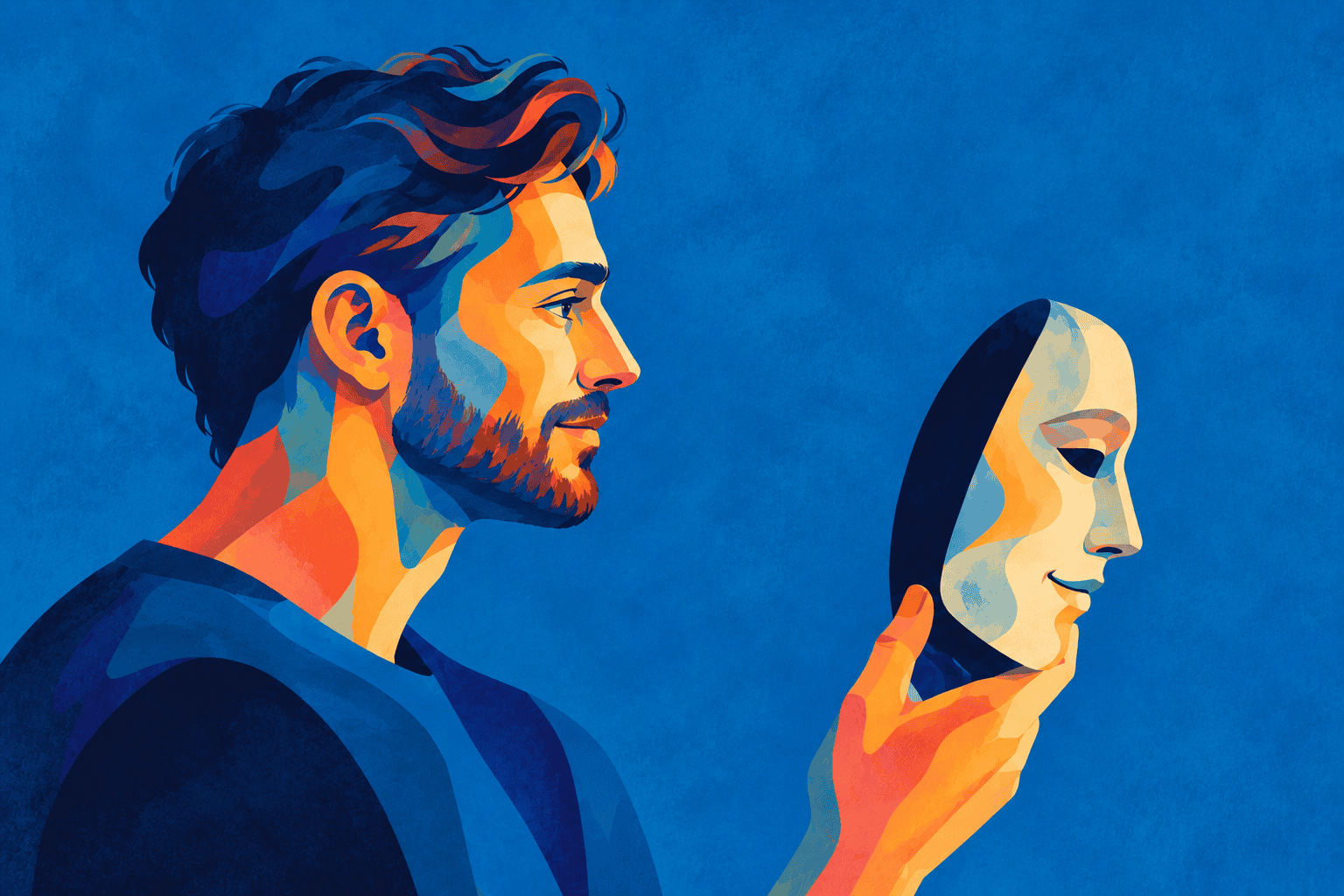
He told himself he was lazy. He believed everyone felt this way and that he just needed to try harder. But trying harder was exactly the problem. He had been trying harder than anyone around him for years—and it had broken him. The effort to appear normal had become a form of emotional labor, a daily grind that drained his energy and left him emotionally hollow.
Realizing the Trap of the Mask
Clare didn’t have a dramatic moment of realization. It was more like a slow leak—the realization that he could keep this up for the rest of his life and be miserable, or he could stop and find out what was on the other side. That shift wasn’t sudden. It came from a quiet awareness, a growing sense that something was wrong with how he was living—how he was relating to others, how he was seeing himself.
He began small. He stopped forcing eye contact that felt like staring into the sun. He stopped laughing at jokes he didn’t find funny. He let himself stim—rocking a little, fidgeting with his hands—the stuff his body had always wanted to do, but he’d always been too ashamed to let it. He stopped apologizing for needing quiet. For years, he treated his need to recharge alone like a character flaw, something to confess. ‘Sorry, I’m just tired.’ ‘Sorry, I need to head out early.’ He dropped the sorry. He just needed quiet. That’s allowed.
What Happened After the Mask Was Dropped
The world didn’t end. No one staged an intervention. A few friendships shifted—the ones built entirely on his performance—because they couldn’t survive without it. But the real ones grew stronger. People could feel when someone was performing. It was harder to connect with someone wearing a mask than with someone being genuinely themselves. The authenticity of a person’s presence matters more than the surface-level performance of politeness or cheerfulness.
Internal Change: A Lighter Load
For the first time, Clare didn’t spend every waking hour monitoring himself. It felt like carrying a heavy backpack for twenty years and finally setting it down. His shoulders came down. His jaw unclenched. He had energy at the end of the day—energy he could spend on things he actually enjoyed instead of recovering from things he endured. He started noticing what he actually liked, not what he thought he was supposed to like.
He stopped forcing himself into loud, crowded situations to prove he could handle them and started choosing the quiet coffee shop, the walk alone, the evening with one good friend instead of the party with thirty acquaintances. These choices weren’t about avoiding people—they were about choosing presence over performance. He began to value stillness, solitude, and simple human connection over the illusion of social success.
From Shame to Acceptance
Accepting that he is autistic didn’t fix everything. Sensory overload is real—a bad fluorescent light or a chaotic room can still overwhelm him. But now, when it happens, he doesn’t add shame on top of it. Instead of thinking, ‘What’s wrong with me?’ he thinks, ‘This environment isn’t built for my brain, and that’s information, not a verdict.’ That shift—from ‘I’m broken’ to ‘I’m different and that’s fine’—changed everything. The world didn’t change. But he stopped asking the world for permission to be himself.
What It Means for Others
Clare writes that the mask feels like protection—but it’s actually a cage. It keeps you safe from rejection, yes. But it also keeps you from rest, from genuine connection, from the relief of just being a person instead of a project. You don’t have to drop it all at once. He didn’t. Start small. Let one unguarded thing be true in one safe place. Notice how it feels. Notice that the people worth keeping don’t flinch.
He spent years trying to be normal. All it got him was exhaustion. The day he stopped, he didn’t become someone new. He became someone he’d been all along—underneath the performance—and he found that person was worth knowing. Normal was never the goal. It was the obstacle. And he doesn’t miss it at all.
Clare is an autistic writer and speaker. He is the founder of CrazyFitnessGuy and hosts The CrazyFitnessGuy Show. His work focuses on self-acceptance, belonging, and life on the spectrum.
For more on how people can live with authenticity, see the original post.
Read more about self-acceptance and belonging in Jimmy Clare’s writings.
- Clare spent years masking his autism to fit social expectations.
- He stopped performing by letting go of forced eye contact and jokes.
- He stopped apologizing for needing quiet, recognizing it as a valid need.
- His internal state improved—less self-monitoring, more energy for real interests.
- He found that genuine connections grow when people are not performing.
- His journey illustrates how social masking can be emotionally and mentally draining, and how self-acceptance leads to greater well-being.
His story shows how social masking can be exhausting and how dropping it can lead to deeper well-being. It also reveals the power of authenticity—how simply being oneself, without the need to perform, can lead to a more balanced, fulfilling life.
Sources & further reading
Featured image: original publisher image. Via original publisher. Image source