On a cold night more than a year ago, Dr. Daniel H. Shapiro walked into a bookstore to meet a friend at a café. The encounter sparked a moment of clarity that would later shape a personal reflection on life’s unpredictability. That night, the conversation between him and his friend felt deeply authentic—a rare pause in the relentless rhythm of daily life. It was a moment of genuine connection, one that made him feel seen and grounded. As he walked out of the bookstore and began his drive home, the significance of that conversation began to resonate with a deeper emotional truth.
What Happened That Night
Shapiro and his friend had a conversation that felt meaningful—like a pause in the constant pace of daily life. It was a moment of connection, one that made him feel grounded and moving forward. As he drove home, he stopped at a traffic light. In his rearview mirror, he saw a car approaching at full speed. The driver did not slow down. Shapiro braced himself for impact.
The car struck his left taillight. The collision was violent. He lost consciousness for a few seconds. When he came to, he was lying on the side of the road, several hundred feet from where he had been stopped. The physical trauma was severe, but what struck him most was the emotional aftermath—the sudden realization that nothing in life is guaranteed. The moment had shattered his assumptions about safety, predictability, and continuity.
Police arrived. They asked basic questions. Shapiro could not form complete sentences. He repeated himself. A paramedic said he was in shock. Being in shock is a physiological and psychological state where the body’s nervous system is overwhelmed, and the mind struggles to process reality. In that state, the person is not just physically disoriented—they are emotionally unmoored. The body reacts with adrenaline, and the mind is unable to process complex thoughts or emotions. It is a state of survival, not clarity.
After the Collision
Shapiro’s wife came to get him. They found others standing in the median, surrounded by flashing lights and damaged vehicles. One woman was celebrating her birthday. The scene was chaotic—cars were dented, lights were flashing, and the air was thick with tension. Yet, in the midst of destruction, a small, tender thought emerged: what if, in the middle of this chaos, someone could still celebrate a birthday?
Shapiro thought about buying her a birthday cake. The idea felt tender and real. It was a small gesture, born of a moment of shared survival. The desire to offer something meaningful to a stranger, in a place of devastation, felt profound. It wasn’t about the cake—it was about the act of connection. It was about choosing kindness even when the world seemed to be falling apart.
They walked to the bakery. It was closed. The moment felt heavy. The desire to celebrate a birthday in the middle of a crash site was real—but unfulfilled. The closure of the bakery symbolized something deeper: the fragility of routine, of expectation, of normalcy. We plan to go to bookstores, to meet friends, to celebrate birthdays. We assume these moments will always be available. But the world does not operate on schedules. It operates on unpredictability.
What the Experience Taught Him
Shapiro realized that life is not as predictable as we assume. We plan careers, build families, save money, and go to bookstores. We expect the next moment to resemble the current one. But sometimes, a car runs through a red light. A phone rings with unexpected news. A loved one falls ill. Relationships change. Jobs vanish. The future we imagined disappears.
He learned that we cannot fully protect ourselves from such events. That awareness can be frightening—but it can also awaken us. The fear of the unknown is not a flaw. It is a signal. It means we are alive. It means we are human. We are not machines that can be programmed for safety. We are beings who experience uncertainty, loss, and change.
The real question, he now believes, is not whether we can make life safe from harm. It is about the kind of person we want to be during the moments we have. When we are faced with a collision, a loss, or a sudden shift, what do we choose to do? Do we retreat into denial? Do we blame others? Or do we respond with presence, with compassion, with courage?
He can’t control what happens to him. But he can become more present. He can notice fear without being defined by it. He can accept longing without letting it dictate his actions. He can face inner emptiness with curiosity, not urgency. This shift in perspective is not about ignoring reality. It is about learning to live with it—without being consumed by it.
Living in the Moment
Now, Shapiro writes this piece at a park. His bare feet touch the grass. The breeze is cool. Children laugh on a playground. He is breathing. He is here. He is alive. The simplicity of that moment—bare feet on grass, laughter in the distance—feels monumental. It is a reminder that presence is not a state of safety. It is a practice of awareness.
He acknowledges that somewhere, someone is sitting at a red light, unaware of what might come next. That moment—unpredictable, unguarded—is part of life. Being awake means knowing that this moment is not guaranteed. It means choosing to enter it anyway. It means doing the work that feels right and loving others—even when we know we can’t keep them forever.
Sharing the Story
Shapiro finds value in sharing his story. He doesn’t know who will read it. But when he does, something shifts. For a moment, he is not alone. And he hopes the reader feels the same. His story is not unique. Many people face moments of sudden loss or disruption. The experience of a collision, a loss, or a surprise change is common.
What makes it meaningful is not the event itself—but the way we respond to it. When we feel fear, we can choose to notice it. When we feel emptiness, we can choose to explore it. When we face loss, we can choose to stay with the people around us. The power of a story lies not in its outcome, but in the way it invites others to see themselves in it.
Shapiro’s message is simple: life is not guaranteed. But being alive is enough. Standing together in the middle of chaos, saying ‘we’re still here,’ is a form of resilience. It is not about fixing the world. It is about finding meaning in the midst of uncertainty. It is about recognizing that even in the most violent moments, there can be tenderness—like the desire to buy a stranger a cake in the middle of a crash site.
For readers who feel uncertain, who face a crossroads in life, or who carry invisible burdens—this story offers a quiet truth. It says: you are not alone. And you are not expected to have all the answers. Being present is not about being safe. It is about being awake. And in that awareness, we find a kind of peace.
Shapiro’s work as a keynote speaker and mentor focuses on human connection and personal stories. His book, The 5 Practices of the Caring Mentor, explores how people can grow through meaningful relationships. More information is available at mentoringwithcare.com.
For readers seeking deeper reflection, the blog When Life Reminds You That Nothing Is Guaranteed offers more personal insights into living with uncertainty.
Shapiro also shares a note about the site: ‘Though I run this site, it is not mine. It’s ours. It’s not about me. It’s about us. Your stories and your wisdom are just as meaningful as mine. Click here to read more.’
The content on Tiny Buddha is designed to support, not replace, medical or psychiatric treatment. Readers are encouraged to seek professional care if they believe they may have a condition.
Shapiro’s piece is part of a broader collection of personal reflections on life, purpose, and mental well-being. It belongs in the category of Life Lessons & Reflection.
For those who feel isolated, or who are struggling with uncertainty, this story offers a shared experience. It reminds us that even in chaos, we can find moments of tenderness and connection.
It is not about fixing life. It is about learning to live in it—fully, gently, and with presence.
Sources & further reading
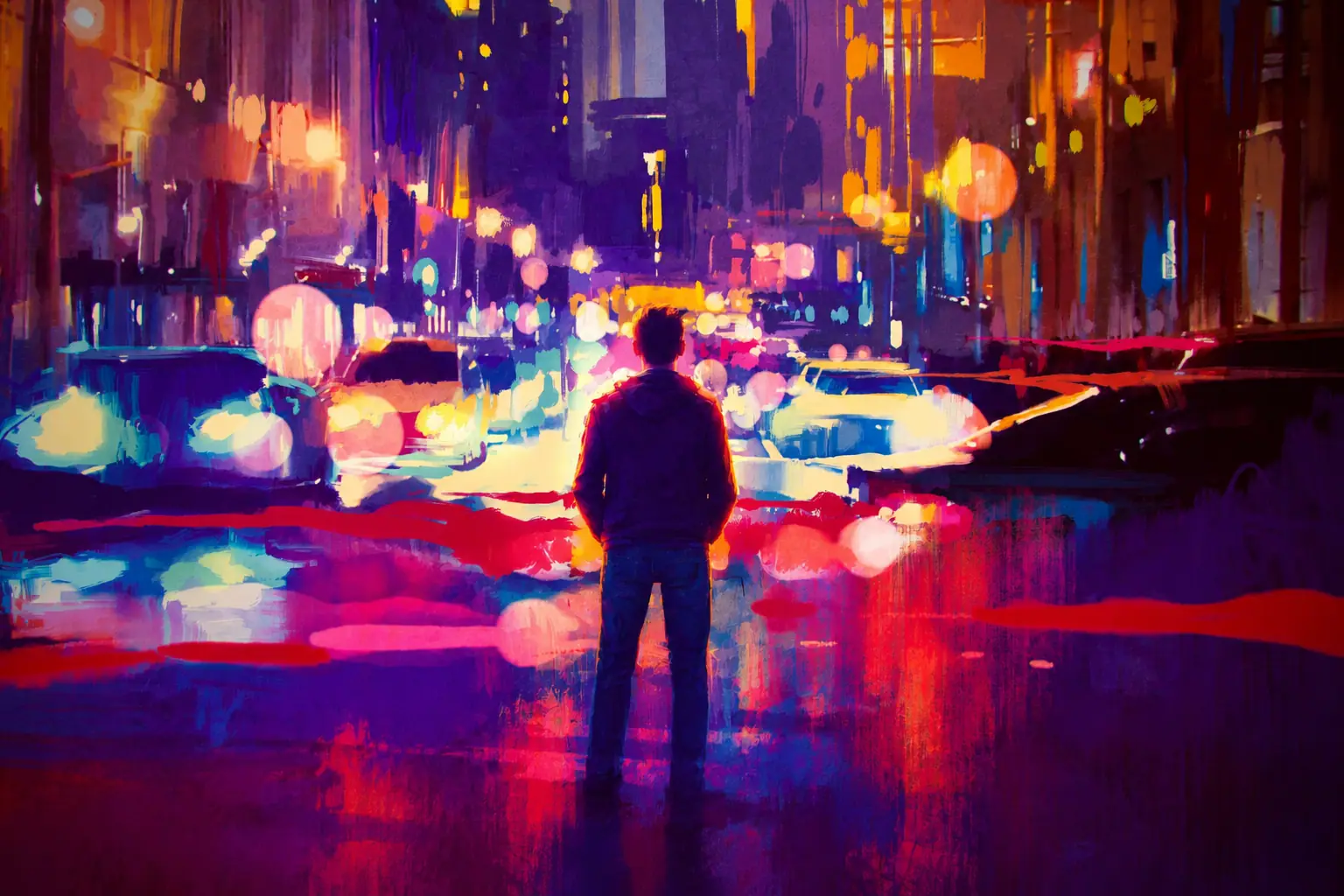
Featured image: original publisher image. Via original publisher. Image source