A letter to The Guardian highlights a growing concern: people nearing state pension age often face unemployment, even as younger workers are frequently discussed in job market debates.
Who Is Left Behind?
Peter Wade, a former advice worker, writes about his own experience. He hasn’t worked in over two years and has stopped applying for jobs.
He reflects on a client in her late 50s who worked as a hospital cleaner. She expected to retire earlier, but changes to women’s state pension age meant that she faced several more years before retirement.
She could no longer perform the physical demands of cleaning. Starting a new career while managing health issues felt daunting.
Systemic Gaps in the Workforce Transition
The current social security and pensions system has roots in the reforms of the early 20th century, developed through the Beveridge report and postwar reforms.
Since then, the system has been adapted and tweaked. But perhaps we have reached the point where tweaking isn’t enough. What we need is Beveridge for the 21st century.
Why This Matters
Many people in their 50s and 60s are not just transitioning into retirement — they are being held in limbo.
They may have lost skills, health may have declined, and job markets may not accommodate their experience or physical capacity.
Without targeted support, these individuals face a sense of invisibility — like they are no longer seen as viable job seekers.
What the Letter Proposes
- Provision for people who lose work near pension age.
- Support for retraining or transitioning into new roles.
- A modern social security model that values experience and adaptability.
The letter does not propose specific policies or funding levels. It focuses on the need for a structural shift in how older workers are supported.
Limitations of the Current Approach
Existing job search platforms and social security systems were designed for a different era.
They often do not account for age-related physical changes, evolving job demands, or the need for flexible work.
While young people face job scarcity, older workers face a different kind of exclusion — one rooted in outdated assumptions about work capacity.
There is no mention of how such changes would be funded or implemented. The letter remains a call for awareness, not a policy blueprint.
For more on the challenges older workers face, see a related Guardian report.
Workforce transitions are not just about age. They are about how society values experience, adapts to change, and supports people through life’s transitions.
Sources & further reading
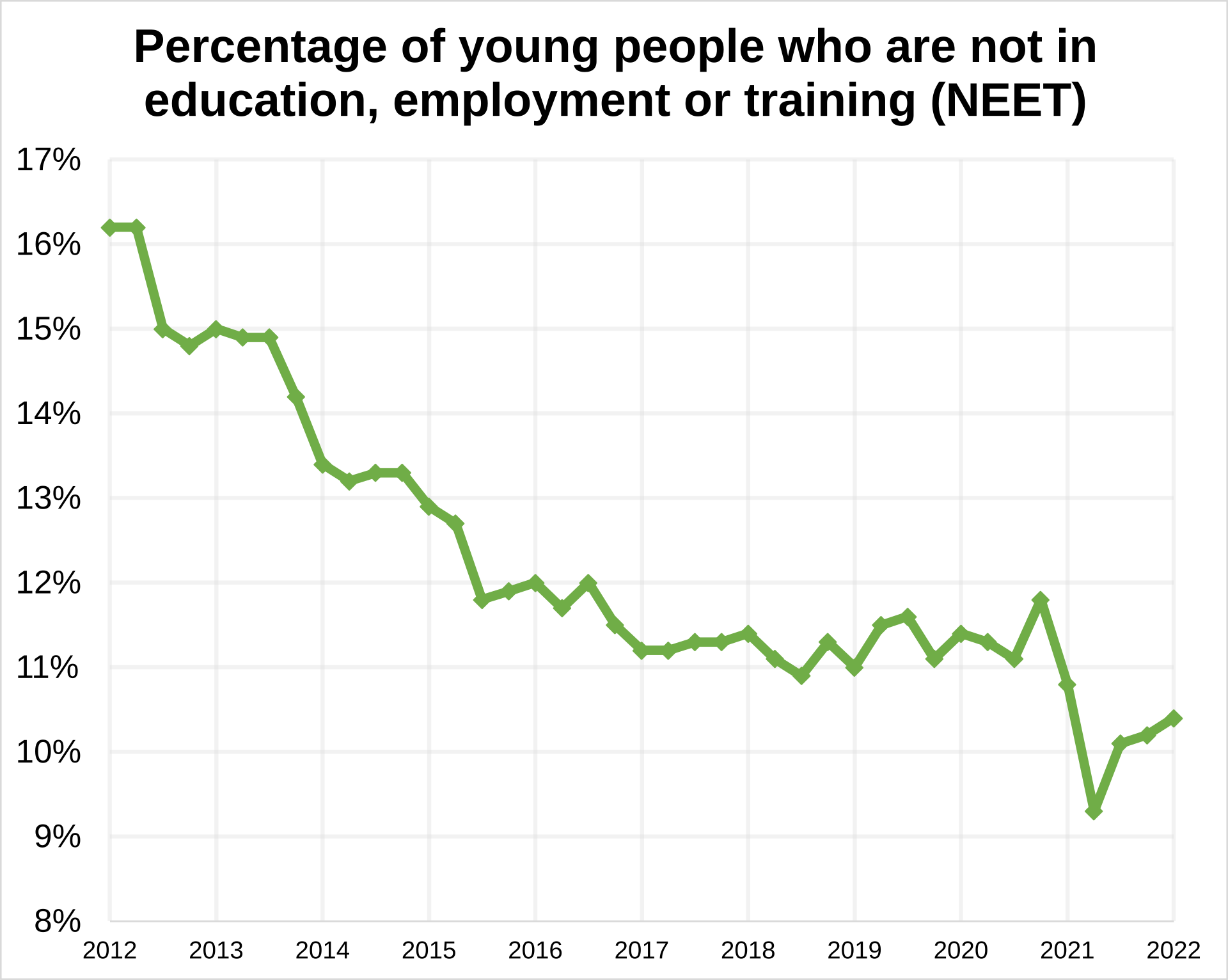
Featured image: Percentage of young people who are not in education, employment… by Tweedle, CC BY-SA 4.0, via Wikimedia Commons. Image source · License