Thomas Straker’s London home defies expectations. Known for his bold presence in London’s culinary scene, Straker has a reputation as a ‘bad boy’ of fine dining. Yet, inside his home, the energy is warm, playful, and deeply personal. This contrast between his professional persona and domestic environment offers a compelling insight into how public identity and private life can coexist in a way that feels authentic and unforced. Source: livingetc.com.
Playful, Not Hidden
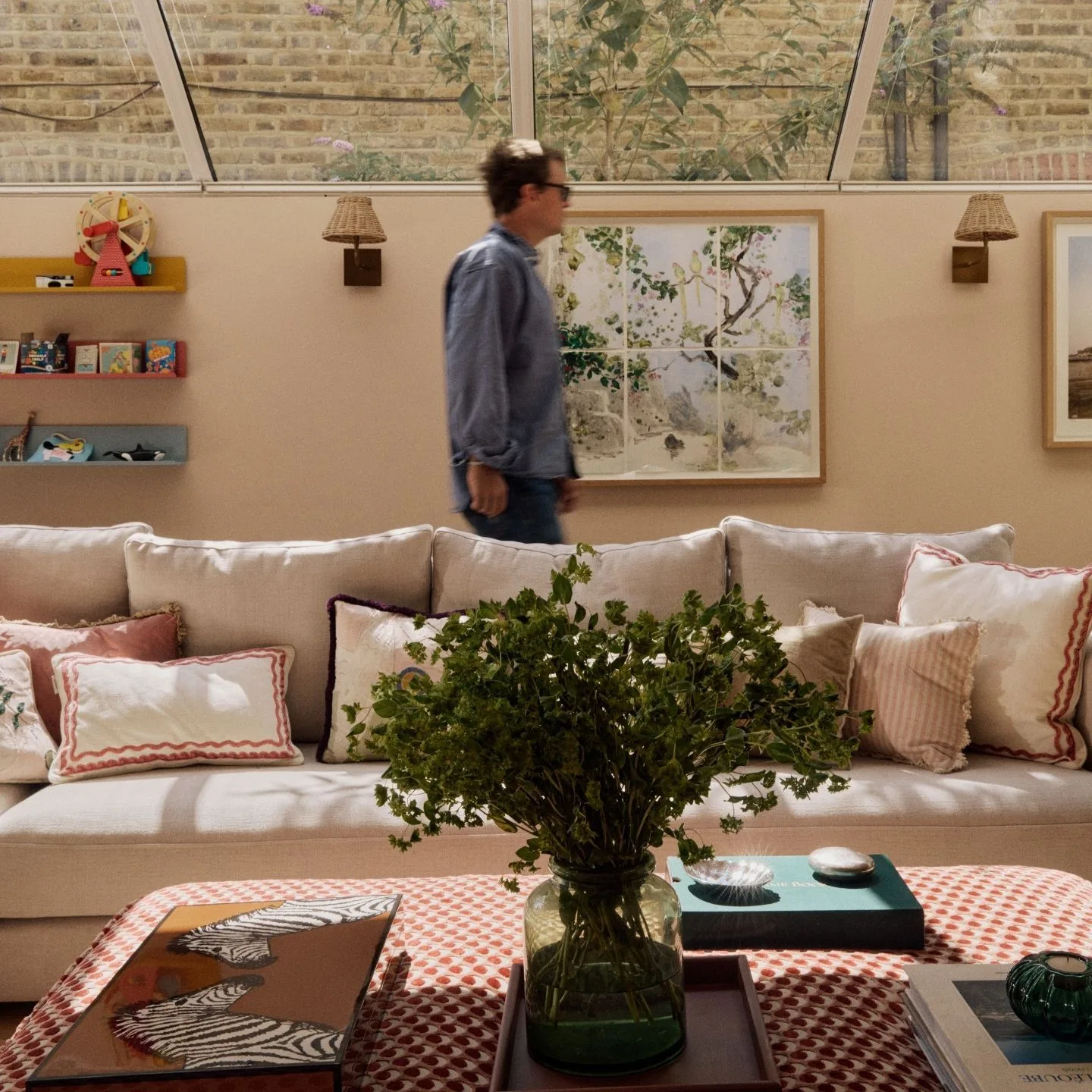
Unlike many homes where children’s toys are stored away or hidden behind closed doors, Straker integrates them into the design in a way that feels natural and unapologetic. A prominent kids’ play table sits in the living room, not tucked into a cabinet or hidden behind a door. This is not a decorative afterthought — it is a functional space that serves as both a play area and a design element.
Westwing’s feature notes that Thomas sees home as a vital retreat from the demands of professional life. In an era where work-life balance is increasingly difficult to achieve, Straker emphasizes that time spent at home is not to be wasted on perfection. Instead, it is a space for unstructured moments — for laughter, for mess, for the unpredictable rhythms of family life.
“With time at home increasingly precious, it is somewhere to switch off, away from the pace of professional life. It is also a space shaped by the realities of family life, where comfort and practicality take precedence over keeping everything perfectly in order.”
These words come directly from Westwing’s feature on Straker’s home. They offer insight into how the chef balances his public persona with private life. The presence of a play table is not just a design choice — it is a statement about values. It reflects a belief that homes should not be sterile or controlled, but rather spaces where children grow, explore, and learn through play.
Color, Texture, and Whimsy
The living room stands out for its vibrant palette. Pink and green dominate, creating a lively contrast that feels both joyful and intentional. These colors are not randomly selected — they are part of a broader design philosophy that values emotional resonance over aesthetic conformity.
Textures play a crucial role in making the space feel inviting. The room is layered with cushions, rugs, and soft fabrics that invite touch and interaction. Westwing’s Laguna Cotton Cushions, for instance, are not only visually appealing but also breathable and comfortable — ideal for a space where people gather and spend long hours together.
A red patterned ottoman adds a pop of color that contrasts with the dominant pink and green, creating visual interest without overwhelming the space. This use of color is not about trend chasing — it is about emotional expression. The red, in particular, evokes energy and warmth, qualities that align with the dynamic nature of family life.
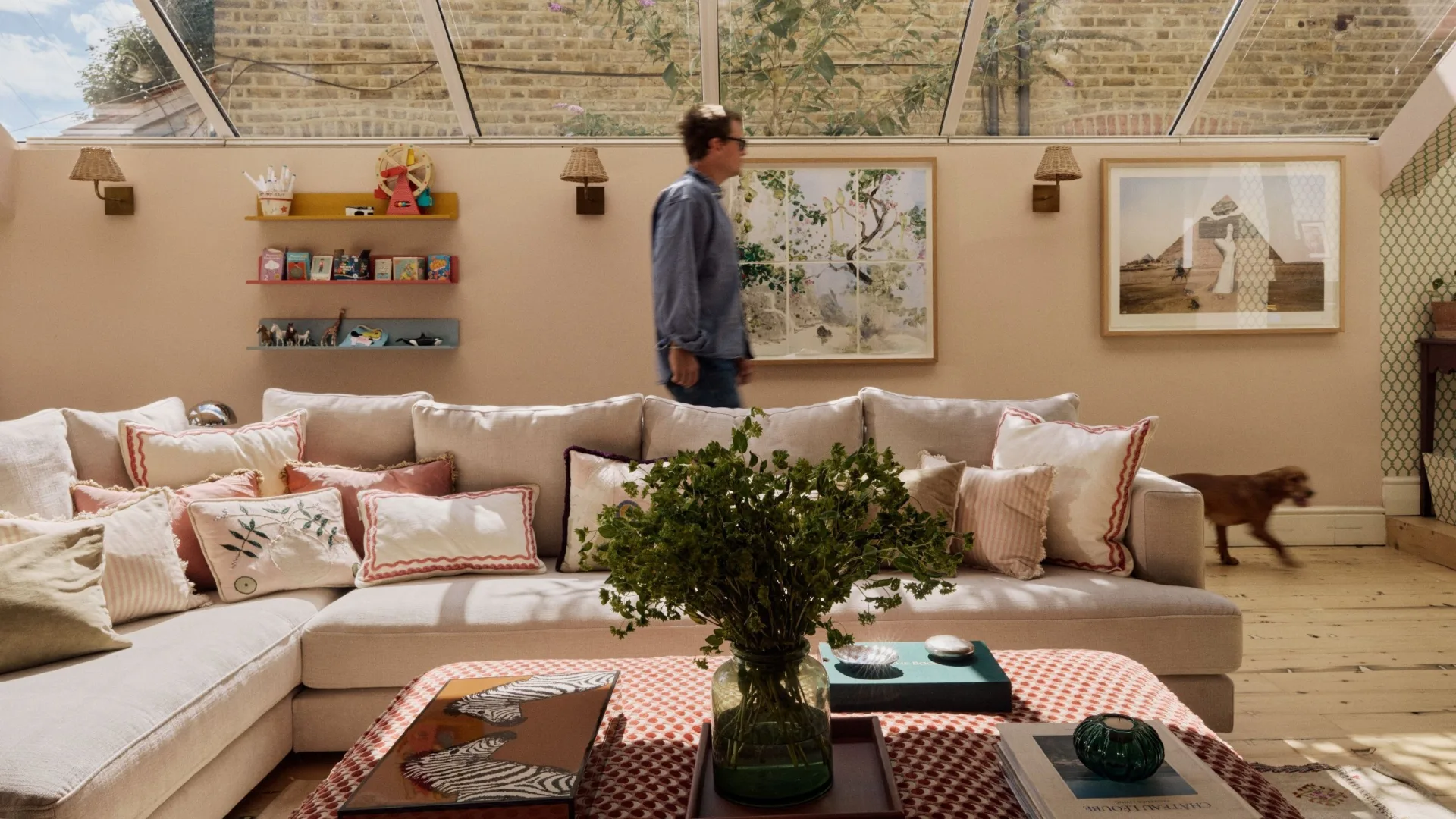
Curated coffee table decor — such as small ceramic pieces or handcrafted items — balances form and function. These objects are not merely decorative; they are part of daily routines. A child might place a toy there, or a parent might use it as a conversation starter. This blending of function and design ensures that the space remains alive and evolving.
The Kitchen: A Space for Living
Straker’s kitchen mirrors the tone of his restaurants — welcoming, open, and designed for use. It avoids the sterile look of traditional kitchens, which often prioritize storage over usability. Instead, the space is designed with daily interaction in mind.
The color palette is muted, with an airy layout that promotes openness and flow. Open shelving displays cookware, dinnerware, and utensils — not just for display, but for daily access. This setup supports the idea that the kitchen is not a place of performance, but of routine and connection.
Westwing notes that Thomas values hospitality. The kitchen is designed to feel welcoming — a space where family members and guests can relax, share meals, and engage in conversation. This principle extends beyond the physical space — it reflects how Thomas approaches service in his restaurants, where the experience of hospitality is central.
Among the displayed items are Westwing’s new Victoria Beckham collaboration dinner plates, which add a curated touch of modern elegance. Hand-painted Dolomite serving plates introduce a personal, artisanal element. These pieces are not merely decorative — they represent a connection to craftsmanship and individuality.
Leather dining chairs, such as the Jordan Leather Dining Chairs, provide both style and comfort. The magnetic knife strip, a detail that appears in both the kitchen and the dining area, is a practical solution that also serves as a design feature. It allows for easy access to tools while maintaining a clean, organized appearance.
A small coffee nook sits beside the kitchen, offering a quiet space for morning rituals. This nook, though modest, is thoughtfully designed — it includes a small table, a chair, and a view of the kitchen, creating a seamless transition between morning routines and the day’s activities.
Design as Daily Practice
Straker’s home isn’t a curated gallery. It’s a reflection of how he lives. The toys, the kitchen tools, the layered textiles — all are part of daily routines. This approach contrasts sharply with the often-perfect, staged environments seen in many design features.
For a chef known for high-stakes restaurants, where every detail is meticulously planned and executed, this unstructured, lived-in aesthetic is a powerful statement. It shows that creativity isn’t confined to the kitchen or dining room. It extends into the home, where spontaneity and authenticity are valued over polish and control.
Design, in this case, is not about aesthetics alone. It’s about function, family, and the rhythm of everyday life. The space feels real — full of life, with room for growth and change. It is not a static object, but a living, breathing environment that evolves with the people who inhabit it.
Visitors to Straker’s home find inspiration not in perfection, but in authenticity. The space feels real — full of life, with room for growth and change. For those seeking home design ideas, Straker’s home offers a powerful example. It proves that a home can be both stylish and deeply personal.
Explore more design inspiration at colorful living room ideas. See more from Westwing’s Home Stories at Thomas Straker’s home story.
Design isn’t about control. It’s about connection. And in Straker’s home, that connection is visible in every detail.
Sources & further reading
Featured image: Image of Thomas Straker walking through a light pink living room that has a large skylight and a large, light pink sectional sofa.. Via original publisher. Image source