By Alex Kimani – Jun 25, 2026, 2:00 PM CDT
- China’s lithium carbonate futures fell nearly 10% in two sessions after reports suggested CATL’s giant Jianxiawo lithium mine may move closer to restarting operations.
- The mine could produce around 46,000 tonnes of lithium carbonate annually—about 3% of global supply.
- The mine’s restart is raising concerns about renewed oversupply and pressuring lithium mining stocks.

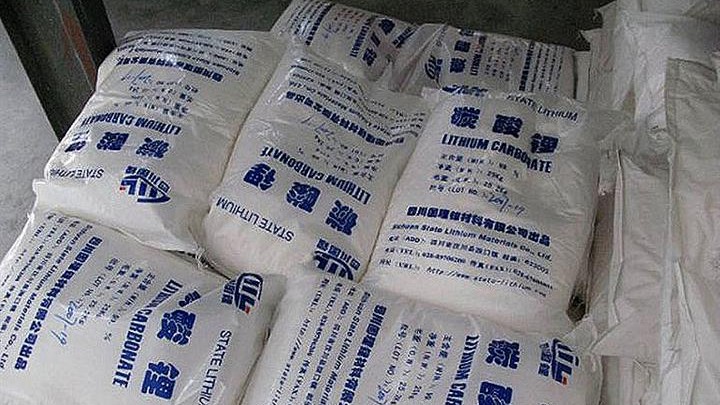
Lithium carbonate futures in China fell ~10% over two trading sessions, dropping to a 10-week low of approximately 157,000 yuan ($23,175) per tonne on Tuesday following market speculation that China’s EV battery giant, Contemporary Amperex Technology Co. (CATL), may soon restart its massive Jianxiawo mine. Reports from authorities in Jiangxi Province show that CATL’s Jianxiawo lithium mine in Yichun passed a preliminary land pre-review and site selection, with the Jiangxi Provincial Department of Natural Resources issuing a “Project Land Use Pre-Approval and Site Selection Opinion”, valid from June 17, 2026, through June 17, 2029.
The approval report has also extended losses for lithium miners, with Lithium Americas (NYSE:LAC) cratering 15.2% over the past 30 days; Sigma Lithium Corp. (NASDAQ:SGML) has lost 14.8%, Atlas Lithium Corp. (NASDAQ:ATLX) has declined 10.2%, Albemarle Corp. (NYSE:ALB) is down 14.8% while Sociedad Química y Minera de Chile S.A. (NYSE:SQM) has shed 5.6% over the timeframe.
Located in Jiangxi Province, China, the Jianxiawo mine is one of the largest hard-rock, lepidolite-hosted lithium deposits in the world. Lepidolite is a lithium-bearing mica mineral comparable to the more common spodumene, which is composed of lithium and aluminum silicate. While it yields less lithium per ton of raw ore compared to spodumene, the sheer scale of the Jianxiawo lithium deposits makes it a force to reckon with, with the mine capable of producing ~46,000 tons of lithium carbonate annually, roughly equivalent to 3% of the global lithium supply.
The pullback is a reversal from the early-year rally when lithium carbonate futures spiked past 200,000 yuan per tonne driven by supply disruptions as well as an unexpected surge in demand from the grid-scale energy storage sector.
Global supply of lithium carbonate took a hit after major mining operations, including the Jianxiawo mine, faced extended shutdowns and permit delays. Back in February, Zimbabwe’s government suspended the export of 14 critical metals, including lithium concentrates, indefinitely in a bid to curb leakages and force foreign operators (largely Chinese) to build local processing plants. Unlike the phased timeline originally planned for January 2027, this emergency directive took effect immediately and even applied to minerals in transit. Mining giants such as Zhejiang Huayou Cobalt and Sinomine must now build local processing infrastructure in Zimbabwe, including a $400-million plant by Prospect Lithium and a planned $500 million lithium sulfate plant. Chinese refineries which rely heavily on Zimbabwean spodumene were starved of supply, triggering a rise in lithium prices.
That said, a cross-section of Wall Street is warning that it’s still too early for lithium bears to do a victory lap, pointing out that the resumption of operations at the Jianxiawo mine still faces major regulatory hurdles and that the operation still requires a renewed mining permit, updated environmental impact reviews, and formal approval for a tailings storage facility.
The mine’s original permit has expired, forcing CATL to navigate China’s revised Mineral Resources Law, which now classifies lithium as a standalone strategic mineral. The tailings facility approval is, however, the most significant bottleneck. Because Jianxiawo extracts low-grade lepidolite ore, it produces millions of tons of waste/slag annually. Under China’s strict environmental oversight, building and approving the required large-scale tailings dam is generally a complex, time-consuming process.
“Though the exact purpose of the land use, remaining process, and timeline is yet to be confirmed, the market appeared to price in the resumption of Jianxiawo in the near term,” analysts at Citi said in a note, predicting a continuation of tight lithium supply-demand dynamics because of new battery capacity scheduled in the third quarter.
Several Wall Street analysts remain optimistic that the global lithium market is transitioning into a structural supply deficit starting in the current year following a prolonged period of oversupply and a price crash. According to a recent Fastmarkets analysis, the structural mismatch where demand outpaces newly added mine capacity is driving a notable market correction and a recovery in prices.
The analysts point out that battery energy storage (BESS) deployment has emerged as a major new structural demand pillar, with the massive growth projected for this market reducing the lithium market’s singular reliance on electric vehicle (EV) adoption cycles. Indeed, the global BESS market is expected to nearly triple to reach up to $150 billion by 2030, with global capacity forecast to multiply between 5 and 15 times by the end of the decade mainly powered by the AI boom. Meanwhile, slowing mine output is expected to be bullish for lithium prices after multiple miners cut production or abandoned planned projects in recent years amid a global lithium glut.
By Alex Kimani for Oilprice.com
More Top Reads From Oilprice.com
- China’s Teapot Refineries Cut Operations to Their Lowest Level Since 2017
- Adani Targets 10 GW Nuclear Power Capacity in India by 2035
- VLCC Earnings Near $470,000 a Day as Hormuz Hopes Drive Tanker Frenzy
Download The Free Oilprice App Today



Alex Kimani
Alex Kimani is a veteran finance writer, investor, engineer and researcher for Safehaven.com.