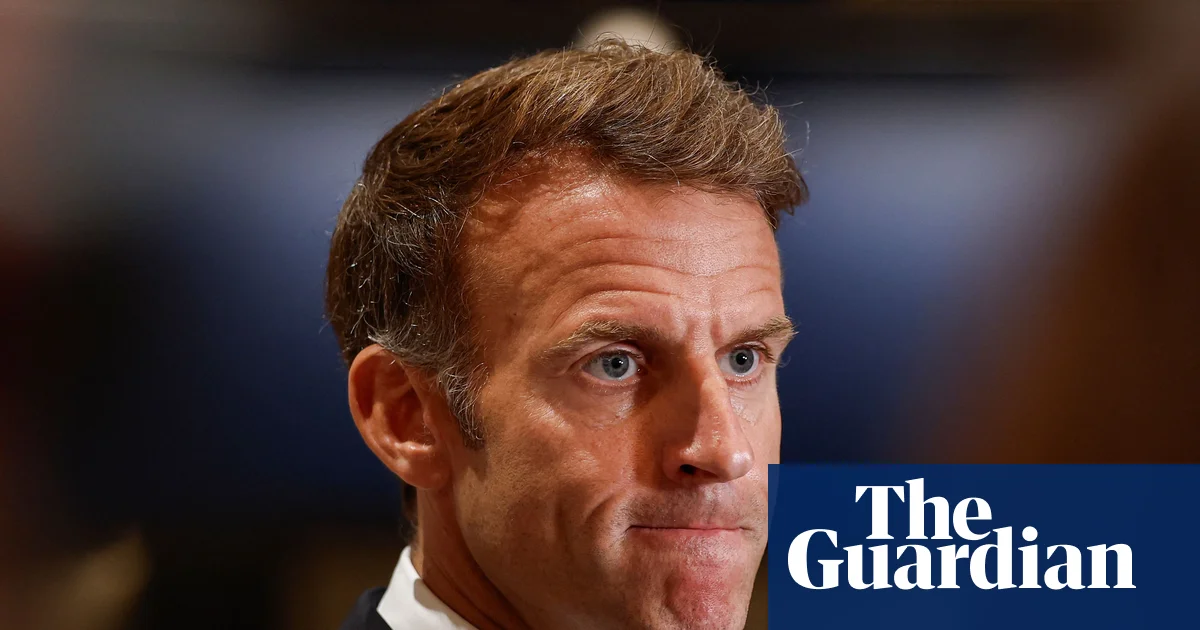
Emmanuel Macron has accused several foreign leaders, including Donald Trump, of making ‘stupid comments’ about France’s recent unrest. He called such remarks ‘unacceptable’ and ‘stupid,’ saying they serve political gain rather than factual truth. Source: theguardian.com.
Macron Criticises Foreign Leaders for Misleading Statements
During a visit to Qatar, Macron did not name individuals directly. He said manipulation of information after Saturday’s riots led to false claims from many international figures.
He pointed to leaders in election campaigns—both in Europe and across the Atlantic—spreading narratives that are ‘naively’ promoted to serve political interests. Macron said these leaders are using France to advance their own agendas.
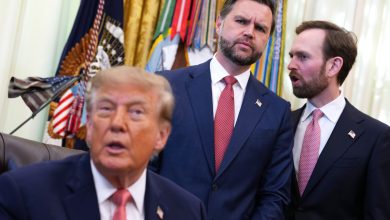
Donald Trump has claimed France’s violence stems from ‘migrants, jihadists and communists’ during his Republican campaign. When asked, Macron replied: ‘Among others,’ showing the issue extends beyond Trump.
AI-Generated Images and False Narratives
Macron highlighted AI-generated images showing migrants and Islamists invading France. He said these scenes never happened and are entirely false.
Such images spread widely on social media. While the French government has not confirmed their origin, officials note spikes in engagement during their circulation. Their authenticity remains under review, but their impact on public perception is clear.
France Faces Escalating Protests and Security Measures
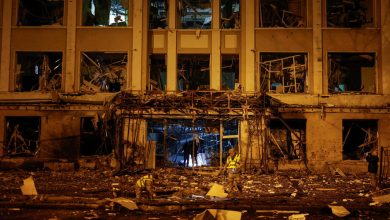
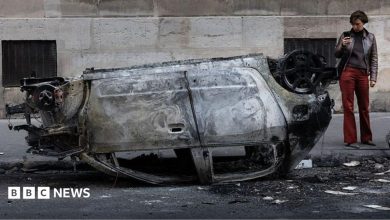
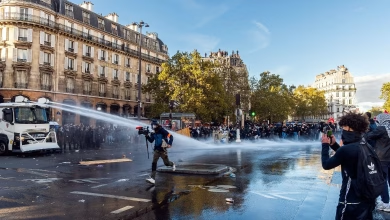
What began as peaceful cost-of-living protests has turned violent. Unrest spread in Paris, Marseille, Lyon, and Limoges. In Limoges, the town hall was set on fire and partially destroyed.
Police banned protests in key Paris areas on Thursday. These include the Elysee palace, both houses of parliament, and tourist sites like the Louvre and Champs-Élysées.
Restrictions also cover Bastille and République squares and the Châtelet-Les Halles district, which was heavily looted.
Government Response and Security Measures
Ministers promised a ‘massive’ security operation. It includes more police and military units in high-risk zones. The goal is to maintain order while allowing limited, controlled protests.
Partial night-time curfews were imposed in Paris, Marseille, and Lille. These were extended on Wednesday to prevent unrest from spreading into residential areas.
Political and Social Backlash
France’s main unions are calling a nationwide mobilisation on 5 November. Sophie Binet of the CGT union said there is ‘huge and legitimate anger’ over rising costs and cut public services.
She said the response must be political, not repressive. She called for real policy changes, not just enforcement.
Student groups are also planning protests on 5 November. They demand more investment in education. This follows the revival of the 2018 gilets jaunes movement, which originally challenged fuel prices and public spending.
International Reactions and Travel Warnings
Several countries have issued travel warnings for France. Financial markets have reacted too. The yield on France’s 10-year bonds rose to 5%—its highest since 2002.
Italy has sent 500 troops to Milan to stop street violence. This shows growing concern about unrest spreading across Europe. Analysts say migrants are not the main cause. They point to economic hardship and inequality as root causes.
What to Watch Next
The next major test is a planned march through Paris on Saturday. The government says it will prevent such a demonstration. The gilets jaunes and student groups are preparing for large-scale actions.
As France nears its presidential election, Macron’s administration faces pressure to respond to public anger. A political solution—rather than repression—is seen as essential. The situation could shape domestic and international politics in the coming weeks.
Sources & further reading
Featured image: original publisher image. Via original publisher. Image source