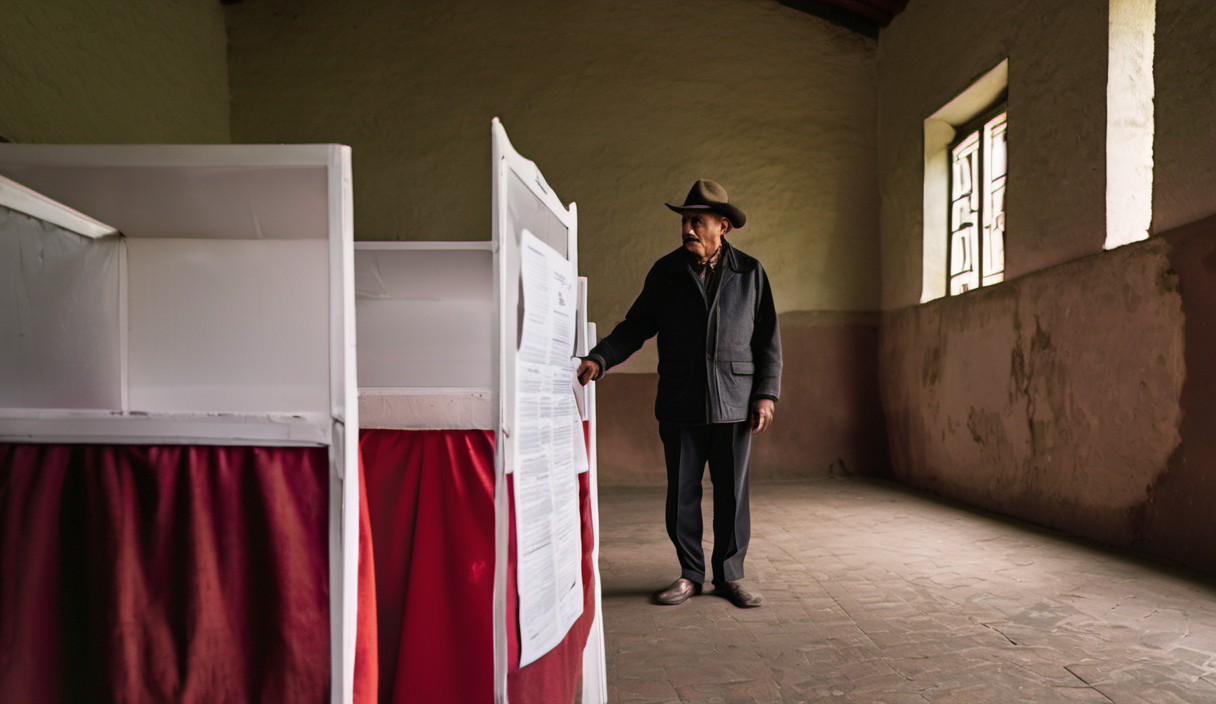
Featured image: A man is standing in a room. AI-generated image; not a photograph of the reported event.
Simeon Flores has been elected mayor of Queropalca, a remote district in the Peruvian Andes, according to exit polls. Source: bbc.co.uk.
What Happened
Flores, running for the centre-left Ahora Nación party, won 34% of the vote.
He beat the right-wing Renovación Popular Perú candidate by just 25 votes.
About 700 residents voted in the election—fewer than 1,000 people in the district.
Key Facts
- Flores is 45 and was born in Queropalca, in Peru’s Huánuco department.
- He received about 34% of the vote in a small, rural electorate.
- His name combines ‘Hitler’ and ‘Mussolini’—two of the most well-known figures of 20th-century European totalitarian regimes.
Why the Name Draws Attention
Adolf Hitler and Benito Mussolini are globally known for their roles in authoritarian regimes.
Flores’s name has sparked international attention, even though it is common in some regions.
Local media note that similar cases have occurred before.
Similar Cases in History
In 2018, Hitler Guesclin Alba Sánchez won the mayoral election in Yúngar, Peru.
In 2020, Adolf Hitler Uunona won local elections in Namibia—a former German colony where such names are common.
What This Means
Personal names can draw public focus, especially in areas with limited media coverage.
Historical associations can shape how people view a candidate—without any link to their policies or beliefs.
Peru’s election process remains democratic and officially verified.
Important Clarifications
There is no evidence that Flores supports or is connected to fascist ideologies.
His name does not reflect political views or endorsements of totalitarianism.
Local sources confirm the name is a coincidence and the election is part of normal democratic practice.
What’s Next
Peru continues to hold local elections in remote areas.
Public attention often turns to unusual names or events in these regions.
For more, see the original BBC report.
This case shows how personal identity can intersect with history and media attention.