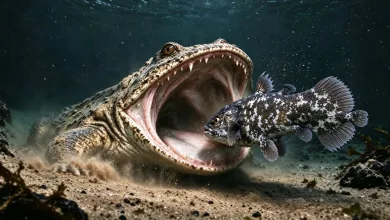
Millions of deep-sea eels gather annually around a seamount off Tasmania’s coast, forming one of the most remarkable fish aggregations ever documented in the deep ocean. Source: sciencealert.com.
What Happens at Patience Seamount
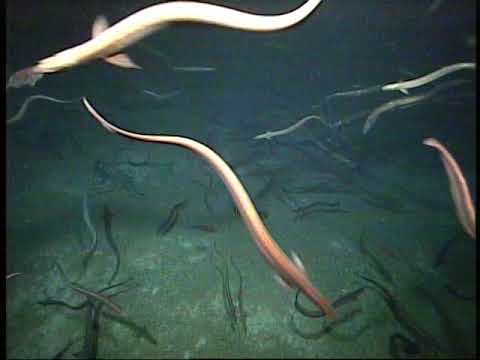
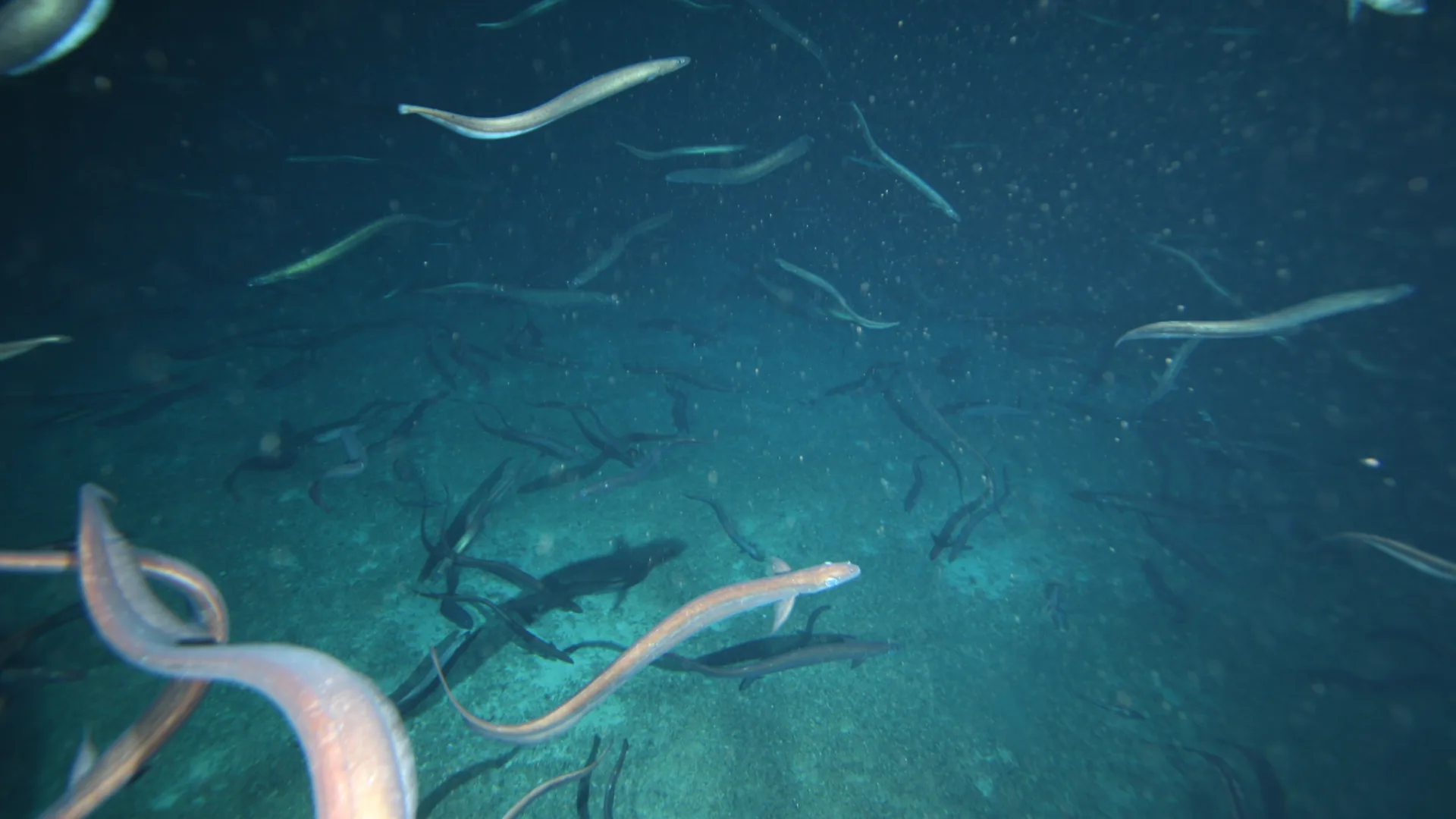
Every year, between March and May, millions of basketwork eels gather around Patience Seamount, a submerged mountain south of Tasmania. This event occurs in the deep sea, where sunlight does not reach and temperatures remain near freezing.
At its peak, the aggregation contains an estimated 2.8 million eels, with a total biomass of over 3,500 metric tons—more than 3,860 US tons. This immense concentration of life is unprecedented in scale and persists for nearly a full year, from December through August.
The eels inhabit the seamount year-round. Their numbers peak in southern autumn. This seasonal pattern suggests a tightly regulated biological rhythm, possibly linked to temperature, currents, or lunar cycles.
How the Gathering Was Discovered
Commercial fisheries reported unusual eel shoals from the 1980s and 1990s. These reports were initially dismissed as random. They later helped guide scientific interest.
In 2007, CSIRO scientists captured the event on camera during a Huon Marine Park survey. They towed a deep-sea camera behind a research vessel. The footage showed a massive, writhing mass of eels in permanent darkness.
The images confirmed the phenomenon. Before this, scientists only had anecdotal or indirect evidence. The visual record was essential for understanding the scale and significance of the gathering.
Key Facts from the New Study
- The aggregation lasts from December to August—nearly a full year. This long duration suggests a stable, recurring biological cycle.
- Basketwork eels prefer the deeper, flatter parts of the seamount. This area offers stable habitat and shelter from strong currents.
- Orange roughy gather near the steeper upper slopes. This shows the two species occupy different zones.
- Females carry advanced eggs and have empty bellies. This indicates they have stopped feeding—signs of reproductive readiness.
Scientists used sonar and underwater cameras to estimate the swarm’s size. Sonar shows fish density but cannot distinguish species. By combining data, researchers matched species to signals and improved accuracy.
Why Do Eels Gather Here?
Patience Seamount is one of about 120 seamounts in the Huon and Tasman Fracture marine parks. Nearby seamounts have similar depths and conditions. Yet only Patience hosts such large eel aggregations.
Marine scientist Ben Scoulding says this remains a major unanswered question. “We have good hypotheses, but no definitive answer,” he said. One theory is the seamount’s proximity to the continental shelf. This may affect fish movement or ocean currents.
Another idea is that the seamount releases unique chemical signals. These signals might attract eels through their sensory systems.
What Scientists Have Learned About Spawning
During March to May, eels show clear signs of reproduction. Females carry eggs. Many have empty bellies—indicating they have stopped feeding.
When eels stop feeding, they are less likely to be caught. In one survey, researchers caught only seven eels from the massive swarm. This highlights how hard it is to observe them in the wild.
Spawning timing and location are still unknown. It may happen in a specific microhabitat or at a certain depth. Confirming this is key to understanding the reproductive cycle.
Environmental Recovery and Protection
Patience Seamount was once fished with bottom trawling. This method damages seafloor habitats and destroys coral and sediment structures.
Since 2007, when the Huon Marine Park was expanded, recovery has been visible. Orange roughy numbers have increased. Living corals have returned to previously damaged areas.
The aggregation occurs in a protected zone. This allows scientists to return regularly and track changes over time. This long-term access is rare and valuable in remote deep-sea areas.
What This Means for Deep-Sea Ecosystems
The Patience Seamount gathering is rare. Most deep-sea fish aggregations involve only a few thousand individuals. Its scale, persistence, and reproductive nature make it one of the most significant fish gatherings in the deep ocean.
It highlights the need to protect deep-sea habitats from destructive fishing. The site acts as a natural lab for studying ecosystem recovery and species adaptation.
Because it occurs in a protected area, scientists can monitor changes over time. Future research may reveal how the aggregation grows or changes annually. This could show what conditions eels need to thrive.
“If the ecosystem continues to recover, we may see larger aggregations,” Scoulding said. This is based on observed recovery in other species and habitats.
Limitations and Open Questions
Despite progress, key questions remain.
- Spawning timing and location are unknown.
- Why Patience, not nearby seamounts, is chosen is still a mystery.
- How eels coordinate movements is not understood.
- The role of chemical or acoustic signals is speculative.
- It is unclear if similar gatherings exist elsewhere in the deep sea.
The study, published in Royal Society Open Science, advances understanding of deep-sea fish behavior. But it does not explain the full mechanism behind the gathering.
More research is needed to determine if this event is unique or if similar gatherings occur elsewhere. Such discoveries could reshape how we see deep-sea life and animal organization in dark, remote oceans.
For now, the Patience Seamount gathering stands as a powerful example of life forming massive, organized patterns in the ocean’s deepest, darkest regions.
Sources & further reading
Featured image: 2.8 Million Eels Have Gathered Around a Single Deep-Sea Mountain Off The Coast of Australia. Via original publisher. Image source