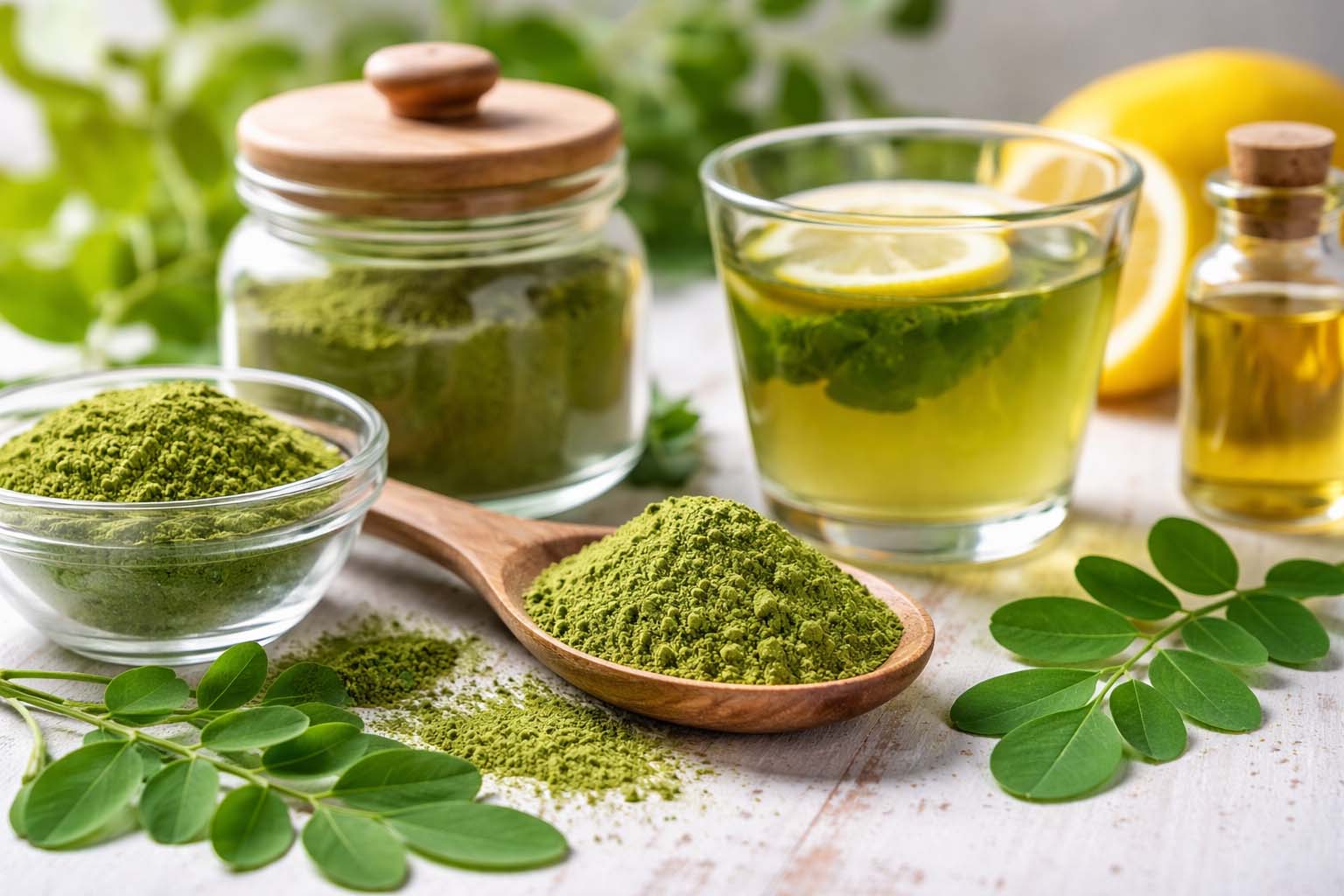
Moringa (usually Moringa oleifera) is a leafy plant sometimes called the drumstick tree or horseradish tree. It’s popular because the leaves are nutrient-dense and easy to add to food as a powder, tea, or cooked greens. The key is using it in realistic, food-level amounts—and being smart about safety and product quality.
What makes moringa “healthy” (in plain English)
Moringa leaves contain a mix of:
- Micronutrients (like vitamins and minerals)
- Plant antioxidants (polyphenols/flavonoids and related compounds)
- Fibre (especially when used as leaf powder in foods)
This is why moringa is often used as a “nutrient booster” rather than a magic cure. Reviews consistently describe moringa leaves as rich in nutrients and bioactive compounds, but many “disease claims” online come from lab/animal work or small human studies—not definitive proof.
Moringa benefits (what the evidence reasonably suggests)
1) A convenient nutrient boost
If your diet is low in greens, moringa can help you add “green nutrition” quickly—especially in smoothies, soups, and sauces. (Think of it like concentrated leafy greens.)
2) Antioxidant and anti-inflammatory potential
Moringa contains multiple antioxidant compounds. That matters because antioxidants help protect cells from oxidative stress. Human outcomes vary, but the plant chemistry is well-documented.
3) Blood sugar / blood pressure / cholesterol: promising but not a guarantee
Some reviews and meta-analyses report possible improvements in markers like blood glucose or blood pressure in certain settings, but the overall evidence is mixed and limited by study quality. If you’re managing diabetes or hypertension, treat moringa as a food—not a replacement for medication.
4) Digestion support (mainly via fibre)
Leaf powder adds fibre to meals. Fibre supports normal bowel function and gut health—especially when combined with water and a balanced diet.
How to eat or drink moringa (easy options that actually taste good)
Option A: Moringa tea (simple, gentle)
- Use dried leaves or a tea bag.
- Steep in hot water for 5–8 minutes.
- Taste tip: add lemon/ginger or a little honey if you like.
Best for: people who want a mild daily habit without changing meals much.
Option B: Moringa powder (most popular)
Because powder can taste grassy/bitter, it’s best “hidden” in food:
Fast ideas
- Smoothie: banana + yogurt (or plant milk) + spinach + ½ tsp moringa
- Oats: stir into porridge with cinnamon + berries
- Soup: whisk into lentil/vegetable soup near the end
- Yogurt bowl: mix with honey + fruit (start small)
Pro tip: start with ½ teaspoon and build up slowly so your stomach adjusts.
Option C: Fresh/cooked leaves (if you can find them)
Cook moringa leaves like spinach: sauté with garlic/olive oil, add to omelettes, or mix into curries and stews.
Option D: Fermented or cooked preparations (better mineral availability)
Some research notes that fermentation can reduce antinutrients like phytates, which may improve mineral availability.
Safety notes (important — don’t skip)
1) Choose the right part of the plant
Most people use leaves (fresh/dried/powder). Be cautious with root/root bark products; multiple sources flag potential toxicity concerns with roots/bark compounds.
2) If you’re pregnant, trying to conceive, or breastfeeding
Be conservative. Food-level amounts of leaf are commonly used in diets, but supplement-strength products are different. Discuss regular use with a clinician.
3) Medication interactions (common sense rule)
If you take medication for:
- Diabetes (moringa may lower blood sugar in some people),
- Blood pressure, or
- Blood thinners (e.g., warfarin)
…talk to a clinician before using moringa regularly, especially as capsules/extracts.
4) Product quality warning: recent moringa powder recalls/outbreaks
In late 2025 and again in February 2026, U.S. health agencies reported Salmonella outbreaks linked to certain moringa leaf/powder supplement products, including recalls. This doesn’t mean “all moringa is unsafe,” but it does mean you should:
- buy from reputable brands,
- check recall notices in your country,
- avoid any product that’s been recalled.
5) Kidney stone risk (for some people)
Some reviews note oxalates can be higher in dried moringa leaves/powder. If you have a history of calcium-oxalate kidney stones, ask your clinician before using it daily.
How much moringa should you take?
For food use, many people do ½ tsp to 1 tsp powder daily (or a cup of tea). If you’re using capsules/extracts, follow the label and avoid stacking multiple moringa products at once.
If you notice stomach upset, scale back, take it with food, or switch to tea.
Quick FAQ (for Google “People also ask” style)
Does moringa help with weight loss?
It can support a healthier diet (more micronutrients, sometimes more fibre), but it’s not a fat-burner by itself. Weight loss still comes down to overall calories, protein, sleep, and consistency.
Can I drink moringa tea every day?
Often yes for many adults, but start small and be extra careful if you’re on blood sugar/blood pressure meds or blood thinners.
Powder vs tea — which is better?
Powder = more of the whole leaf (and fibre). Tea = gentler and easier on digestion.
Moringa can be a great “green booster,” but if you’re pregnant, have a medical condition, or take regular medication, check with your GP/medical professional before using it daily—especially as capsules or concentrated extracts.