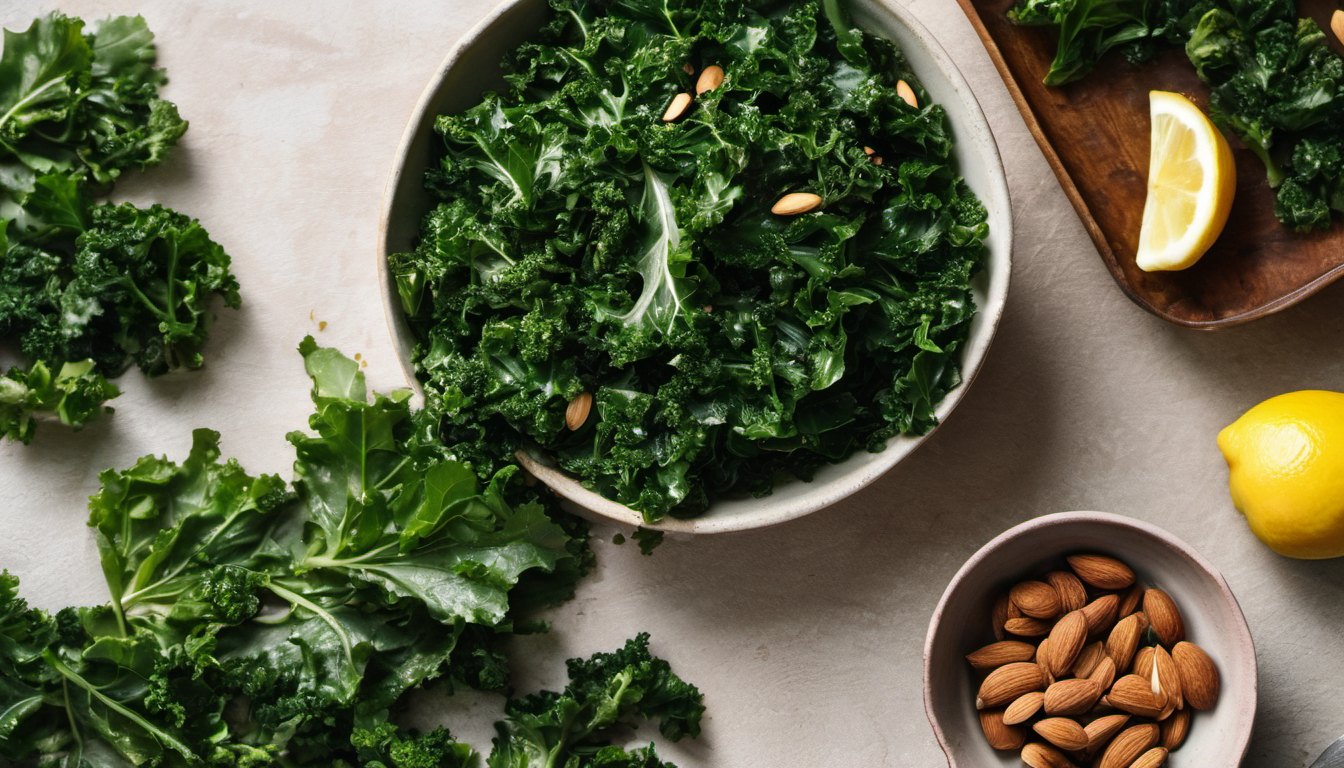
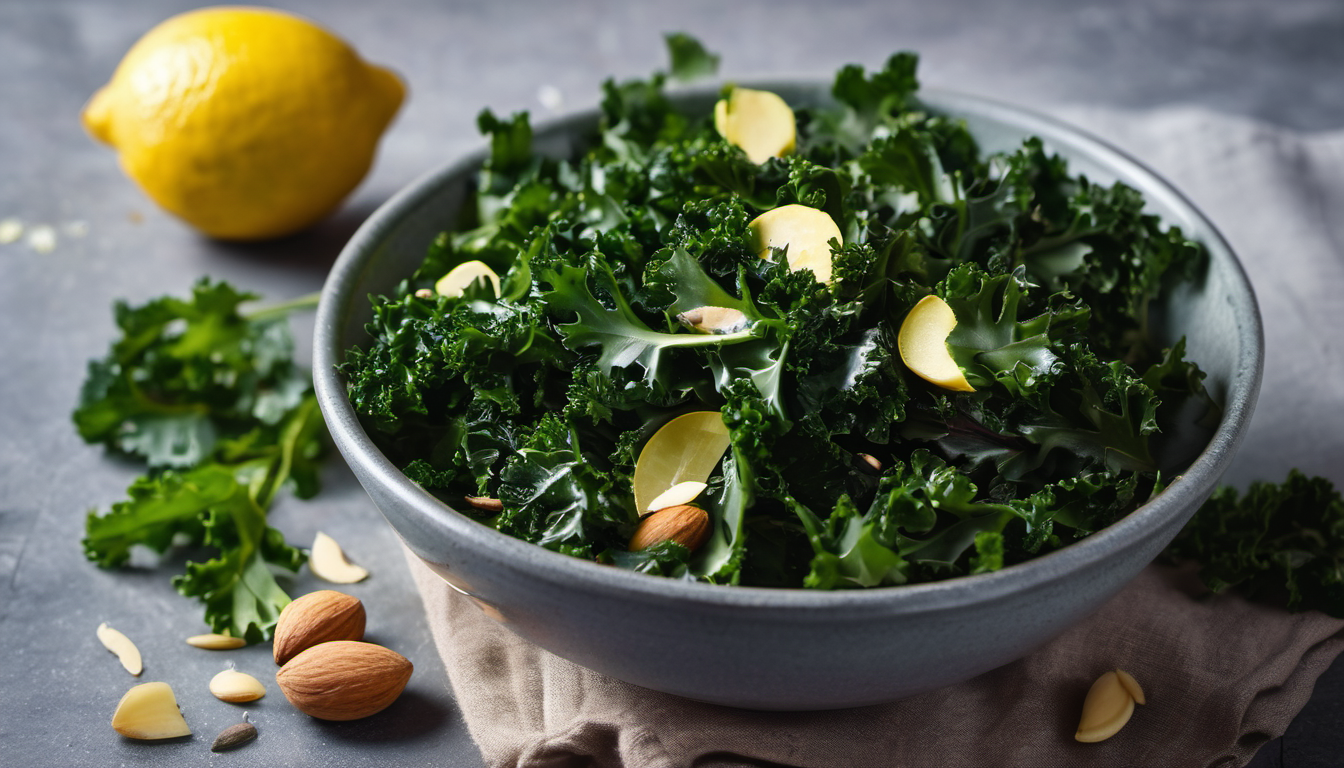
Featured image: A top-down view of a table with a bowl of chopped kale, almonds, a lemon, and a lemon half. AI-generated image; not a photograph of the reported event.
Nagi shares a straightforward kale side salad recipe designed for everyday use. It uses minimal ingredients and focuses on texture and flavor balance. Source: recipetineats.com.
What the Recipe Offers
The salad is made with curly kale, which Nagi finds affordable and texturally suitable. The leaves are stripped from stems and torn into bite-sized pieces.
It relies on a scrunch-and-massage technique to soften the chewy texture of raw kale. This step is emphasized as essential—without it, the kale remains too firm to enjoy.
Key Ingredients
- 4 to 5 big kale stems, yielding about 4 cups tightly packed leaves
- 2 tablespoons extra virgin olive oil—only 1 tablespoon is rubbed into the leaves initially
- 2 teaspoons fresh lemon juice (or apple cider vinegar, rubbed into leaves)
- 1/4 teaspoon heaped salt
- 2 pinches of black pepper
- 1/4 cup flaked almonds (or other nuts or seeds)
How to Prepare the Salad
- Strip kale leaves from stems using hands. Hold the stem with one hand and slide the other up to remove most of the leaves.
- Tear the leaves into bite-sized pieces. Precision slicing is optional.
- Drizzle 1 tablespoon of olive oil and sprinkle with salt and pepper.
- Massage the kale with hands—squeezing handfuls and rubbing to coat all surfaces. This step takes about 20 seconds.
- Leave the kale to marinate for 30 minutes. It can be left at room temperature or in the fridge.
- After marinating, drizzle with the remaining olive oil and all of the lemon juice. Toss gently.
- Add half of the flaked almonds and half of the parmesan. Toss again.
- Transfer to a serving bowl. Top with the remaining almonds and parmesan.
Why This Method Works
Kale is naturally chewy when raw. The scrunching and 30-minute marinate help break down the fibers, allowing the oil and salt to penetrate the leaves.
Nagi notes that the oil used is not poured over the kale like a dressing. Instead, it is rubbed in, which makes a small amount go much further. This reduces fat content while still softening the texture.
Flavor Profile
The salad is described as simply flavored—only lemon and olive oil. No creamy dressings or heavy add-ins are used.
Nagi says it is not designed to convert kale haters. The simplicity may make it unappealing to those who prefer richer or more complex greens dishes.
What to Serve With It
The salad pairs well with a range of main dishes. It complements:
- A rich roast beef tenderloin with a creamy mushroom sauce
- A pan-seared chicken breast or fish
- A hearty Greek pasta bake (pastitsio)
- A roast chicken
It is not traditionally paired with Asian main dishes, but Nagi notes it would be possible to use it in such a context if it were available in the fridge.
Storage and Shelf Life
The salad can be stored in the refrigerator for up to two days. Kale is described as hardy and stable after dressing, unlike some salads that degrade quickly.
Leftovers do not spoil due to the absence of perishable components like croutons or fresh herbs.
Substitutions and Flexibility
Several substitutions are offered to suit different preferences or ingredient availability:
- Lemon juice can be replaced with apple cider vinegar, which must be rubbed into the leaves, not drizzled.
- Flaked almonds can be swapped for other nuts or seeds—such as slivered almonds, pepitas, sunflower seeds, or chopped walnuts, pecans, or cashews.
- Parmesan can be replaced with shredded cheddar or other cheeses. Alternatively, a crunchy, salty option like crispy fried shallots or Chang’s crispy noodles can be used.
Nagi notes that toasting almonds is optional. It adds flavor but is not required, depending on how busy or relaxed the day is.
Nutrition and Serving Size
Per serving (assuming 5 servings), the salad provides:
- 4g carbohydrates
- 3g protein
- 10g fat (6g monounsaturated, 2g polyunsaturated, 2g saturated)
- 2g fiber
- 34mg vitamin C
- 143mg calcium
- 1mg iron
Author’s Perspective and Intent
Nagi presents this as a real-life, weekly recipe—something made on a Monday night after a long workday. It is described as ‘virtuous and lazy’—no chopping, no separate dressing, just hands-on work.
She emphasizes that this is not a push to convert kale haters. The recipe is intentionally simple and unadorned. It is meant for those who already enjoy greens and want a quick, reliable way to include kale in their diet.
Nagi adds that she has another method for cooking kale on the stove, which she plans to share in a few weeks. This suggests a broader interest in kale preparation beyond salads.
Limitations and Considerations
While the recipe is easy and efficient, it may not appeal to all palates. The lack of creamy dressings or rich add-ins makes it less satisfying to some.
It is not designed for those who expect a complex or indulgent salad. The texture and flavor are intentionally restrained.
Those who dislike the taste of kale or find it too bitter may not enjoy this version. The recipe does not include any sweet or savory elements to balance the earthy taste.
What to Watch Next
Nagi plans to share a second kale recipe—likely a stovetop version—within a few weeks. This suggests a broader exploration of kale preparation methods beyond salads.