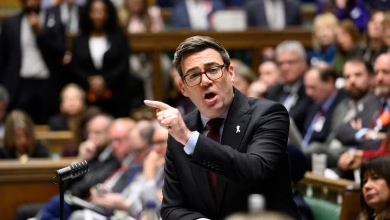
Net migration to the UK has fallen to its lowest level since 1997, excluding pandemic years. This marks a significant shift in the country’s demographic trajectory.
Key Figures and Trends
For the year ending June 2026, net migration was 77,000.
The figure is more than 90% below the peak of 944,000 in March 2023. It is the first time net migration has been in the ‘tens of thousands’ since a target set by David Cameron’s 2010 government was never met.
Annual net migration in 1997 was 48,000. The current level reflects a sustained reversal from high immigration levels seen in the early 2020s.
Breakdown of Migration Flows
Immigration declined 17% over the year, driven by fewer non-EU citizens getting permission to work, study, bring family, or apply for asylum.
- Visa grants to international students fell 38% — 39,200 fewer — compared to 2025. This affects university ecosystems and local economies.
- Skilled worker visas, including health and care roles and dependants, dropped 38% — 26,300 fewer. This risks staffing shortages in key sectors.
- Visas for social care workers were ended. Numbers fell from 108,000 to just 1,400 by 2026. This impacts care availability in rural and aging communities.
Emigration fell 4% — 28,000 fewer people — compared to the year ending June 2025. Most people leaving were non-citizens who moved for work or study, including those in the ‘Boriswave’ from 2021.
Government Responses and Policy Shifts
Home Secretary Shabana Mahmood credited Labour’s policies for the drop. She said: ‘The Conservatives lost control of our borders. Year upon year, they promised they would bring net migration down to the tens of thousands. Instead, they let it reach close to a million a year, overseeing four decades worth of migration in their last four years alone. This government has restored control. Where they failed, we have delivered for the British people.’
Labour’s 2024 manifesto pledged to reduce net migration and target irregular migration, including small-boat asylum seekers. The government now links migration policy to economic needs.
Opposition figures argue differently. Chris Philp, shadow home secretary, said: ‘The fall in net migration is mainly a result of changes made by the previous Conservative government. We now need to go even further with a legally binding annual cap, set by parliament, at a far lower level.’
Expert Analysis and Economic Implications
Ben Brindle of the Migration Observatory at Oxford said net migration could fall further next year. He noted: ‘Falling net migration is not automatically a problem for the UK economy. Falling asylum migration will help public finances. But skilled work visa numbers have dropped more — and that will have a fiscal cost.’
He warned that declining skilled worker visas could hurt long-term productivity in healthcare, education, and technical fields.
Sunder Katwala of British Future said the figures surprised most people. He said: ‘It must now be time for the political and media debate to catch up and start a new phase of the debate about what happens next.’
Why This Matters
Net migration remains a key political issue. The drop shows a shift in both policy and public perception.
Labour now focuses on economic needs, not anti-immigration sentiment. This is reflected in reduced emphasis on Nigel Farage’s Reform UK, which has seen declining poll numbers.
While reduced migration may ease public spending pressure, it could reduce skilled worker supply. This may affect healthcare, education, and responses to an aging population.
What to Watch Next
Experts expect migration trends to continue evolving. Labour may introduce a legally binding annual cap on migration.
Policy decisions will shape future outcomes. The government may face pressure to balance economic needs with social and demographic concerns.
For the latest updates on UK politics, including migration, asylum, and border policies, visit the Guardian’s live coverage.
Full data on net migration is available from the Office for National Statistics and Home Office.
Sources & further reading
Featured image: original publisher image. Via original publisher. Image source