Women in leadership roles aren’t so sure that the coming years will add more female colleagues to their ranks. In a survey of participants in a Harvard Business School Executive Education program for senior executive women, we found that these leaders feel that there’s been little—if any—progress on gender equality across business and society over the past year. And while they see promise in the changes heralded by generative AI, they are keenly aware of associated risks, primarily from embedded bias that, left unaddressed, is likely to entrench gender discrimination and other harms.
When asked to compare the level of gender equality in their country today (the survey was administered in late 2025) versus one year ago, over 40 percent said they believed it had decreased—more than 30 percentage points higher than those who felt it had increased.
Responses comparing the level of gender equality in the workplace were slightly worse, with even fewer women stating it had improved. They were more sanguine about their own organizations, but the gap remained, with over 30 percent sharing that they felt gender equality had decreased and under 20 percent believing it had increased.
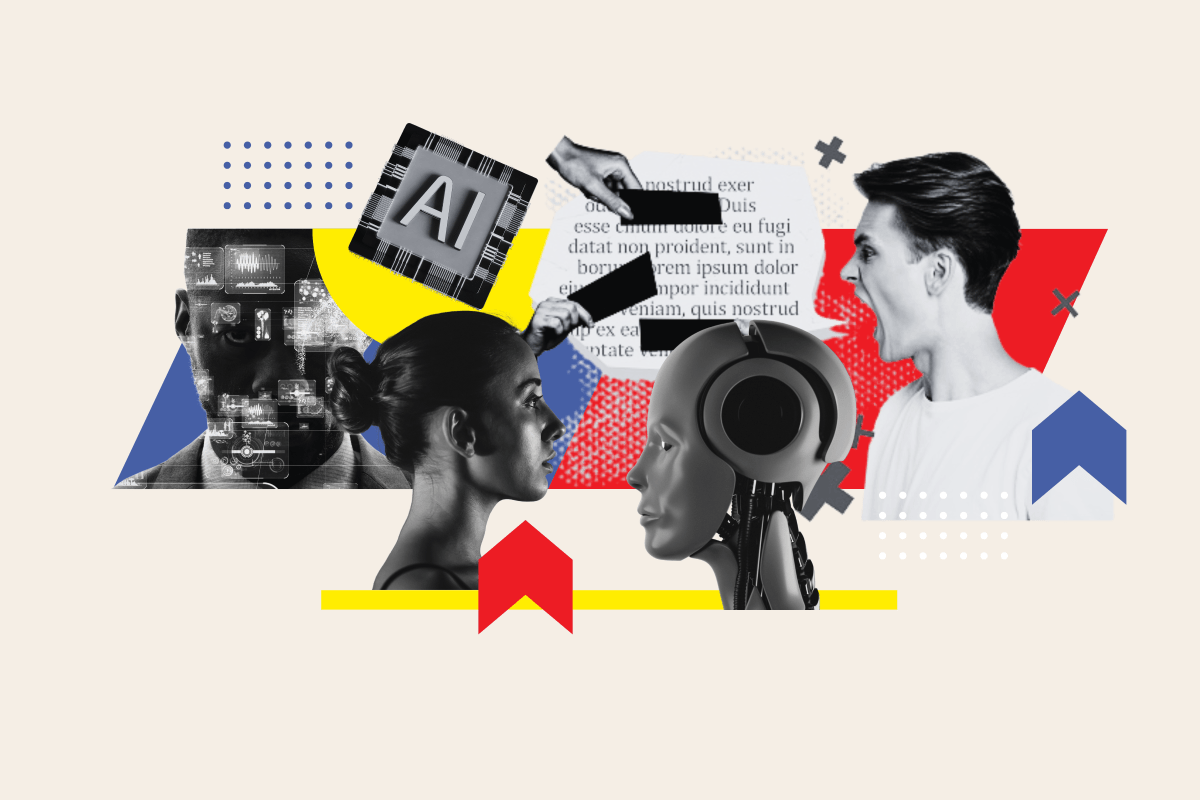
Photo-illustration by Newsweek/Getty/Canva/Photo-illustration by Newsweek/Getty/Canva
Their perception can’t be written off as individual grievance: they have themselves climbed to the top ranks of their organizations. Their pessimistic outlook should sound an alarm bell for organizations that want to nurture strong leadership pipelines, particularly in light of other warning signs in the broader economy: in the U.S., for instance, recent Bureau of Labor Statistics findings show more labor force exits for women compared to men, and an increase in the gender wage gap.
If we are indeed losing ground on gender equality, we couldn’t be doing so at a more consequential time. The rapid expansion of AI technologies is transforming work and portending upheaval for entire fields and occupations, and researchers are just beginning to examine gender differences in the impact of these changes. Their initial findings are concerning, with some studies observing that women systematically receive fewer opportunities to train on and use AI in their jobs—not to mention data showing that women are overrepresented in the occupations most affected by automation in administrative and clerical work.
In free-text responses, many women leaders in our survey highlighted job threats as of particular salience for women, but their views are multilayered when it comes to the impact of AI on women’s careers. Most of their organizations have implemented enterprise-level AI use and most of them are using AI for their individual work at least some of the time. A majority expect benefit for employees at their own firms as well as a positive impact on their own careers, with a particular emphasis on increases in efficiency and productivity noted in their detailed responses.
Despite this optimism about productivity gains for themselves and others at their current organizations, their confidence shrinks when asked to consider women’s careers in a broad sense, with only about half believing they will be helped and about a third unsure of the impact. (A minority believe AI would have no impact at all, and even fewer are certain it would harm women’s careers.)
Their free responses express hope about the promise of automation for women managing the ‘second shift’ of home and family responsibilities on top of their work roles, but that excitement is tempered by worry that AI in the workplace may have deleterious effects on women’s advancement. One flagged a “decrease in human interactions and mentoring that is already less available to women than men” as a risk, and others pointed to the possibility of discrimination in hiring or other processes as AI tools with embedded gender bias execute them with increasing independence.
Both types of concern suggest that women leaders see gender inequities as durable phenomena that won’t be eliminated through speed and efficiency, even if such gains enhance individual women’s productivity as well as men’s. In other words, even with equal access to AI—something which research suggests isn’t yet the case—women may still be disadvantaged as its effects take greater hold on the workplace.
One likely reason for their wariness is an awareness that AI systems aren’t somehow removed from the realities of human society—indeed, they are informed by the inequities that characterize human societies, something most of our respondents indicated concern about when asked.
“AI mirrors the biases that are present in our society,” as one noted in a representative comment. Coupled with the fact that the leaders we surveyed believe that movement toward gender equality has stalled or slowed, it’s no surprise that their primary concerns about the impact of AI, as evinced in their detailed responses, revolve around the risks of systemic bias as AI systems expand: the entrenchment of historical disparities, reinforcement of stereotypes, and normalization of sexualized or violent content targeting women.
Several cited the relative dearth of women leading high-profile AI companies and the gender imbalance of the field as a whole in outlining their concerns, a point underscoring the core insight from our survey: organizations cannot take for granted that their capable women employees will continue to fill their leadership pipelines in the coming years.
In a time when even women at the top feel that equality is still out of reach and technology is ushering in massive transformation, business will need to choose to pay attention to the effects of AI on both work and workers. Amid the embrace of AI tools by companies and executives—including the survey respondents themselves—it remains to be seen whether its advancement will diminish or deepen gender inequality.
For their part, women in powerful positions are bullish on its innovations but markedly less optimistic about its progress toward gender equality. Sustained attention to the intersection of gender and AI is a critical and urgent need, lest technology outpace our ability to guide it toward advancing social good rather than deepening inequality.
Boris Groysberg is Richard P. Chapman professor of business administration at the Harvard Business School and a faculty affiliate at the Gender Initiative.
Colleen Ammerman is director of the Harvard Business School Race, Gender & Equity Initiative.
The views expressed in this article are the writers’ own.