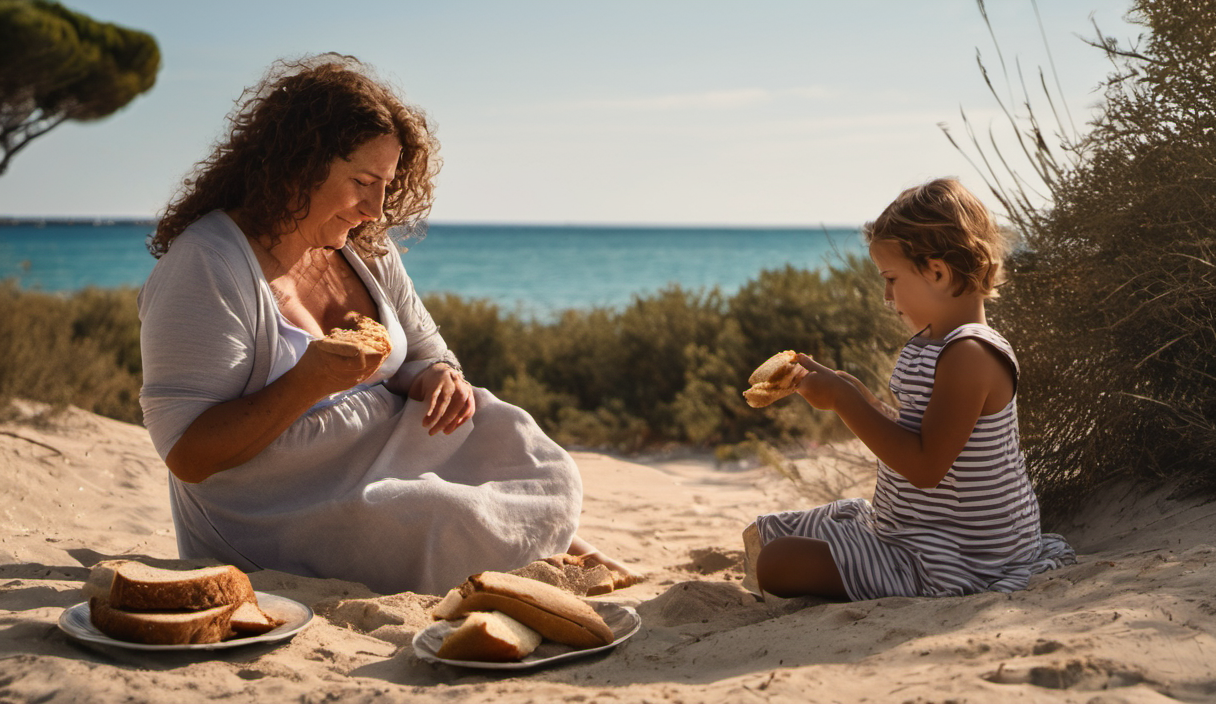
Featured image: A woman and a young girl are sitting on a sandy beach. AI-generated image; not a photograph of the reported event.
A woman was confronted at a private beach club in Puglia for eating a homemade sandwich on the sand. The incident reignited debate over packed lunches at Italian beach resorts.
What Happened
At a beach in Vieste, on Puglia’s Gargano peninsula, Rosaria brought homemade sandwiches for herself and her children.
When lunchtime arrived, she asked her son to eat near the sea, out of sight of staff. He was caught, and Rosaria was reminded that the resort forbids packed lunches.
The incident sparked an immediate row among beachgoers and resort managers.
Key Facts
- No national law bans packed lunches at private beach clubs.
- Resorts like Il Tirreno in Lazio allow packed lunches but reject ‘ill-mannered’ behavior, such as leaving takeout containers.
- Luca Pernice of Corriere della Sera said packed lunches are common, as many visitors can’t afford daily restaurant spending.
- Antonio Decaro, Puglia’s regional president, said people should be free to eat food brought from home.
- Il Gabbiano beach club offers packed lunches for €9 with water, a service that customers praise.
Background: How Beach Clubs Work
Private beach clubs dominate Italy’s coastline. The share ranges from 20% in Sardinia to 70% in Emilia-Romagna and Liguria.
Most offer bars and restaurants. Customers pay high fees. Resorts operate only three months a year but still pay taxes and maintain operations.
Why It Matters
Many Italians say they can’t afford daily restaurant bills at beach clubs.
Moira Maccharini said bringing homemade food is more enjoyable and cost-effective.
Elisabetta, from Sicily, noted that beach visits have declined due to the cost of living.
Resort owners argue that packed lunches create hygiene and waste issues.
Limitations and Open Questions
While no law prohibits packed lunches, enforcement varies by location.
Some clubs, like Il Gabbiano, offer solutions by providing food at low cost.
Still, many public beaches lack services and maintenance, prompting criticism of private ownership.
Mare Libero, a grassroots movement, advocates for public beaches and better local management.
What to Watch Next
Public debate over beach access and affordability may grow as more Italians face rising living costs.
Resorts may adjust policies, but customer demand for affordable, flexible options remains strong.
For more on Italy’s beach culture and cost of living, see The Guardian’s full report.
Resort owners say they manage costly operations. Rachele Giambi of Il Tirreno said: ‘We don’t forbid packed lunches. But the problem is those who are ill-mannered.’
Still, customers like Beatrice Bordo say they value freedom to choose what and where to eat. ‘I’ve paid a significant amount. I spend on coffee and ice-cream. So they can’t expect me to spend a large amount daily.’