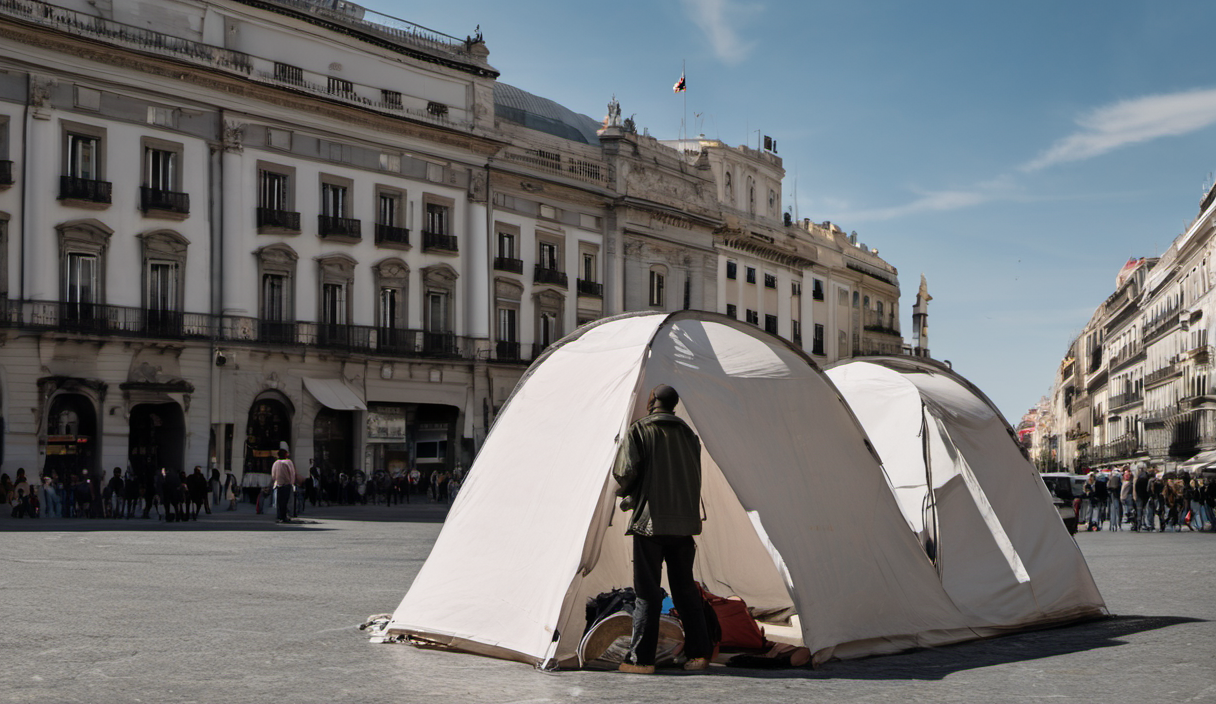

Featured image: The main foreground subject is a large, white, fabric tent with a peaked roof. AI-generated image; not a photograph of the reported event.
Hundreds of people have pitched tents in Madrid’s Puerta del Sol square, protesting Spain’s worsening housing crisis. The demonstrations follow a national outcry over rising rents and evictions. Source: bbc.co.uk.
What Sparked the Protests?
The movement began with the case of Maricarmen Abascal, an 87-year-old woman evicted from her home after her landlord, an investment firm, raised her rent sharply.
She was unable to pay, and was forced out. Though the firm later invited her to return, she never did. She died in hospital shortly after.
Her story has become a symbol of the crisis, resonating with many Spaniards who face similar struggles.
Public Concerns and Survey Data
A recent study by Spain’s Centre for Sociological Research (CIS) found strong public support for policy changes:
- 72% want higher taxes on owners with 10 or more properties.
- 76% support limits on short-term rentals like Airbnb.
- 40% back the expropriation of empty homes.
These figures show widespread concern about housing affordability and market practices.
Key Facts About the Crisis
Spain has seen an average rise in rental costs over the last decade, according to property outlet Idealista.
Increases are even steeper in key cities, with data showing higher rates in Málaga and Marbella.
The Bank of Spain has estimated a housing shortfall of around 750,000 homes. This could rise to one million by 2028.
Spain has 3.8 million empty properties, but most are in rural areas. Only a fraction are in urban centers where the crisis is most acute.
Why the Crisis Exists
Experts point to a mismatch between housing supply and demand.
Between 2021 and 2025, Spain saw about 1.2 million new households — driven largely by migration.
But new housing construction lagged. Fewer than half-a-million new homes were built during that period.
Barriers included rising material costs, a weakened construction industry, and lack of political will to streamline building laws.
Is the ‘Vulture Fund’ Claim Valid?
While protesters blame ‘vulture funds’ for driving up rents, data suggests otherwise.
According to Bank of Spain figures from 2024, only 8% of rented properties are owned by companies.
Jorge Galindo, director at Esade’s economic policy centre, says there is no significant concentration of rental properties among a small group of investors.
He argues that the real driver of rising rents is a shortage of supply, not speculative investment.
Other Factors Pushing Prices Up
Short-term rentals like Airbnb have increased prices in specific urban areas.
But their impact is local, not nationwide.
Worsening inflation and stagnant wages have also hurt affordability.
A study by El País found that real average salaries have declined by 5% over the past decade, due to inflation and rising taxes.
Monthly salaries in Madrid average €1,550 — a sum that leaves many workers with little room for rent.
What the Government Is Doing
Prime Minister Pedro Sánchez introduced emergency housing reforms targeting speculative practices.
He called the measures ‘a step against those who treat housing as a commodity to be bought and sold’.
However, the reforms were rejected by Congress, prompting Sánchez to call a snap election next month.
What to Watch Next
The protests may influence the upcoming election, where housing policy could become a key issue.
Public opinion remains divided on whether to tax property owners, regulate short-term rentals, or expropriate vacant homes.
While the ‘vulture fund’ narrative is powerful, data suggests the crisis is rooted more in supply-demand imbalance than in a few powerful investors.
For more on how housing policies affect affordability, see our article on controversial tax rules for second homes.